How a Former Pradhan Revived a Desert Pond and Secured Water for His Village
 Across drought-prone regions of western Rajasthan, water security remains deeply tied to community leadership and local governance. In this field narrative, Moumita Mukherjee, Deputy Manager at A.T.E. Chandra Foundation reflects on how a former Pradhan and a determined Gram Panchayat in Barmer district used 15th Finance Commission funds to revive a traditional waterbody, demonstrating how local institutions, when empowered and aligned, can build climate resilience from the ground up.
The following is the author’s account from the field.
Jasindhar Station (Gadra Road, Barmer, Rajasthan) – In this windswept border village on the margins of India’s fast-paced 21st century, development has arrived slowly, marked by incremental progress over time.
As temperatures soar, Gadra Road bears the weight of its harsh climate, with water remaining its most pressing challenge. The monsoon has grown increasingly erratic. This year, while parts of Rajasthan recorded nearly 79 percent excess rainfall, Jasindhar saw barely two short spells of rain.
Yet amid this uncertainty, it is the village Panchayat’s commitment that has begun to rewrite the local water story.
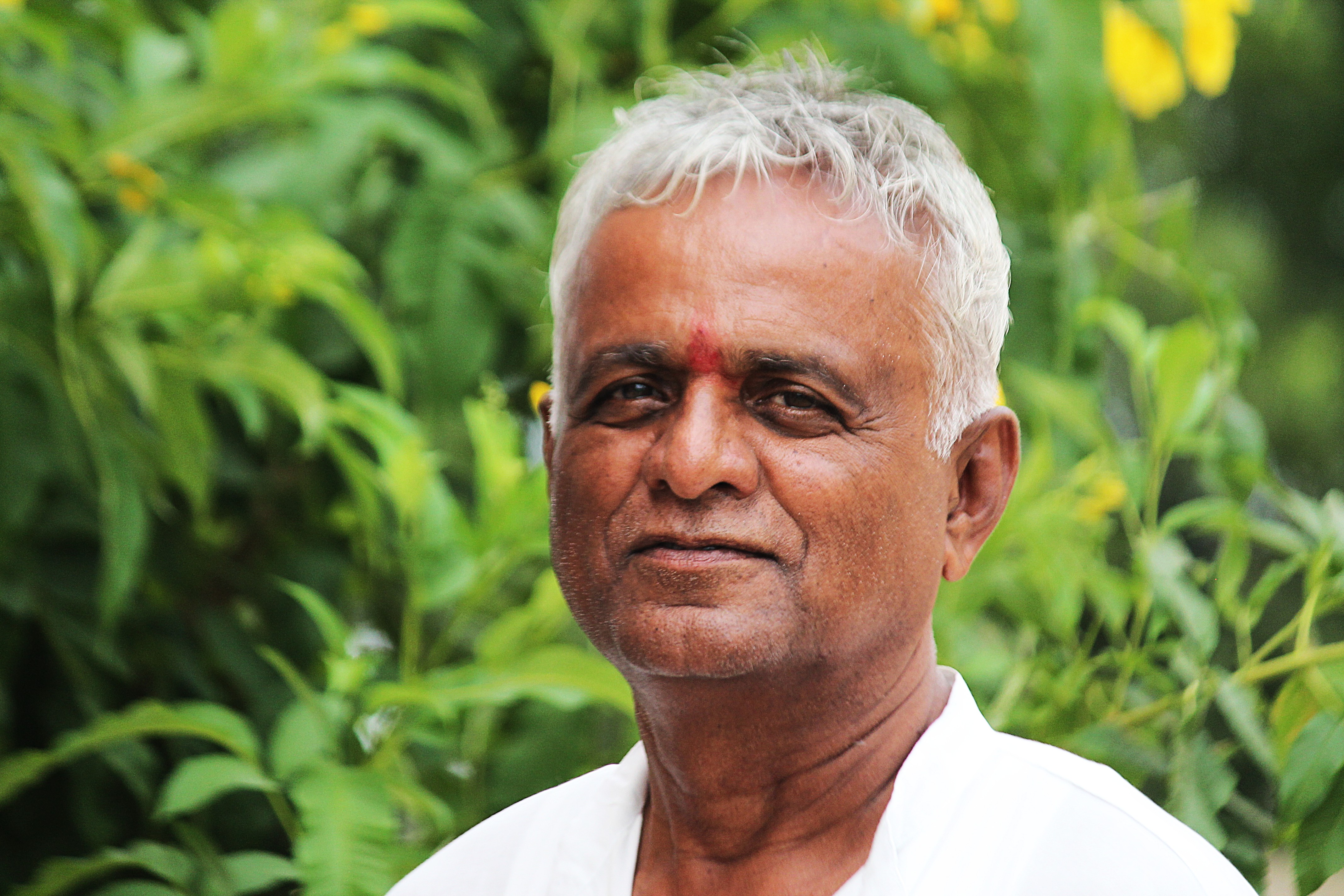 Teja Ram, a soft-spoken leader in his late 70s and former Pradhan, is known for repeating a simple truth: “First, we must come together as a community to harvest the rains, and then pray that nature blesses us in return.”
A Village Shaped by Scarcity and Resilience
Jasindhar, like many border villages, carries a story shaped by scarcity and resilience. Born after the 1965 border attacks, families moved closer to the railway station for safety and transport access, giving the village its name: Jasindhar Station.
For the older generation, memories of women walking 10 to 15 kilometres for water, or men climbing moving trains to fetch a few litres, are not distant tales but lived experiences.
Tube wells in the 1990s brought hope, though the water was saline. Pipelines arrived after 2015 and eased some struggles, but supply often remained irregular. In response, communities continued to depend on traditional rainwater harvesting systems — tankas and tanklis (underground storage structures) along with community nadis (ponds).
These sources became critical not only for drinking water but also for sustaining livestock — the backbone of livelihoods in this part of the western Thar.
From “Muchhon Ki Ladhai” to Collective Ownership
Teja Ram recalls a time when restoring a waterbody was something only wealthy families could afford.
“There used to be muchhon ki ladhai,” he says — battles of pride and control over every pot of water. With wealth came the power to decide access. Marginalised communities often had to wait or quietly collect water at night.
Over time, Panchayati Raj institutions strengthened. Gram Panchayats became more aware and more accountable. The sense of ownership slowly shifted.
Today, the talab belongs to everyone — and so does the responsibility to protect it.
A Pradhan Who Never Retired
Though no longer Pradhan, Teja Ram continues to guide the village leadership, including Sarpanch Jay Prakash and Village Development Officer Keshav Kumar Bhairwa, both committed to addressing Jasindhar’s water challenges.
“We have two talabs, both in disrepair for a long time. When Teja Ram ji suggested using available Gram Panchayat funds to rejuvenate them, we immediately decided to act,” shares Sarpanch Jay Prakash.
The Panchayat chose to leverage 15th Finance Commission funds to revive the village’s Adarsh Talab, aiming to secure water for its livestock and community needs. With technical support from Piramal Foundation and A.T.E. Chandra Foundation, and cooperation from block and district officials, the Gram Panchayat Development Plan was prepared and approved. Soon after, restoration work began.
A Revival Rooted in Collective Spirit
The rejuvenation began on 2 October — Gandhi Jayanti, Dussehra, and the year’s first Gram Sabha. For Teja Ram, a Gandhian at heart, the date symbolised shramdaan, unity, and shared responsibility.
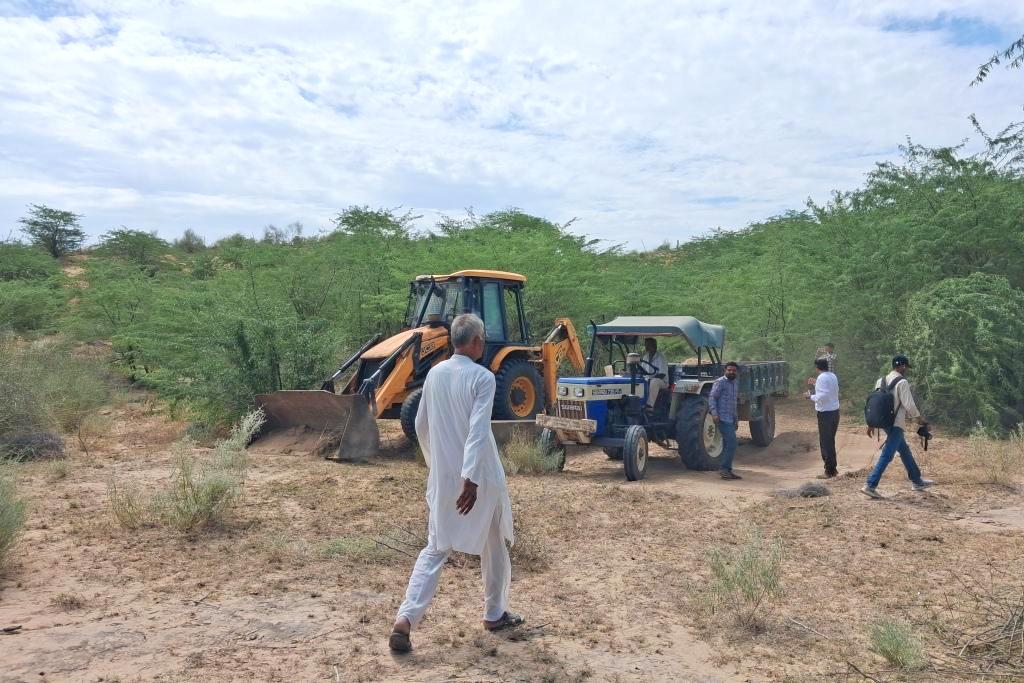
Over a week, the talab was deepened and widened using an excavator. Its expanded capacity — nearly 50 lakh litres, roughly equivalent to about 1,000 tankers — is expected to provide water well into December, even in a weak monsoon year, for a village of around a thousand people.
To an outsider, it may appear to be just another pond. For Jasindhar, it is an oasis.
Once replenished, the talab supports thousands of livestock and sustains local wildlife — including chinkaras, blackbucks, camels, nilgai, and monitor lizards. When required, it also helps meet limited irrigation needs.
“The silt removed from the waterbody was reused to strengthen bunds, fill drains, level courtyards, and even repair traditional mud chulhas,” adds VDO Keshav Kumar Bhairwa.
A Model Grounded in Local Governance
According to the First Census of Waterbodies by the Ministry of Jal Shakti, Barmer district has around 608 waterbodies. Strengthening local capacities and enabling Gram Panchayats to effectively utilise available funds could significantly enhance surface water storage through rejuvenation of existing structures — especially in drought-prone regions.
“Strengthening the capacities of Sarpanches is essential. Only then can they understand schemes, plan effectively, and solve problems for their people,” says Teja Ram.
In this border village, solutions did not arrive from distant capitals. They emerged from within — through local leadership, institutional mechanisms, and community resolve.
The revival of Adarsh Talab is more than an infrastructure intervention. It reflects dignity, accountability, and the enduring wisdom captured in a local saying:
Gaon saje toh talab bache, aur talab bache toh gaon jive.
When a village protects its waterbody, the waterbody, in turn, protects the village.
(The author works with waterbody rejuvenation initiatives under the Foundation’s Rural Development vertical.)