Quick CSR, Slow Impact? Why Speedy Deployment Needs Follow-Through
 As CSR investments increasingly focus on rapid deployment to address visible gaps in education, skilling, healthcare, and community infrastructure, questions around durability and adoption are becoming more pressing. While quick interventions can restore access and prevent service disruption, their long term value depends on what follows after delivery.
In this thought leadership piece, Amit Deshpande, Chief Operating Officer, Centre for Transforming India (CFTI), reflects on how speed driven CSR interventions perform on the ground and why follow through is critical to sustaining participation and outcomes. Drawing from implementation experience across public facilities and community programmes, the article highlights why CSR success must be measured not only by timely execution, but by continued usage and relevance.
The piece is particularly relevant for CSR leaders, foundations, and development practitioners seeking to balance urgency with accountability, and to ensure that fast action translates into lasting social impact rather than short lived gains.
Read the full article below for deeper insight.
Quick CSR, Slow Impact? Why Speedy Deployment Needs Follow-Through
When needs are visible and urgent, quick action can be one of CSR’s biggest strengths. Timely interventions often restore normal use of schools, community centers, and public spaces almost immediately. When basic gaps are fixed early, people return, stay engaged, and use these spaces as intended. In this context, speed does not mean carelessness. It means acting before small disruptions turn into long-term disengagement.
When Basic Gaps Remain, People Stop Showing Up
Missing infrastructure affects participation in very practical ways. There is a lack of interest. People disengage because the activity is not easy to participate in under the conditions. In schools, for instance, students might be registered but would not attend on days when the noise is too much, the lighting is too poor, or the toilets are dysfunctional. In community centers or training venues, classes may not only be cut short but also be completely canceled because of the power cuts or people's safety being a concern after dark. Little by little fewer people come to the sessions for a shorter period of time until they eventually stop coming altogether. This is the real picture of decreasing participation: it is silent and slow drop-offs instead of visible exits.
Speed Matters When Delay Disrupts Daily Life
Quick action prevents these silent losses. Providing desks allows students to sit comfortably and focus. Restoring lighting enables evening classes and skill programmes. Functional sanitation reduces early exits and absenteeism. Studies across education and skilling initiatives show that basic infrastructure fixes can improve regular attendance and daily usage by 15–20% within weeks. The reason is simple: they remove obstacles people face every single day.
Infrastructure Works Because It Enables, Not Persuades
Basic infrastructure delivers fast results because it supports behaviour that already exists. People want to learn, work, and participate. The problem is not motivation—it is conditions. Fans and lights allow sessions to continue despite heat or late hours. Clean, usable toilets make it easier for women and adolescent girls to stay for full programmes. Seating and shade encourage people to remain instead of leaving early. These interventions work immediately because they unlock participation that was already there.
Energy Access Solves Today’s Problem and Tomorrow’s Risk
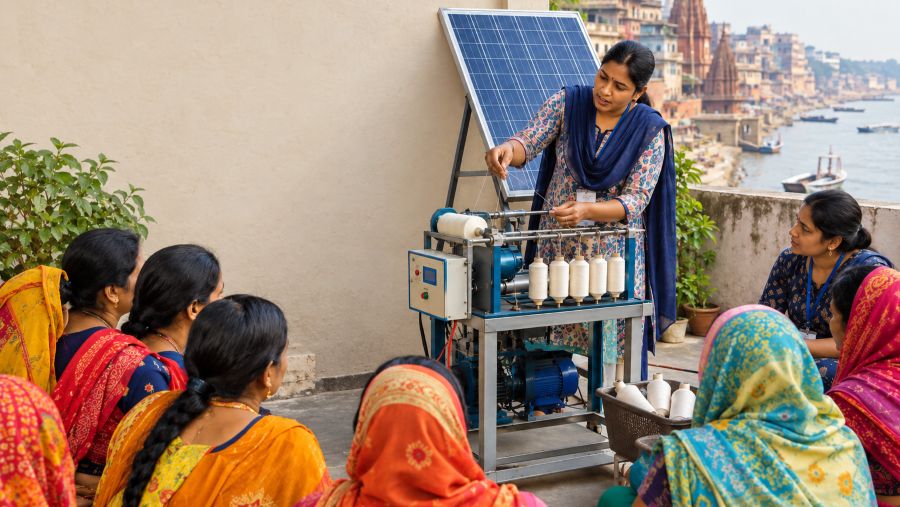
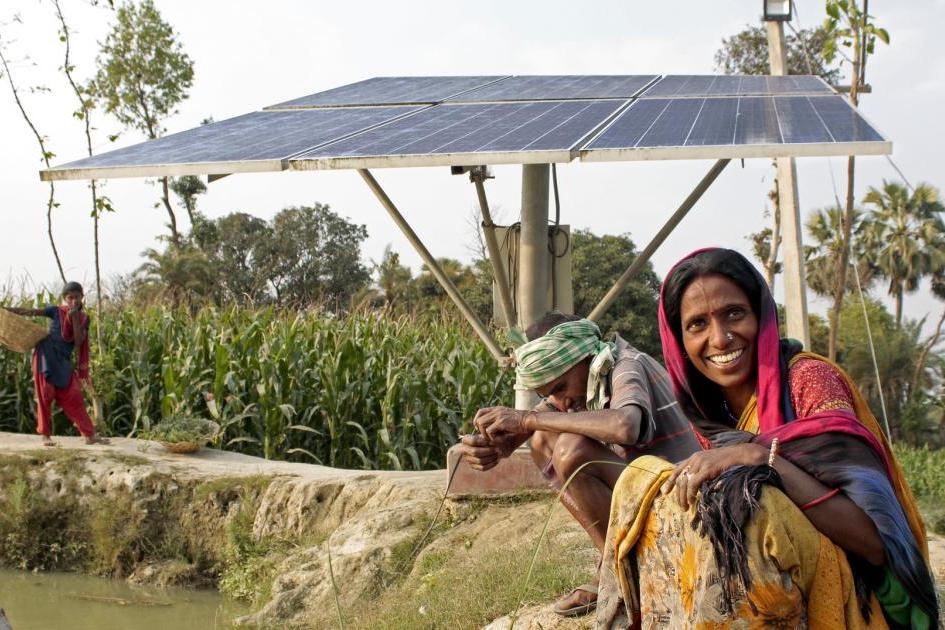
Energy access presents a solution to the problems of today as well as the threats of tomorrow by demonstrating how speed and sustainability can be combined. Electricity has been provided in most public facilities; however, the facilities are unable to utilize it because of erratic supply as well as unpaid electricity bills. This implies that nothing can be done electronically, recreational activities are minimized at dusk, nor are the facilities safe at night. When solar power is installed in a public facility, lighting, ventilation, and electrical equipment can all start functioning on the first day of installation. Over time, dependence on unstable grids reduces and operating costs can drop by 30–40%. What begins as an urgent fix becomes a long-term resilience solution.
Mobility Interventions Remove Invisible Barriers
Distance and unsafe travel often push people out gradually. Walking long distances every day leads to fatigue and safety concerns, which slowly result in irregular attendance and eventual dropouts. Almost instantaneously, the provision of bicycles or transport support alters this scenario. There is a decrease in travel time, an increase in punctuality, and a rise in trust—particularly among female and younger participants. Evidence from research suggests that reducing the hassle of daily commuting can result in an increase in attendance of 25% on a regular basis, just by making participation easier.
Follow-Through is the Factor that Decides If Speed Wins
Quick fixes, even if very effective, can still lose their power without follow-through. A non-working light, a broken bicycle, or a vague responsibility regarding maintenance can, without much noise, bring up the old barriers. Follow-through does not require heavy monitoring. Occasional visits, feedback calls, or conversations with local stakeholders are often enough to identify small issues before they grow. Programmes that include light post-deployment engagement remain functional and relevant for much longer.
Completion Is Adoption, Not Installation
CSR projects are often considered complete once assets are delivered or installed. But delivery is not the same as success. A project is complete only when people use what has been provided regularly, confidently, and independently. Follow-ups ensure that speed leads to adoption rather than abandonment.
Fast Action, Sustained Impact
Speed and responsibility are not opposites. With basic planning—local coordination, clear roles, and realistic expectations—CSR initiatives can move quickly and still last. Small, fast interventions add up over time: access today, infrastructure tomorrow, energy next year. Individually modest, together transformative.
The most effective CSR respects urgency without losing continuity. It acts quickly when the need is clear and stays engaged long enough to protect the value created. Speed is not the risk. Disengagement is.