More Than a Game: What Sport Gives Girls That Society Often Doesn’t
.jpg)
Girls are often taught how to adjust to the world long before they are encouraged to challenge it. They are guided to be careful, accommodating and composed, but are given far fewer spaces to test their strength, voice and ambition. Sport is one such space and it remains underestimated. In this article, Ms Komal Mehra, Head, Sports Initiatives and Associations at Usha International, reflects on what sport gives girls that society often withholds the freedom to be bold, physically strong and self assured.
Drawing from her experience leading sports partnerships, grassroots programmes and inclusive initiatives across India, Mehra shows how sport enables balanced growth. It does not replace empathy or care, qualities many girls already carry, but adds resilience, emotional steadiness and belief in one’s own strength. From learning to take up space on the field to handling pressure with confidence, sport prepares girls not just to participate, but to rise on and beyond the field.
On National Girl Child Day, the conversation around empowering girls rightly focuses on education, safety, health, and access to opportunity. These are essential pillars. Yet one of the most effective platforms for building confidence and capability is still treated as optional: sport.
Sport is not just about winning. It is a space where girls learn strength in the fullest sense. Physical strength. Emotional steadiness. The courage to take up space. It exposes girls to qualities they are often discouraged from expressing openly: boldness, stamina, self-assertion, and resilience.
Many traits society celebrates in girls, such as empathy, patience, nurturing, and cooperation, are already deeply present. Girls are often encouraged to be calm, considerate, and accommodating. This “moon energy” is powerful in its own way. What sport does, is bring balance. It introduces “sun energy” into a girl’s world: action, intensity, ambition, and belief in one’s own strength.
Sport does not change who girls are. It expands them.
Sport builds self-assertion
Sport creates a visible shift in girls. They stop waiting to be chosen and start choosing themselves.
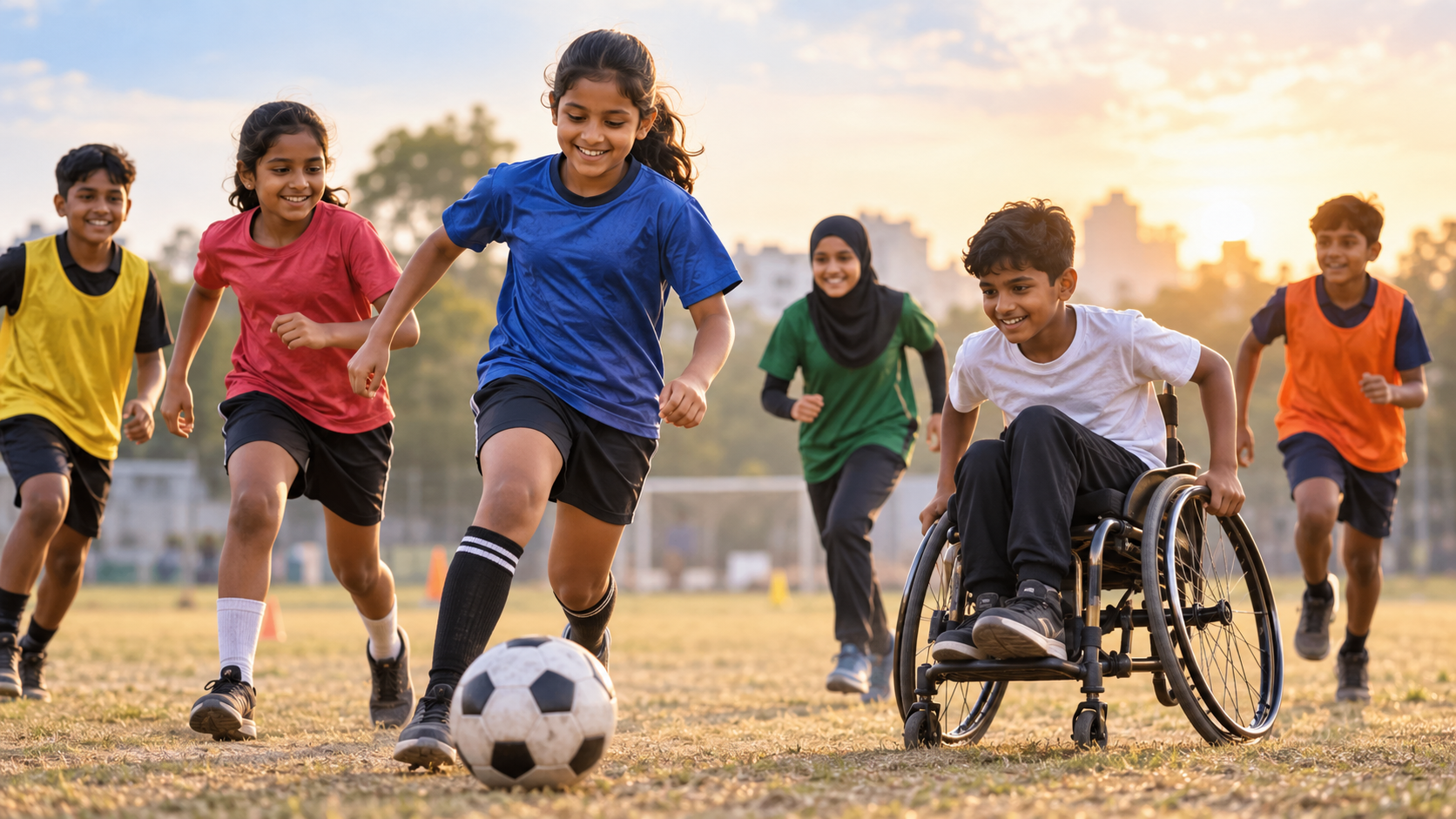
On the field, girls learn to speak up, call for the ball, and hold their ground. They learn to take decisions quickly and back themselves. They learn to compete without fear of judgment. They learn to be firm without being rude, and confident without apology.
Self-assertion is not always encouraged for girls in everyday life. Sport makes it normal. It rewards it. It gives girls repeated practice in standing up for themselves.
Once that confidence enters their system, it shows up everywhere: in classrooms, communities, workplaces, and relationships.
Sport builds physical strength and active living
Sport shapes a girl’s relationship with her own body in a powerful way.
It builds athleticism, including strength, stamina, endurance, agility, and control. It trains the body to handle discomfort and still perform. It also builds physical resilience, which is the ability to fall, recover, and continue.
Just as importantly, sport makes self-care a habit. Girls learn early that their bodies need nourishment, rest, and protection. Active living becomes a way of life, not an occasional activity.
This has lifelong impact. When girls grow up valuing their health and strength, they become women who prioritise their well-being without guilt. Physical strength is not just fitness. It changes posture. It changes presence. It changes how girls walk into the world.
Sport trains emotional balance under pressure
Sport is one of the most honest environments for emotional learning.
There is pressure. There are wins and losses. There are mistakes and setbacks. There are moments of unfairness. In this environment, girls learn to manage emotions instead of being controlled by them. They learn how to reset quickly, regulate frustration, and return with focus.
This is not theoretical learning. It is emotional training in real time.
The ability to stay steady under pressure is a life skill. It prepares girls not only for sport, but for the demands of education, careers, relationships, and decision-making.
The real impact is balance
Girls do not need sport to teach them empathy, patience, or care. Many already have those qualities. Sport strengthens what is already there, while adding what society often limits: boldness, physical resilience, self-belief, and strength.
It balances the moon with the sun.
This balance matters because the world is not always gentle with girls. It tests them early. It limits them early. Sport gives girls the ability to respond, not by shrinking, but by rising.
This National Girl Child Day, sport should be seen for what it truly is. Not extracurricular. Not optional. Not secondary. It is serious development work that builds strong, capable, confident young women.
Because When Girls Play, everyone grows.