Sowing Equality: Why Women Farmers Must Lead India’s Agricultural Future
By Namrata Kohli
As Kisan Kumbh 2026 convenes at IIT Delhi, the agri-tech conclave places women at the centre of climate resilience, digital farming, and rural transformation.
The Union Budget 2026–27 has placed agriculture firmly back at the centre of India’s development narrative. Higher allocations for farm innovation, climate resilience and digital integration have created a policy momentum that now finds expression in a timely national gathering: Kisan Kumbh 2026, to be held on March 30–31 at Dogra Hall, organised by Cowtrition Foundation under the aegis of the Centre for Rural Development, Indian Institute of Technology Delhi.
The two-day international conclave — themed “Nourishing the Nation, Nurturing the Future” — will bring together policymakers, agri-scientists, entrepreneurs, financial institutions and farmer leaders. Its defining focus, however, is unmistakable: women farmers.
Why Women, Why Now?
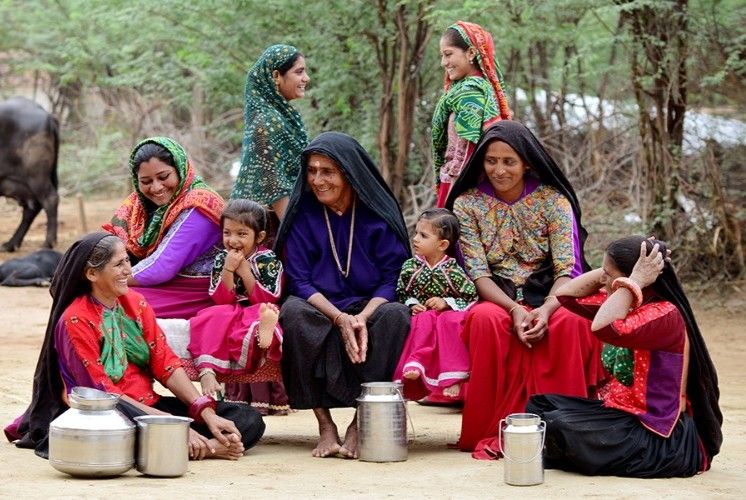
Agriculture in India has long depended on women’s labour — often unpaid, frequently unrecognised, and rarely rewarded with ownership. Globally, women contribute nearly half of total food production; in developing countries, their contribution rises to 60–70 percent. Yet land ownership tells a starkly different story. Women own barely 15 percent of agricultural land worldwide — and in India, the figure drops to an alarming 2 percent.
The contradiction is both moral and economic. Those who till the land seldom own it. Those who feed the nation rarely have decision-making power over credit, technology or market access.
The conclave seeks to address precisely this imbalance — not through rhetoric, but through structured dialogue and policy engagement.
From Beneficiaries to Stakeholders
Kisan Kumbh 2026 aims to reposition women farmers as central stakeholders in agricultural productivity, sustainability and rural growth. The agenda reflects this shift. The conclave will deliberate across a comprehensive spectrum of priorities, placing women’s leadership at the core of agricultural transformation while advancing climate-smart and regenerative farming practices, water conservation and soil health management.
Discussions will also examine the integration of agri-tech and digital solutions, stronger market linkages and value-chain participation, and the growing relevance of organic and natural farming. Equally significant will be conversations around policy advocacy, rural development frameworks, and expanding financial inclusion and microfinance access — all aimed at building a more resilient, equitable and future-ready farm economy.
These are not isolated silos. Together, they represent the ecosystem within which women farmers operate — and often struggle.
Consider financial inclusion. Over one crore women’s self-help groups across India have collectively accessed loans exceeding ₹1.5 lakh crore. This is not symbolic participation; it is measurable economic engagement. Yet, without land titles or formal recognition as “farmers”, many women remain outside institutional credit systems.
Similarly, climate change has intensified vulnerabilities in agriculture. Erratic rainfall, soil degradation and water stress disproportionately affect women, who often manage seed preservation, livestock care and subsistence farming. Climate-smart farming techniques, digital advisory platforms and regenerative practices are no longer optional — they are survival tools.
The Social Context
The conversation cannot be divorced from India’s broader gender landscape.
Women’s unemployment rates remain significantly higher than men’s. Workforce participation, despite incremental gains, continues to lag. Representation in Parliament took nearly three decades of debate before the 33 percent reservation for women was cleared — a reminder that rights are often delayed, not denied outright.
Discrimination begins early. Campaigns such as Beti Bachao, Beti Padhao have improved awareness, yet systemic barriers persist — from inheritance laws in practice to limited mobility and access to technology in rural areas.
And yet, the other side of the story is one of quiet resilience.
From farms to factories, women are the invisible backbone of India’s growth. Much of rural India’s structural and economic stability rests on their labour. What remains unfinished is the journey from labour to leadership.
Technology Meets Tradition
Hosting the conclave at IIT Delhi is symbolic. Agriculture is no longer confined to ploughs and monsoons; it is increasingly shaped by data analytics, precision farming, drone mapping and AI-driven advisories. Digital integration in agri-data, multilingual platforms and mobile-based decision tools are redefining how information reaches farmers.
But technology without inclusion risks widening the gap. Women farmers must not be passive recipients of innovation; they must be co-creators and informed users. Training, digital literacy and access to devices are as critical as policy announcements.
The Kisan Kumbh platform offers an opportunity to bridge this divide — bringing research institutions, startups, cooperatives and grassroots leaders into one conversation.
Democracy at the Grassroots
India’s decision to grant 50 percent representation to women in Panchayats has already altered the grammar of rural governance. Women-led local bodies have demonstrated measurable improvements in sanitation, water management and education outcomes. Extending that participatory model to agricultural decision-making is a logical next step.
Policy advocacy at the conclave is expected to address questions such as:
- Should women be recognised as primary farmers in official land records?
- How can microfinance transition into scalable agri-enterprises?
- What regulatory reforms can simplify market access for women-led producer groups?
These are structural questions — and their answers will determine whether empowerment remains a slogan or becomes a system.
A Moral and Economic Imperative
There is a cultural dimension too. Indian civilisation has long invoked Shakti — feminine power — as the source of creation and sustenance. Yet social practice has not always matched philosophical reverence. The irony is sharp: the hands that sow seeds are often denied the right to own the soil.
Correcting this imbalance is not merely about gender justice. It is about national productivity. Studies repeatedly show that when women farmers have equal access to resources, yields increase, nutrition improves and rural incomes stabilise.
A developed India cannot be built on partial participation.
The Road Ahead
Kisan Kumbh 2026 is more than a conference. It is an inflection point — where agriculture, technology and gender equity intersect.
If the Budget has laid the fiscal foundation, this conclave seeks to provide intellectual and institutional scaffolding. The task ahead is clear: move from token inclusion to structural empowerment; from labour recognition to ownership rights; from dependency to decision-making power.
As India aspires to become a developed nation, the question is not whether women should lead in agriculture — it is whether the nation can afford not to let them.
A nation rises fully only when its women rise with it.
Namrata Kohli is a development communicator and policy commentator focusing on agriculture, gender equity and rural transformation.
REGISTRATION LINK- https://bit.ly/KISANKUMBH2026
To Avail DISCOUNT Type ReferenceCode: KK26-SD01