From Subsistence to Sustainability: How DS Group is Reimagining Farming as a Viable Livelihood
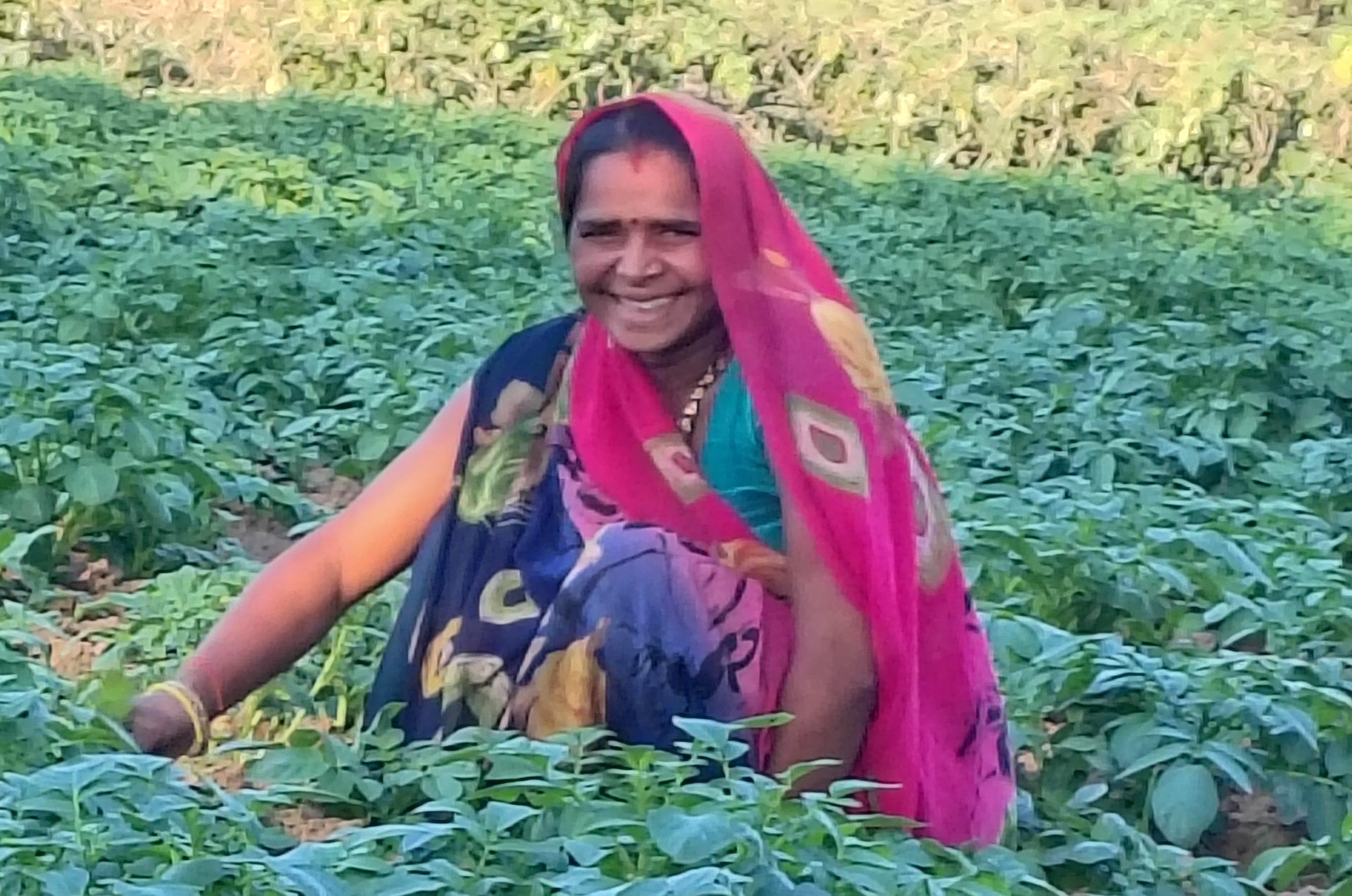
Agriculture in India has seen significant progress over the years. Yet, for many farmers in remote villages, these advancements remain out of reach due to limited awareness, resources and access to modern practices. Janki’s story highlights how DS Group’s CSR initiatives are bridging this gap by equipping farmers with the knowledge, skills and support needed to turn farming into a sustainable and dignified livelihood. Read this case study to understand how this transformation unfolded on the ground.
Understanding the Starting Point
In small villages such as Mau Masaniya in Madhya Pradesh, DS Group’s CSR team, in partnership with Manjari Foundation, is working to transform farmers’ lives through its Entrepreneurship Development Program.
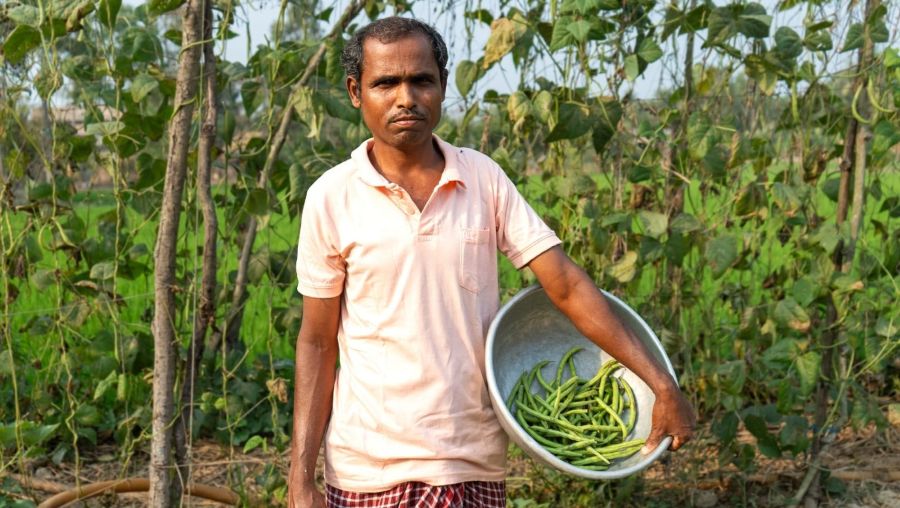
Janki Kushwaha, a farmer from Mau Masaniya, relied on traditional farming practices, including the use of outdated seeds that delivered low and uncertain returns. As a result, her seasonal earnings remained limited to around ₹5,000, which was insufficient to meet even the basic needs of her family of four. With only two acres of land and low returns on agricultural investments, Janki struggled to repay loans taken from relatives. This led to mounting debt, and she remained stuck in a cycle of borrowing from one lender to repay another.
Nearly 75% of farmers in Janki’s village face similar challenges in achieving financial stability. They depend on informal loans and have limited access to sustainable sources of income. In such contexts, interventions focused on skill development and livelihood enhancement prove critical.
Programme Design and CSR Vision
DS Group’s Entrepreneurship Development Program empowers rural and underserved communities across states such as Uttar Pradesh, Rajasthan and Madhya Pradesh. Aligned with the organisation’s focus on livelihood enhancement, the program begins with village-level surveys to identify potential entrepreneurs and understand local needs.
It offers a comprehensive support system that includes training, skill development, access to resources and equipment, financial support, market linkages, networking opportunities and ongoing guidance. Participants are supported in setting up viable businesses ranging from small retail shops to oil mills and food processing units.
Implemented by the CSR team in collaboration with Manjari Foundation, the program aligns closely with DS Group’s broader CSR vision of creating sustainable well-being by addressing economic, environmental and social challenges.
The Entrepreneurship Development Program focuses on livelihood enhancement, one of DS Group’s key CSR priorities. It enables rural communities to develop skills, start small enterprises, earn stable incomes and move towards financial independence. Through this approach, participants learn to use their resources effectively and take meaningful steps towards self-reliance.
At the community level, the initiative helps reduce migration, strengthens local economies and contributes to poverty reduction. Compared to traditional livelihood support models, this program creates long-term impact by enabling participants to become self-sufficient.
Implementation Model
Manjari Foundation is a registered non-profit organisation that works to empower women from marginalised rural communities and address issues of social injustice, poverty and exclusion. Its strong grassroots presence and expertise in women’s empowerment, entrepreneurship and community development make it a natural partner for DS Group.
When Janki was struggling to sustain her livelihood, field staff from Manjari Foundation visited her village and introduced the Entrepreneurship Development Program. Hoping to improve her situation, she chose to participate.
The training was conducted by Mr Harendra Sharma and Mr Harikant Sharma through four structured modules covering financial literacy, entrepreneurial thinking, peer learning and confidence building. While the core training lasted eight days, participants continued to receive support in the form of access to government schemes, basic resources and guidance until they were able to establish their enterprises.
This initiative treats farming as a business and provides end-to-end support. It also builds an entrepreneurial mindset and practical skills that lead to lasting change. The flexible training model is designed to respond to the specific needs of local communities.
Capacity Building and Behavioural Change
The Entrepreneurship Development Program that Janki participated in was designed to build both confidence and capability. During the training, she developed a new perspective on farming. She learned about financial planning, crop insurance, marketing and basic record-keeping, which helped her think more strategically.
“I realised farming was not just about growing crops. It could be managed and run like a business,” she recalls.
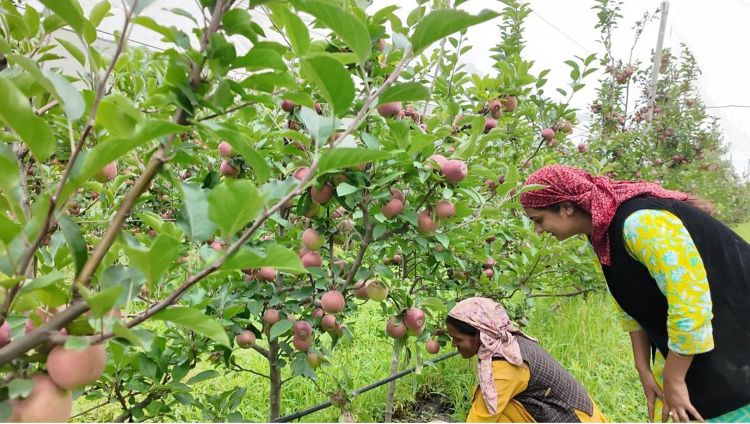
With these insights, Janki began cultivating vegetables on one acre of her land, while using the other acre for grains. She also adopted drip irrigation. Although the transition was initially challenging, it helped her conserve water, reduce weed growth and support denser plantation. Her improved financial literacy also gave her the confidence to engage with formal banking systems and manage loans more effectively.
Over time, her vegetable yield increased to nearly 40 quintals, including crops such as brinjal, tomato, onion and gourds. On the second acre, she adopted a three-crop cycle of pulses, oilseeds and wheat, producing 30 to 35 quintals annually.
Measurable Impact
The results of these changes were significant. Janki’s annual income, which was earlier limited to ₹60,000, increased to nearly ₹2.5 lakh during peak cycles. After deducting expenses, she now earns approximately ₹1,00,000 annually and has been able to save around ₹20,000.
Earlier, she relied only on weekly sales of brinjal for a steady cash flow. Following the intervention, the use of high-yield hybrid seeds, improved irrigation and better crop planning significantly enhanced her productivity and income.
Her increased earnings enabled her to repay old debts, invest in improved farming tools and support her children’s education and healthcare needs.
“The biggest change for me was learning how to plan. Earlier, I worried only about the next harvest. Today, I can think about the next year and the future of my children,” she shares.
Like Janki, other participating farmers also began adopting improved farming practices.
Sustainability and Scalability
The Entrepreneurship Development Program has enabled farmers to adopt practices that deliver long-term benefits. Participants diversified their crops, made better use of available land and improved overall agricultural productivity. At the same time, they built connections with vendors, gained access to government schemes, received essential resources and continued to receive mentoring support.
Peer learning emerged as a key strength of the program. Farmers regularly visited each other’s fields, exchanged ideas and held informal knowledge-sharing sessions, encouraging the adoption of best practices across the community.
The program also emphasises continuous mentoring, basic record-keeping and follow-up visits to address operational challenges. Together, these elements create a strong support system that promotes self-reliance, collective growth and long-term income stability.
Given its adaptable and community-focused design, the EDP model is highly scalable and can be replicated in other villages where agriculture remains the primary source of livelihood.
Community-Level Ripple Effect
Janki’s success has inspired other farmers in her village to rethink their approach to agriculture. Her journey sparked conversations around treating farming as an enterprise rather than merely a means of subsistence.
All nine participating farmers transitioned to more structured and market-oriented farming practices. Improvements in crop diversification, financial planning and irrigation methods led to increased productivity and higher seasonal incomes. In addition, at least 11 more farmers in the village adopted drip irrigation and began using hybrid seeds.
Janki’s journey reflects how DS Group’s CSR initiatives are redefining rural livelihoods by combining technical knowledge with entrepreneurship, enabling farmers to move from a cycle of debt to a path of dignity and stability.