
Children Matter International Forum 2026 Focuses on Youth Drug Prevention in Digital Age
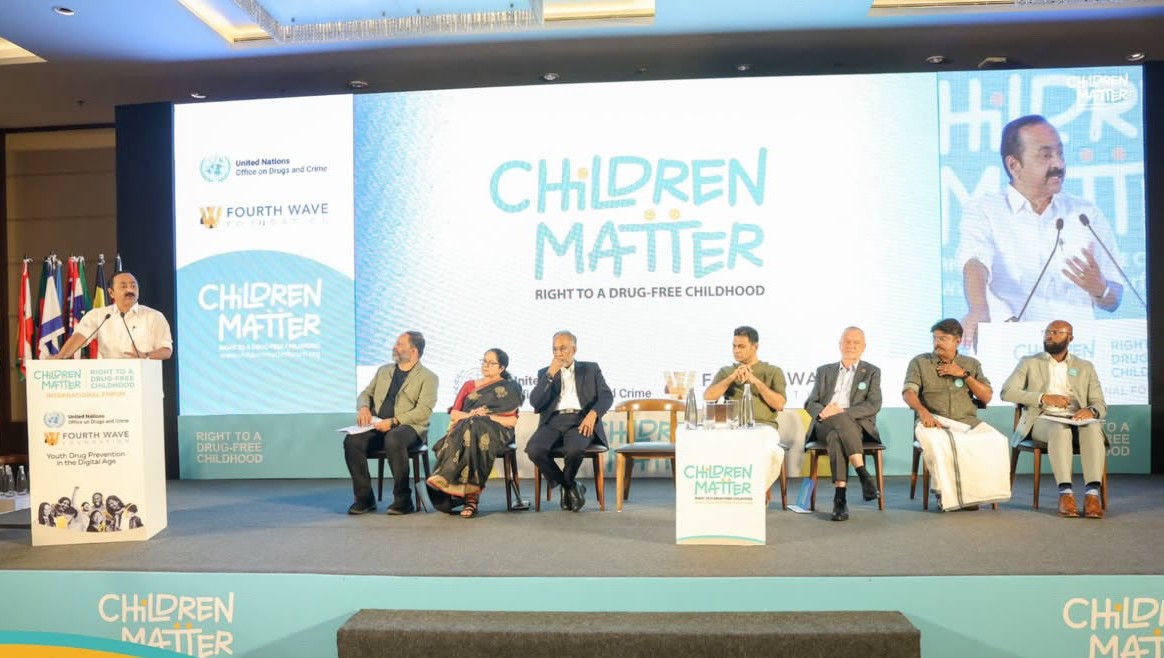
Bengaluru, November 16, 2026: The Children Matter International Forum (CMF 2026), jointly organised by the United Nations Office on Drugs and Crime (UNODC) and Fourth Wave Foundation (FWF), concluded its three-day international summit at Kochi Marriott Hotel on November 14. The forum brought together over 200 delegates, policymakers, educators, experts and youth representatives from 60 countries to discuss child protection and youth drug prevention in the digital age.
Held under the theme “Youth Drug Prevention in the Digital Age – Trends, Influence, Storytelling and Safe Spaces”, the forum focused on emerging challenges associated with children's increasing digital exposure, including online drug promotion, dark-web trafficking, algorithm-driven content and predatory marketing.
Discussions across plenary sessions, panel discussions and masterclasses examined the role of digital platforms, institutions, families and communities in preventing substance use among young people. The summit also highlighted findings indicating that children spend an average of eight hours online each day, while up to 76 per cent of substance-related social media content portrays drug use favourably.
S. D. Shibulal, Co-founder and former CEO of Infosys and Co-founder of Shibulal Family Philanthropic Initiatives, and Kumari Shibulal, Founder and Chairperson of Shibulal Family Philanthropic Initiatives, attended the conference as patrons of Project VENDA, the flagship substance use prevention initiative of Fourth Wave Foundation.
Addressing the gathering, Mrs. Kumari Shibulal, Founder and Chairperson of Shibulal Family Philanthropic Initiatives, said, "The United Nations tells us that about 331 million people used drugs in 2024, that is one third more than ten years ago. And those most at risk are the young. Here at home, India has more young people than any other country: over 25 crores between 15 and 24. That is our greatest strength. But it also means that when drugs reach our children, millions of families feel the pain."
During the summit's Gala Evening on November 13, S. D. Shibulal spoke about the responsibility of technology companies and institutions in ensuring children's safety in an increasingly connected world.
S.D Shibulal, Co-founder of Shibulal Family Philanthropic Initiatives and former CEO of Infosys, said, "As someone who been active in building this connected world, I feel a personal responsibility to help make it safe for our children in the future as the next wave is already here. Our children will grow up with artificial intelligence as a companion, a tutor, and sometimes a stranger in their pocket. We cannot wait ten years to ask what it is doing to them. Those of us who build and govern technology must put child safety into the design, not add it as an afterthought."
Project VENDA, Fourth Wave Foundation's flagship substance use prevention programme, has reached over 1.2 million children through its work with schools, communities and institutions. The initiative focuses on preventing substance use among children and young adults while promoting safe and drug-free environments.
Reflecting on the need for collective action, Diana Vincent, Founder & Director, Fourth Wave Foundation, India, said, “The time to act is now. We cannot afford to treat child protection and drug prevention as conversations for another day. Governments, technology platforms, educators, families and communities must come together, take accountability and translate commitments into concrete action. We must listen to young people, equip them with the knowledge and resilience to navigate the digital world, and create safe spaces where they can thrive. Protecting our children is a shared responsibility, and every stakeholder must play their part in ensuring a safe, healthy and drug-free future for every child.”
The three-day forum concluded with discussions on collaborative approaches to youth substance use prevention, emphasising digital awareness, responsible media practices, institutional accountability and greater participation of young people in decision-making processes.