

CII IGBC Green Bengal Summit 2026 Focuses on Climate-Resilient Urban Development
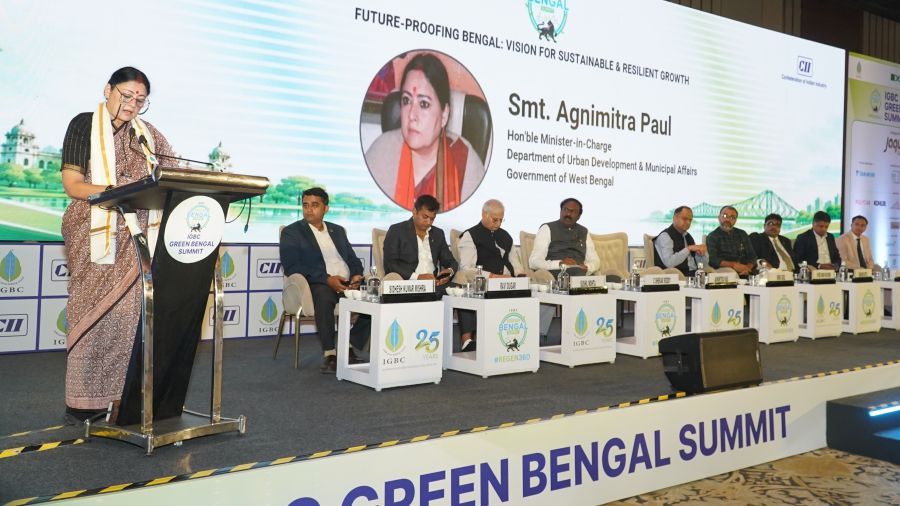
Kolkata, November 14, 2026: The Confederation of Indian Industry’s Indian Green Building Council (CII IGBC) organised the Green Bengal Summit 2026 in Kolkata, bringing together government representatives, industry leaders, urban planners, architects, developers and sustainability experts to discuss sustainable and climate-resilient development in West Bengal.
Held at Taj Taal Kutir under the theme “Future-Proofing Bengal: Vision for Sustainable & Resilient Growth”, the summit focused on integrated climate-resilient development, urban regeneration and Net Zero carbon pathways. The discussions examined how urbanisation, infrastructure development, housing and industrial growth can be aligned with environmental sustainability.
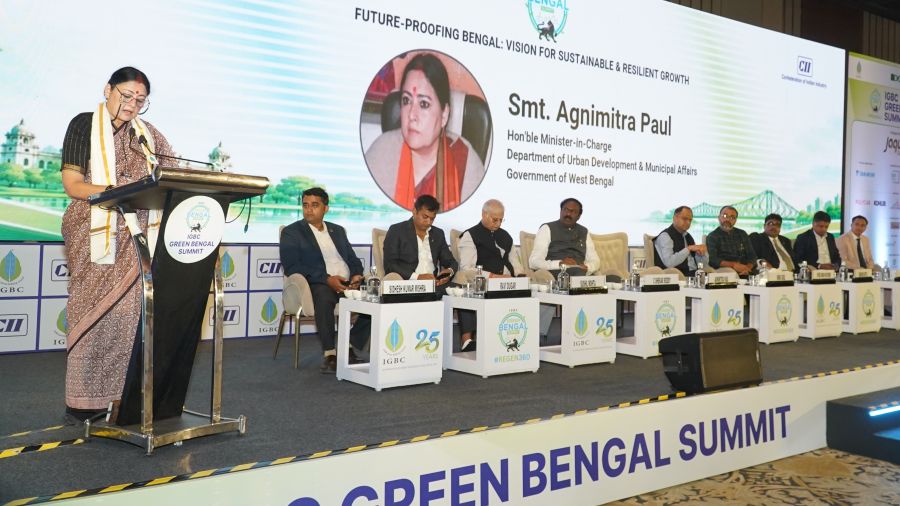
The inaugural session was attended by Smt. Agnimitra Paul, Hon’ble Minister-in-Charge, Department of Urban Development & Municipal Affairs, Government of West Bengal; Mr. Vibhu Goel, IAS, Managing Director, WBHIDCO Limited; Mr. Debashis Dutta, Chairman, CII Eastern Region Committee on Logistics & Infrastructure and Immediate Past Chairman, CII West Bengal State Council; Dr. Shivraj Dhaka, Principal Counsellor, CII Indian Green Building Council; Mr. Apurva Salarpuria, President, CREDAI Kolkata and Deputy Managing Director, Salarpuria Group; Mr. Sushil Mohta, Immediate Past Chairman, IGBC Kolkata, President, CREDAI Bengal and Chairman, Merlin Group; Mr. C Shekar Reddy, National Chairman, CII Indian Green Building Council; Ar. Vivek Singh Rathore, Chairman, IGBC Kolkata Chapter and Founder & Principal, The Salient; and Mr. Ravi Dugar, Co-Chairman, IGBC Kolkata and Director, PS Group.
Addressing the summit, Smt. Agnimitra Paul highlighted the need to integrate environmental considerations into West Bengal’s urban development plans, particularly in response to rapid urbanisation, changing rainfall patterns, urban flooding, heatwaves and deteriorating air quality. She said, “Economic development and ecological responsibility must move hand in hand. Future-proofing Bengal requires us to ensure that every building, road and township planned today is equipped to withstand the environmental realities of tomorrow. Our focus is on taking the green city blueprint beyond Kolkata to emerging urban centres such as Durgapur, Asansol, Howrah and Siliguri. We must also strengthen municipal waste management, promote circular construction practices, conserve urban wetlands and water bodies, and accelerate the adoption of energy-efficient and Net Zero buildings. The government alone cannot achieve this transformation. Industry, institutions, developers and citizens must become active partners in building a greener and more resilient Bengal.”
Mr. Vibhu Goel, IAS, Managing Director, WBHIDCO Limited, highlighted the importance of incorporating climate resilience into urban planning, citing New Town, Kolkata, as an example of an evolving urban ecosystem. He said, “Future-proofing is no longer an additional feature of urban development; it is an essential economic and environmental prerequisite. At WBHIDCO, we recognised the importance of moving beyond conventional urban planning towards integrated resilience, urban regeneration and Net Zero pathways. Our approach included adopting Sponge City principles for stormwater management, strengthening green infrastructure, promoting passive cooling and encouraging the retrofitting of existing buildings. We also emphasized the need to address embodied carbon in construction materials and accelerate renewable energy integration. Building a future-ready Bengal required a strong partnership between the government, IGBC, architects, engineers, developers and financial institutions.”
Mr. C Shekar Reddy, National Chairman, CII Indian Green Building Council, discussed opportunities to expand green building adoption through policy support, incentives and industry participation. He said, “West Bengal has demonstrated the potential of green development through initiatives such as New Town, Kolkata. The next step is to expand this approach from individual buildings and townships to larger neighbourhood ecosystems, while taking the green building movement to Tier-II and Tier-III cities. There is considerable scope to accelerate the adoption of green building ratings through appropriate incentives, particularly for the manufacturing sector, MSMEs and affordable housing. Retrofitting existing buildings, promoting Net Zero developments, embracing emerging technologies and encouraging young innovators will be critical to this transition. We believe that every stakeholder participating in this movement can contribute towards developing at least one Net Zero or green retrofit project over the next 12 months. Together, we can position West Bengal as a leading example of sustainable development.”
The summit also featured a special address by Shri Tapas Roy, Hon’ble Minister-in-Charge, Department of Industry, Commerce & Enterprises; Department of Public Enterprises & Industrial Reconstruction; and Department of Non-Conventional & Renewable Energy Sources, Government of West Bengal. He highlighted the need to balance industrial expansion with environmental responsibility and called for greater participation from businesses, institutions and communities. He said, “As West Bengal continued to strengthen its position as a preferred destination for industries, investments and economic opportunities, sustainable and inclusive growth remained equally important. Industrial development and environmental responsibility must go hand in hand. Sustainability should not be viewed merely as a regulatory obligation but as an opportunity for innovation, efficiency, competitiveness and long-term value creation. Initiatives such as ‘My City, I Care’ demonstrated how industry bodies, institutions, communities and individual citizens could come together to create meaningful change. The participation of young innovators and businesses will be particularly important in translating sustainability ambitions into action and building cities that offer a better quality of life for future generations.”
The programme included technical sessions on sustainable cities and resilient urban growth, green retrofits for existing buildings, sustainable construction materials, energy and water efficiency, and India’s Net Zero mission. A special plenary examined the challenges and opportunities associated with advancing Net Zero development in West Bengal.
A dedicated session, “My City, I Care – Innovator’s Showcase”, featured grassroots solutions from the Green Bengal Innovation Challenge. Ten shortlisted ideas were presented, with the top five showcased and winners recognised in the presence of government and industry representatives. Shri Tapas Roy attended the session as Guest of Honour.
The event also hosted the Green Crusaders Awards 2026, which recognised projects and project teams participating in IGBC’s special registration initiative. The awards acknowledged the contributions of project owners, developers, architects, consultants and other stakeholders towards promoting green building practices in the state.
Through the Green Bengal Summit 2026, CII IGBC provided a platform for government, industry, developers, technology providers and citizens to exchange ideas and discuss ways to make West Bengal’s built environment more sustainable, resource-efficient and climate-resilient.







.jpg)
.jpg)