

Blue Planet Environmental Solutions: Embedding Circularity, Climate Action and ESG into Business Growth
Waste management is increasingly being viewed through the wider lens of resource efficiency, climate action and long term business resilience. The shift from treating waste as an end point to recognising its potential for material recovery, energy generation, land restoration and economic value is also reshaping the way organisations approach sustainability.
For Blue Planet Environmental Solutions, this approach is reflected in its first Annual Sustainability Report, which establishes an ESG baseline across operations in 13 countries. The report brings together environmental, social and operational indicators, including 8.92 million tonnes of waste processed, 1.24 million tonnes of estimated avoided CO2e emissions and 298.53 acres of land reclaimed across two reporting years. It also places greater emphasis on data quality, independent assurance, occupational safety, supply chain accountability and consistency across markets.
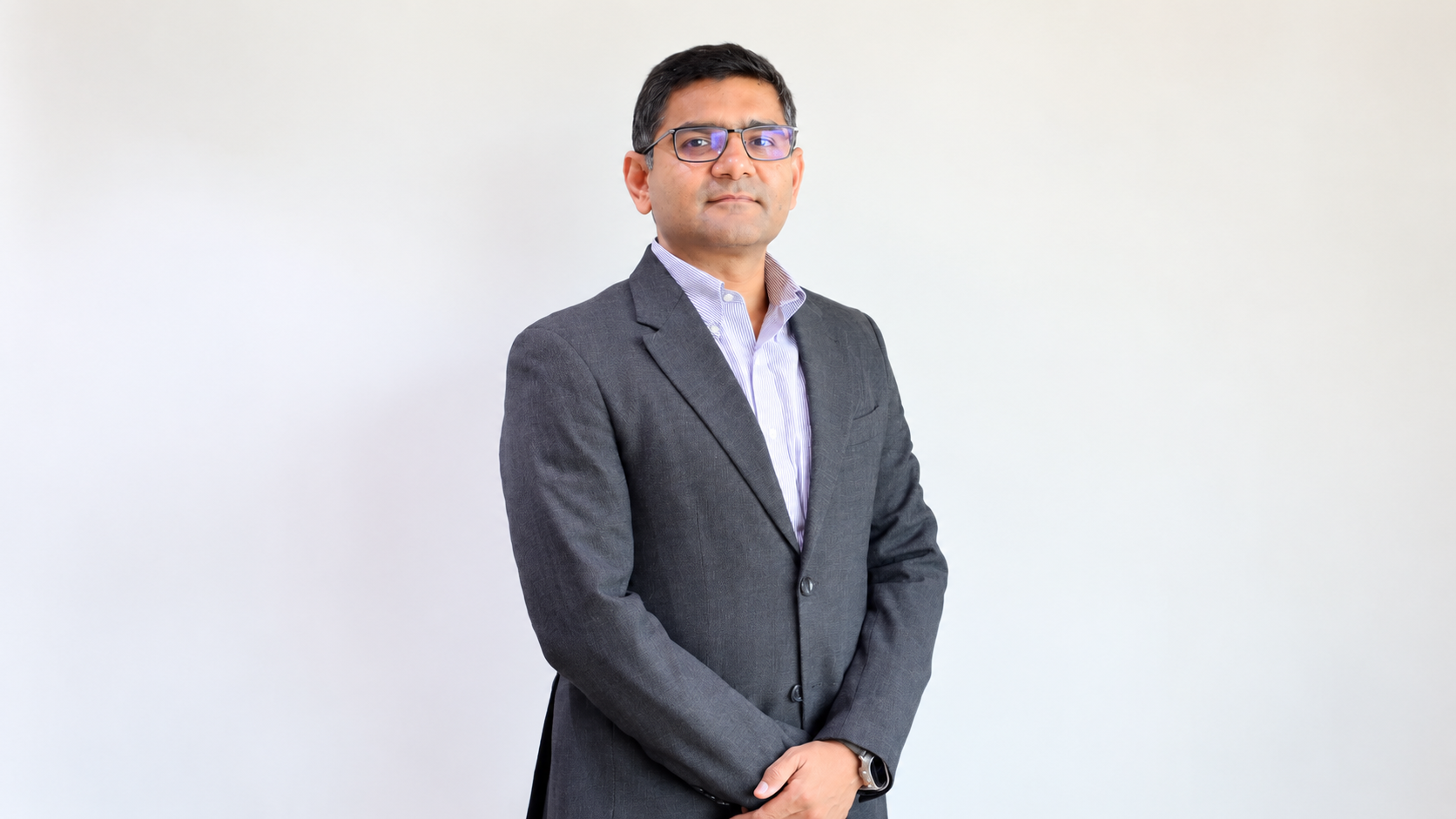
In this interaction, Mr. Prashant Singh, Founder and CEO, Blue Planet Environmental Solutions, discusses how businesses can move ESG beyond compliance and reporting, the role of circular economy models in resource and climate strategies, the complexities of legacy waste and e waste, and the systems needed to make sustainability performance more measurable, credible and embedded in business decision making.
Scroll down to read the full interview:
Q. As sustainability moves from being a corporate aspiration to a measure of business resilience and accountability, how do you believe companies should rethink the role of ESG within their core business strategy?
A. For me, the biggest change is that sustainability can no longer sit on the sidelines of business strategy. It has to be part of how a company thinks about growth, risk, investment and long-term competitiveness.
Businesses today operate in a very different environment. Resources are becoming more constrained, regulations are evolving, customers and investors are asking harder questions, and climate-related risks are increasingly affecting operations and supply chains. In that context, ESG is not simply about demonstrating responsibility; it is about building a business that can remain relevant and resilient over the long term.
At Blue Planet, we see this very practically. Waste is often viewed as a cost or an environmental problem. But when you build the right systems around it, the same waste can become a source of recovered materials, energy and economic value. That is where sustainability and business strategy begin to reinforce each other.
I believe the companies that will lead in the next decade will be those that can create economic value while using resources more intelligently and taking responsibility for their wider impact.
Q. From your experience at Blue Planet Environmental Solutions, what distinguishes a sustainability strategy that genuinely creates long term social and environmental value from one that remains largely compliance or reporting driven?
A. The difference is whether sustainability changes what a company actually does.
A compliance-led approach can produce policies, targets and reports, but long-term value is created when sustainability influences everyday business decisions: what you invest in, how you design operations, how efficiently you use resources and how you measure outcomes.
At Blue Planet, our starting point has always been the problem we are trying to solve. Waste has environmental consequences, but it also contains materials and resources that still have value. Whether we are remediating a legacy dumpsite, recovering materials, processing e-waste or converting organic waste into energy, the objective is to create an outcome that is environmentally meaningful and economically viable.
That last part is important. Solutions need to work at scale, and scale is difficult to achieve if sustainability depends permanently on a premium or remains disconnected from commercial realities.
For me, a strong sustainability strategy is therefore one where environmental and social value is built into the economics of the business. Reporting should demonstrate that progress; it should not be the reason the progress exists.
Q. Blue Planet has now published its first Annual Sustainability Report, establishing a formal ESG baseline across operations in 13 countries. What prompted the company to undertake this exercise at this particular stage of its growth, and what did the process reveal about where the organisation stands today?
A. Blue Planet has grown significantly across businesses, technologies and markets. At this stage of our journey, we felt it was important to bring greater structure and transparency to how we measure the impact we are creating across the Group.
Our first Annual Sustainability Report gives us that baseline. It brings together two reporting years and allows us to look beyond individual projects to understand our performance at an organisational level. Across that period, we processed 8.92 million tonnes of waste, avoided an estimated 1.24 million tonnes of CO2e and reclaimed 298.53 acres across 35 sites.
The exercise was valuable not only because it showed us the scale we have reached, but because it made clear where we need to become stronger. As an organisation operating across different markets and business models, consistency of data, processes and ESG practices becomes increasingly important as we grow.
So I see this first report as a starting point rather than an achievement in itself. It gives us a clearer view of where we stand today and a stronger basis from which to set priorities, improve performance and hold ourselves accountable going forward.
Q. The report indicates that Blue Planet processed 8.92 million tonnes of waste across two reporting years. What does this scale tell us about the untapped potential of the circular economy, particularly in converting waste from an environmental liability into a resource and economic opportunity?
A. The 8.92 million tonnes is significant, but what it really tells us is how large the opportunity still is.
For decades, the dominant approach to waste has been linear: we consume something, discard it and then spend money managing the consequences. The circular economy asks a different question: what value is still present in that material, and how do we keep it in productive use?
Once you begin looking at waste through that lens, the economics change. Materials can be recovered and returned to productive use, organic waste can become energy, electronic assets can be refurbished or recycled, and land occupied by legacy waste can be restored for future use.
We see this across our operations. The value is not limited to reducing the amount of waste going to disposal. Circular systems can reduce dependence on virgin resources, create secondary raw-material markets, support new businesses and jobs, and in many cases lower emissions.
The opportunity now is to build the infrastructure, markets and policy frameworks that allow these solutions to move from individual projects to scale. Waste is only a liability when we fail to recognise and recover the value within it.
Q. The company estimates 1.24 million tCO2e in avoided emissions through its operations. How does Blue Planet approach the challenge of translating waste management interventions into credible climate outcomes, and what would you like stakeholders to understand about the relationship between waste diversion and decarbonisation?
A. Waste and climate are much more closely connected than they are often treated.
When waste is landfilled or poorly managed, the impact does not stop at the disposal site. Organic waste can generate methane, valuable materials are lost, and replacing those materials with virgin resources creates additional emissions across extraction, manufacturing and transportation.
So when we talk about waste diversion, we are also talking about avoiding emissions at different points in the value chain. The climate benefit, however, has to be measured credibly. We use defined methodologies and underlying operational data to quantify relevant outcomes, and selected ESG indicators in our Sustainability Report have undergone independent limited assurance.
Our reported estimate of 1.24 million tonnes of CO2e avoided across the two reporting years helps us understand the climate dimension of our operations, but we are equally focused on continuing to strengthen the quality and consistency of the data behind these numbers.
The larger point is that decarbonisation cannot be addressed only through energy. How we consume materials, manage waste and keep resources circulating is also part of the climate equation. A more circular economy can therefore become an important contributor to broader decarbonisation efforts.
Q. Legacy waste remains one of the most complex environmental challenges because it requires addressing pollution accumulated over years or decades. With 5.10 million tonnes of legacy waste processed in FY26, what have you learned about the environmental, social and economic dimensions of restoring these sites, and where do you see the greatest opportunity for collaboration with governments and industry?
A. Legacy dumpsites are not simply waste-management problems. They are land, public-health, environmental and urban-development challenges that have accumulated over many years.
When a dumpsite is scientifically remediated, the impact can extend well beyond removing waste. You can reduce environmental risks, recover materials, reclaim valuable land and improve conditions for communities living around these sites. In dense and rapidly growing cities, the value of recovering land itself can be substantial.
Processing 5.10 million tonnes of legacy waste has reinforced one lesson for us: these projects require both technical capability and a strong implementation ecosystem. Municipal bodies and governments provide the policy direction and long-term vision; private-sector partners bring technology, execution capability, investment and market linkages for recovered materials.
The greatest opportunity is to move from treating dumpsite remediation as a one-time clean-up exercise to integrating it with the city's wider circular-economy and waste-management strategy. We need to address the accumulated waste, but at the same time strengthen systems for current waste so that we are not recreating the same problem for the next generation.
Q. The report highlights 20,060 tonnes of e waste processed in FY26. Given the rapid growth of electronic consumption, how should businesses, policymakers and consumers rethink e waste as a circular economy opportunity rather than simply a disposal challenge?
A. E-waste is a very good example of why the language of “waste” can sometimes be misleading. An end-of-use electronic product still contains materials, components and, in many cases, an asset that can have a second productive life.
The first priority should therefore not automatically be recycling. Where an asset can be responsibly refurbished and returned to use, we can extend its life and preserve more of the value already embedded in it. When reuse is no longer viable, responsible recycling can recover materials and ensure hazardous components are handled appropriately.
For this system to work at scale, every stakeholder has a role. Producers need to think about lifecycle responsibility and traceability. Policymakers can strengthen formal collection and recycling ecosystems. Businesses should have clear processes for retiring IT and electronic assets, and consumers need convenient, trusted channels for returning products.
For us, processing 20,060 tonnes of e-waste in FY26 is part of a larger opportunity. As electronic consumption grows, India and other markets can build strong circular value chains around collection, refurbishment, component recovery and recycling. The objective should be to extract the maximum useful life and value from an electronic asset before it becomes waste.
Q. Independent third party audits and limited assurance under ISAE 3000 Revised have been used for selected ESG indicators. In your view, how important is independent assurance in building trust in sustainability reporting, and what should organisations do to ensure that ESG data is treated with the same rigour as financial or operational data?
A. Trust in sustainability reporting ultimately depends on the quality of the data behind it.
As ESG information increasingly influences investment, procurement and business decisions, companies cannot treat sustainability data as something less rigorous than financial or operational information. The systems may still be evolving, but the expectation should be the same: clear definitions, reliable source data, internal ownership, documentation and appropriate controls.
For our first Sustainability Report, we chose to obtain independent limited assurance under ISAE 3000 (Revised) for selected ESG indicators because external scrutiny is an important part of building credibility. It also helps the organisation itself. The assurance process tests how information is collected and consolidated and can identify areas where systems need to mature.
At the same time, assurance should not become a box-ticking exercise. The real work happens throughout the year, at operating sites and within business teams where the data originates.
Our focus going forward is to make ESG measurement increasingly embedded in normal management processes. When sustainability information is reviewed with the same discipline as other business performance indicators, reporting becomes more useful not only to external stakeholders but also to management in making better decisions.
Q. Blue Planet reports 100% compliance across 103 Environmental and Social Action Plan items while employing more than 4,000 employees and workers across the reporting period. How is the organisation embedding ESG into occupational safety, workforce practices and supply chain accountability, and what metrics will you prioritise to demonstrate progress in these areas?
A. As our operations grow, our responsibility to the people who work with us has to grow with them. For a business like ours, ESG cannot be separated from what happens every day at our sites.
The 100% compliance across 103 Environmental and Social Action Plan items is encouraging, but compliance is the baseline. The larger objective is to build consistent practices around occupational health and safety, employee welfare, training, grievance mechanisms and responsible operating standards across the Group.
Safety is particularly important because many of our operations are execution-intensive. We are strengthening training, site-level processes, incident reporting and accountability so that safety is treated as an operating discipline, not simply an EHS requirement.
The same principle applies to our supply chain. As we mature, we want ESG expectations to become more systematic in how suppliers and partners are evaluated and engaged.
Going forward, I would like us to demonstrate progress through both leading and outcome-based indicators: safety training and coverage, incident and lost-time trends, workforce development, grievance resolution, employee well-being and the extent to which ESG requirements are embedded across our supplier base. Consistency across markets will be as important as the individual numbers.
Q. Looking ahead, what are Blue Planet’s most important ESG priorities for the next phase of its growth across climate action, resource efficiency, occupational safety, supply chain ESG and consistency of practices across markets, and what measurable outcomes should stakeholders expect to see in the company’s next sustainability report?
A. Our next phase is about scaling with greater consistency and discipline.
On the environmental side, we want to continue increasing the amount of waste and resources we can bring back into productive circulation while strengthening how we measure the associated climate outcomes. Resource efficiency and emissions will remain important, but we also want to improve the quality, comparability and granularity of our data across businesses.
On the social side, occupational health and safety will remain a major priority. As we grow, we need strong standards that are understood and applied consistently, irrespective of geography or business unit.
Supply chain ESG is another area where we see significant opportunity. Our impact is influenced not only by our own operations but also by the ecosystem of suppliers, contractors and partners around us, so we want to progressively strengthen expectations and visibility across that network.
In the next report, stakeholders should expect to see clearer year-on-year comparability, stronger performance indicators and greater consistency across markets. The objective is not simply to report more data. It is to use better data to improve how we operate, identify gaps earlier and demonstrate measurable progress against the baseline we have now established.





.png)