
94% of Business Leaders Report Climate-Related Financial Losses
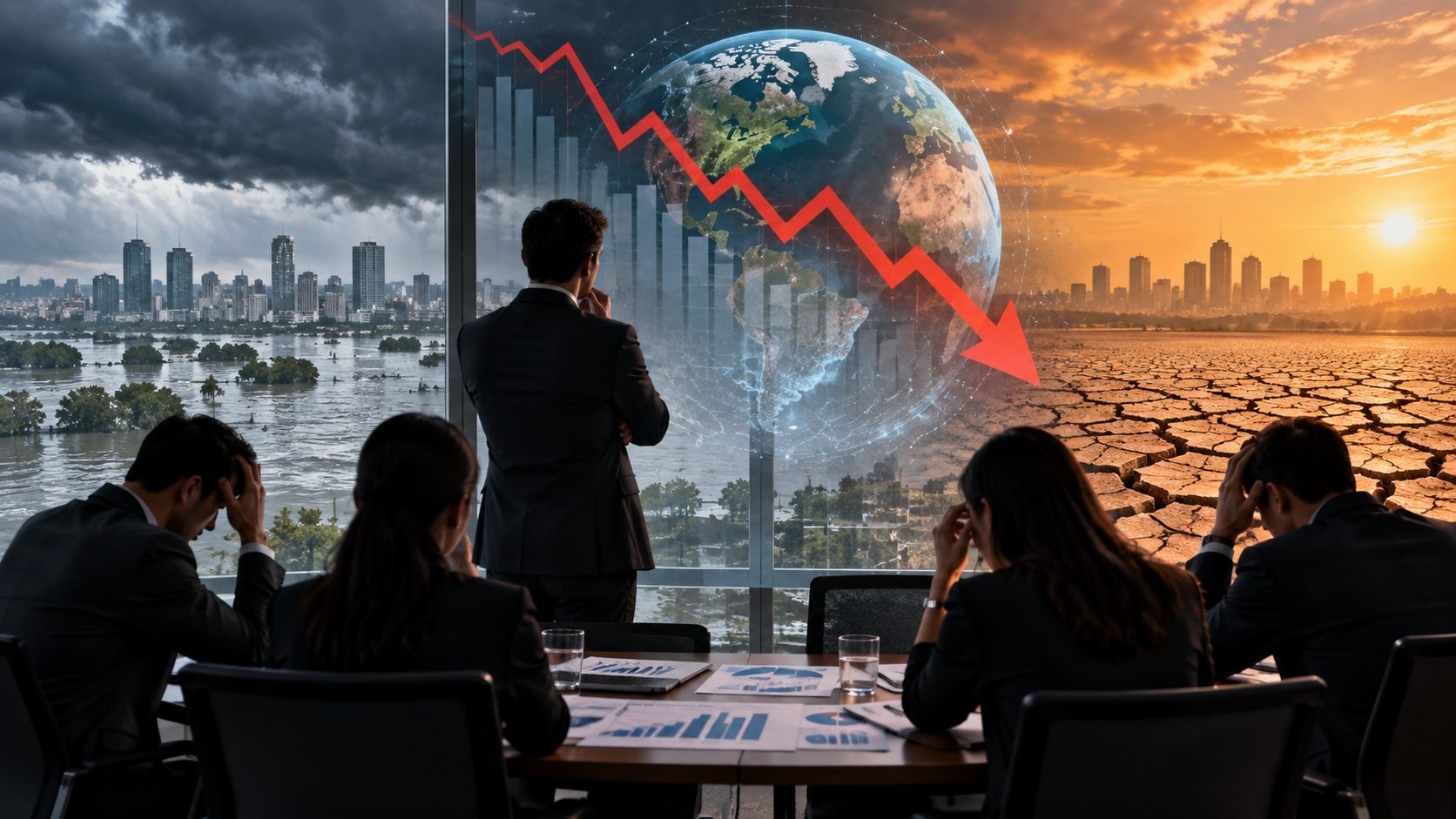
Mumbai, September 9, 2026: Climate-related disruption is already affecting business finances, with 94% of senior business leaders reporting financial losses for their companies over the past two years, according to the Sustainability in Action 2026 report by Sweep and Capgemini.
The report, based on a survey of 1,000 senior business leaders across the United States, United Kingdom, France, the DACH region and the Nordics, found that 30% of respondents reported climate-related financial setbacks of more than $1 million. At the same time, 79% said their sustainability data was insufficient to accurately inform wider business strategy because it was not adequately integrated across their organisations.
The findings indicate a decline in confidence in sustainability data compared with 2024. While 53% of respondents in the earlier study said their data lacked the reliability needed to inform business strategy, that proportion rose to 79% in 2026.
The report said sustainability data remains siloed, incomplete or inconsistent across business systems, even as companies increasingly use it for decisions related to costs, risk mitigation, supply chains, procurement and investment.
“Sustainability has not fallen off the business agenda, in fact the opposite is true,” said Rachel Delacour, co-founder and CEO of Sweep. “There is a growing risk to companies as climate disruption and geopolitical tensions continue to impact supply chains, costs and investment decisions faster than the data systems built to help manage them.”
Despite the challenges, 85% of respondents said their businesses need to transform for the low-carbon economy, while 86% viewed the transition as a growth opportunity rather than an inhibitor.
AI is also gaining importance in sustainability-related decision-making. According to the report, 79% of respondents said AI adoption had increased investment in sustainability. Reported benefits included improved data accuracy and audit-readiness, greater access to investment and reduced time spent collecting and processing data.
“*Resilience is no longer just about managing risk," said **Cyril Garcia, Global Head of Sustainability Services, Corporate Responsibility and member of the Group Executive Board at Capgemini. “It is about anticipating disruption and acting with confidence. Trusted, connected data across the value chain is the foundation that enables AI to improve supply chain performance, advance sustainability outcomes, and create sustained competitive advantage for organisations.”
“Business leaders are under pressure to respond to the huge financial losses fueled by geopolitical changes, extreme weather events and uncertain economic conditions," adds Delacour. "Sustainability data is an answer to all of that, as it provides insights on where these risks are hitting the business, what it is costing them, and where to act first."
The report said businesses with integrated data infrastructure could be better positioned to manage climate-related disruption, meet disclosure requirements and use sustainability information in broader business decision-making.