Work in the Age of AI: LinkedIn’s View on India’s Evolving Skills Landscape
As artificial intelligence rapidly reshapes the contours of work, India finds itself at a pivotal moment- balancing opportunity, disruption, and the urgent need for continuous skilling. No longer confined to technology roles, AI is permeating sectors as diverse as manufacturing, healthcare, financial services, and retail, fundamentally redefining how work is performed and what it means to be a high-value professional. In this evolving landscape, the emphasis is shifting from static expertise to dynamic, cross-functional “skill stacking,” where technological fluency is complemented by human-centric capabilities such as critical thinking, communication, and adaptability.
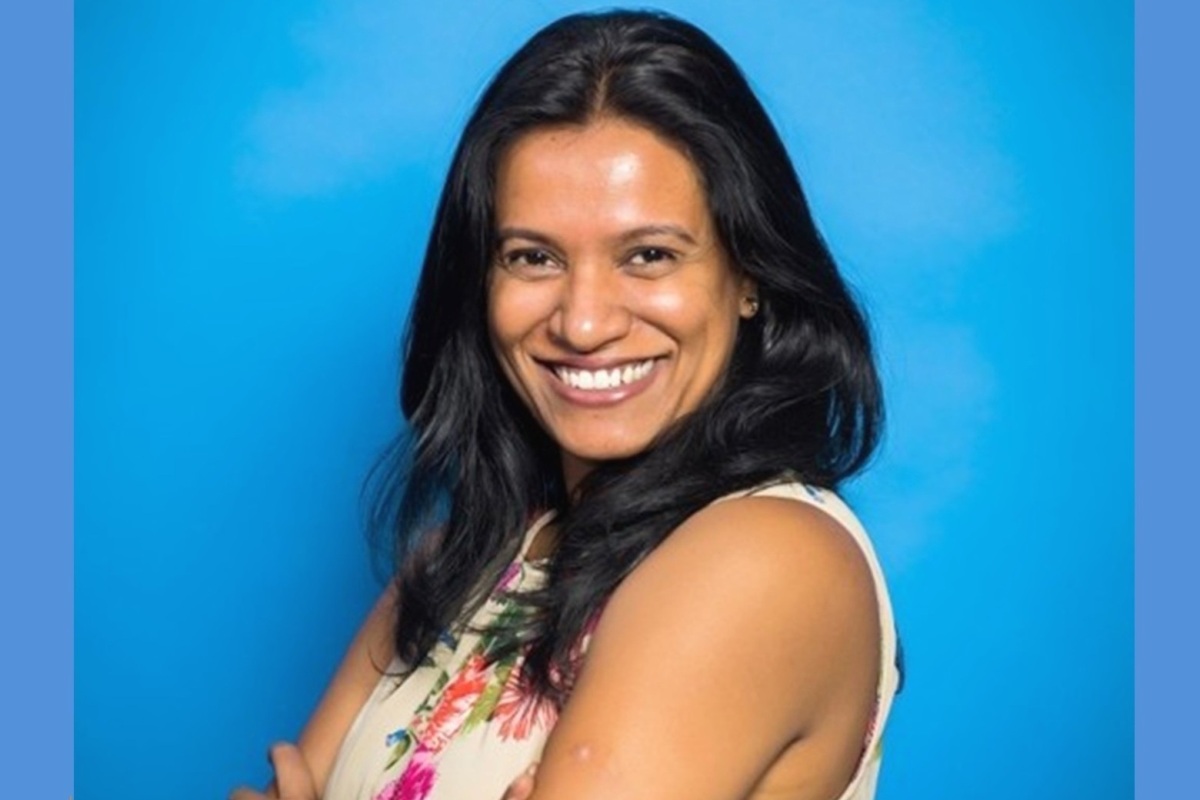
In this insightful conversation with TheCSRUniverse, Susan Mathew, Director–HR, LinkedIn India, draws on the platform’s extensive labour market data to unpack how AI is transforming job roles, hiring trends, and workforce expectations. She highlights emerging hybrid roles, the growing importance of skills-first hiring, and the dual imperative of reskilling and inclusion. The discussion also explores how organisations, educators, and policymakers can collaborate to build a future-ready workforce which is not only competitive but also equitable in an AI-driven world.
Read the full interview here:
Q. From LinkedIn's labour market insights, which sectors in India are currently witnessing the fastest adoption of AI, and how is this beginning to reshape job roles?
A. AI is starting to shape work across sectors, not just in technology heavy environments. We are seeing it influence how work gets done in manufacturing, financial services, healthcare, retail and professional services. The important shift is not simply that companies are adopting new tools. It is that the definition of a strong professional is changing.
Our Skills on the Rise 2026 data shows that AI related capabilities are becoming relevant across functions such as sales, marketing, HR, education and finance. In practical terms, that means more professionals are expected to use AI to work faster, communicate better, analyse information more quickly and make smarter decisions.
What is being reshaped is not only the role, but the value attached to the role. When routine work gets automated, the premium moves to judgment, problem solving, communication and adaptability. In many ways, AI is helping us be more human at work. And the people pulling ahead in these times are what I like to call “skill stackers” – those who are continuously building capabilities across technology, business and leadership rather than relying on a single expertise.
Q. Are you observing early signals of AI-led disruption or displacement in specific job categories, particularly entry-level or routine roles?
A. The most significant shift we are seeing today is in how roles are being redesigned and how expectations of professional contribution are evolving across career stages. A shift of this magnitude – as we’ve seen in the past as well – is bound to cause some anxiety. Our data reveals that 78% of early and mid-career professionals feeling that the job search has become tougher. But this shift is less about opportunity disappearing and more about expectations evolving.
What’s also changing is the hiring equation. Applications per open role have more than doubled since early 2022. With an increasingly large number of applications, recruiters, today, are facing a volume-quality mismatch. This means professionals need to upskill more consistently and signal their capabilities more clearly than before. In a more competitive and AI-shaped job market, the real differentiator will be professionals who can pair technological fluency with people-focused skills and adaptability.
Q. Do LinkedIn's data insights suggest that India's reskilling efforts are keeping pace with the speed of AI-driven workplace change? Where do the biggest gaps currently lie?
A. Across industries, we are seeing encouraging signals that professionals are taking ownership of their development. Nearly 31% of professionals in India are actively learning in-demand skills such as AI to stay competitive. This reflects a growing awareness that skills are becoming the most valuable currency in the labour market. However, the critical bridge is the one between learning a tool and applying it to solve a meaningful problem. Strategic capability isn't just about knowing how to use AI; it's about knowing why and where to apply it to drive tangible business impact.
This is where structured learning ecosystems play an important role. LinkedIn Learning with its over 24,500 courses, is helpful for professionals looking to level up. More importantly, AI-powered coaching helps professionals discover personalised learning pathways aligned with their roles and career goals.
The onus to build a resilient workforce also lies with employers. Organisations making the fastest progress are those embedding learning into everyday work. When skilling becomes part of how work gets done rather than a separate activity, the workforce evolves alongside technology.
Q. As AI creates new opportunities, which emerging job roles and skill clusters are seeing the fastest growth, and what should professionals prioritise to stay relevant?
A. One of the most interesting shifts we are observing is that the fastest-growing roles are no longer defined by a single capability. They are defined by combinations of skills. Our Jobs on the Rise 2026 report reveals that the strongest demand is for professionals who blend AI fluency with strategic, real-world application. While AI-first roles like Prompt Engineer and AI Engineer continue to surge, a more significant signal is the rise of hybrid roles that bridge technical expertise with strategic vision. Software engineers are now expected to operate with greater autonomy, and strategic advisors are valued for their ability to navigate complex digital transformations.
To stay relevant, professionals shouldn’t focus on mastering a single AI tool but to pair broad AI literacy with soft skills such as critical thinking, creative problem-solving, and communication. The market isn't focused on specialists, it's rewarding versatile thinkers who can leverage technology to solve business problems in new and innovative ways.
Q. How are companies in India approaching workforce transition? Are they investing more in reskilling existing employees or hiring new AI-ready talent?
A. What we are seeing across organisations is a balanced strategy. Companies are bringing in specialised AI talent where necessary, but they are equally focused on reskilling their existing workforce. Leaders increasingly recognise that AI capability cannot sit in isolated teams; it needs to be distributed across the organisation.
This is accelerating the shift toward skills-first hiring, where demonstrated capabilities matter more than linear career paths. Employers are looking beyond job titles to understand what people can actually do and how quickly they can learn. At the same time, most forward-looking companies now treat reskilling not as a one-time initiative but as an enduring strategic capability that allows their workforce to evolve in lockstep with technology.
Q. From a workforce inclusion perspective, what risks do you see for vulnerable groups such as early-career professionals, women returning to work, or workers in routine service roles as AI adoption accelerates?
A. AI certainly brings change, but when implemented thoughtfully it can also become a powerful force for inclusion. This is especially true for women professionals re-entering the workforce, who our data shows are 14% less likely to have strong professional networks in India. AI-powered tools can bypass these network-based barriers by making talent visible in new ways, ensuring that true potential is not overlooked because of a career break or a non-traditional resume.
The key is ensuring equitable access and designing these systems with intention. For those at the start of their careers, AI can guide their development meaningfully. For professionals navigating shifts in their roles, it opens clear and accessible pathways to gain the skills they need for what's next. When we are deliberate in how we build and apply these tools, AI becomes more than a driver of productivity, it becomes a powerful force for inclusion, creating and expanding opportunities for all.
Q. What role can digital learning platforms and professional networks like LinkedIn play in helping workers anticipate and prepare for job disruptions?
A. Professionals recognise that AI is reshaping the world of work, but it’s often difficult to translate that change into what it means for their own careers. At LinkedIn, our goal is to close that gap. With a professional community of over 1.3 million members, we surface real-time insights into how jobs and skills are evolving – from the capabilities that are in demand to the roles emerging across industries. This helps turn professional uncertainty into the confidence needed to move forward.
We’re also continuously innovating to equip professionals with tools that help them navigate a dynamic job market. Our AI-powered job search builds on this by letting professionals describe what they want in their own words, uncovering opportunities beyond rigid titles that they might not have considered. Features like Job Match then show how their existing skills align with what employers are looking for, making it easier to identify where they already have an advantage and where they may want to upskill. Where gaps emerge, LinkedIn Learning helps professionals build the skills needed for their next step through personalised recommendations. When people can see their next opportunity, build and showcase the right skills for it, they are no longer just reacting to change, they are in a position to shape their own futures with purpose and confidence.
Q. How should policymakers, educational institutions, and industry collaborate to ensure that AI adoption strengthens India’s workforce competitiveness rather than widening skill inequalities?
A. AI will strengthen India’s workforce competitiveness only if access to skills evolves as quickly as technology itself. In India, job skills are expected to change by 75% by 2030, which means preparing people for the future of work cannot be the responsibility of any single institution.
A collaborative, skills-first ecosystem is essential and something policymakers, educators, and the industry at large need to work together to build. LinkedIn data suggests this approach could expand India’s talent pool by 12x and open 29% more opportunities for women. When governments enable better skills intelligence, educators embed AI and digital literacy into learning, and employers invest in continuous skilling, AI can become a catalyst for a more competitive and inclusive workforce.
Q. Looking ahead to the next 3-5 years, what key workforce trends should India prepare for as AI becomes embedded across industries and workplaces?
A. In the next few years, AI will move from being a specialised tool to becoming a natural part of our daily work. The real differentiator will not be whether professionals use AI, but how effectively they combine its analytical capabilities with human judgment, creativity, and contextual understanding.
At the same time, we're seeing two other major shifts. First, potential or what professionals can do is becoming more important than pedigree. Second, opportunity is spreading beyond the big cities; our data shows that job openings in tier-2 cities grew by 42% in just six months last year. Together, these changes tell a clear story: in a more scattered, fluid, and AI-powered world, the ability to constantly learn and adapt isn't just a professional skill. It's the foundation for a successful career.





.png)