
USIBC-Grant Thornton Bharat Report Highlights Energy Partnership as Key Driver of India-US Trade Growth
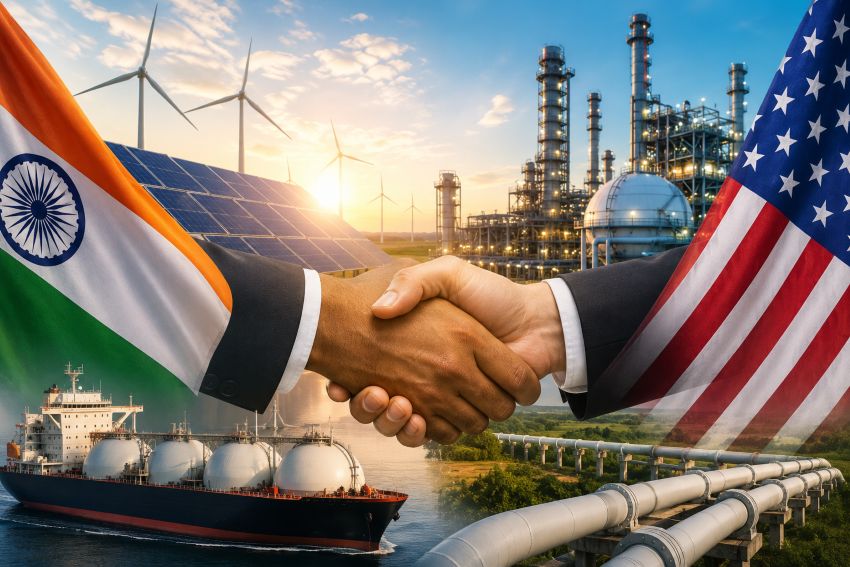
New Delhi, June 10, 2026: The U.S.-India Business Council (USIBC), in collaboration with Grant Thornton Bharat, has released a report titled Strengthening the India-US Energy Partnership: Unlocking Hydrocarbon Opportunities through Investment and Collaboration, highlighting the role of hydrocarbons in supporting the shared goal of expanding India-US bilateral trade to USD 500 billion by 2030.
The report states that the India-US energy relationship is evolving beyond a traditional buyer-seller arrangement into a broader strategic partnership encompassing trade, investment, technology, infrastructure and energy security across the hydrocarbon value chain.
According to the report, there are significant opportunities to strengthen cooperation in liquefied natural gas (LNG), crude oil, LPG, ethane and propane. It also identifies potential for increased investments, enhanced energy security and stronger supply chain resilience for both countries.
Rahul Sharma, Managing Director, USIBC India, said, "The evolution of the India-US energy relationship reflects the broader trajectory of our bilateral partnership-moving from transactional engagement to deeper strategic integration. As trusted partners, India and the United States are uniquely positioned to collaborate across energy, technology and investment to strengthen energy security, support economic growth, and create new pathways for expanding bilateral trade in the years ahead."
Amit Kumar, Partner and Energy and Renewables Industry Leader, Grant Thornton Bharat, said, "The India-US energy partnership is entering a new phase, one that extends beyond commodity trade to deeper collaboration across investment, technology, infrastructure and supply chains. As India's energy needs continue to grow and the United States expands its role as a leading energy producer, hydrocarbons can serve as a powerful catalyst for advancing the shared goal of USD 500 billion in bilateral trade by 2030. The opportunity now is to build a more integrated energy ecosystem that strengthens energy security, accelerates industrial growth and creates long-term value for both economies.”
The report recommends action in three key areas: expanding bilateral hydrocarbon trade, creating a more predictable investment environment for energy companies, and diversifying supply chains to improve long-term energy security.
It also highlights opportunities for US investment in India’s hydrocarbon sector, including exploration and production, LNG infrastructure, city gas distribution, gas-based power generation and petrochemicals. Similarly, Indian companies could increase investments in US LNG export facilities, upstream oil and gas assets, shale resources and petrochemical feedstock chains.
Among the recommendations is the creation of an India-US AI-Powered Energy Task Force to accelerate the adoption of advanced technologies such as AI-driven energy forecasting, exploration optimisation, predictive maintenance and digital twin technologies.
The report also advocates deeper collaboration on Strategic Petroleum Reserves (SPRs) through joint efforts in storage infrastructure, emergency response planning, inventory management and reserve financing to enhance energy resilience.
According to the report, growing natural gas demand in India and expanding LNG export capacity in the United States create favourable conditions for strengthening long-term energy cooperation and supporting broader trade and economic objectives.