The Habitats Trust and the New Blueprint for Scalable, Regenerative Conservation in India
As India navigates the dual imperatives of rapid economic growth and ecological preservation, the conversation around biodiversity conservation is undergoing a decisive shift. No longer confined to isolated interventions or species-centric approaches, conservation today is increasingly tied to climate resilience, water security, and long-term development outcomes. This evolving landscape calls for systemic thinking, where policy, science, and community engagement converge to deliver impact at scale.
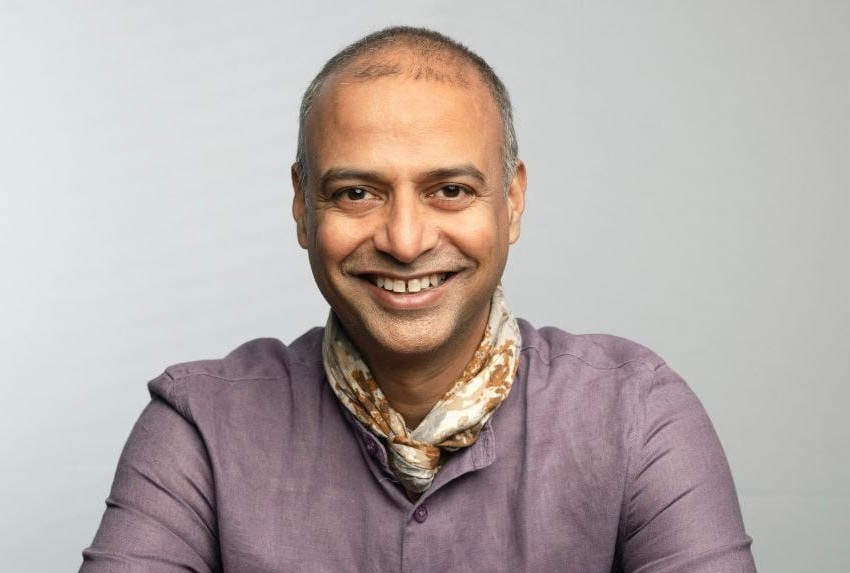
In this context, philanthropic institutions are emerging as critical enablers, bridging the persistent gap between intent and implementation. Speaking on this transformation, Rushikesh Chavan, Director at The Habitats Trust, outlines how strategic philanthropy can move beyond traditional funding roles to act as a catalyst for landscape-scale solutions, institutional capacity building, and data-driven conservation frameworks. His insights reflect a broader shift in India’s environmental discourse, one that prioritises coexistence, regenerative models, and the integration of natural capital into the country’s growth trajectory.
Scroll down to read the full interview:
Q. Despite strong legislative frameworks, implementation often varies across states. Where do you see the most critical policy or enforcement gaps in wildlife conservation, and how can philanthropic organisations and conservation funders help strengthen on-ground implementation while complementing government efforts without duplicating them?
A. Legislation in India often falters not due to a lack of intent, but due to the sheer complexity of our diverse social, cultural,economic, and political landscape. The divergence between legislative intent and on-the-ground reality remains a defining challenge. Whilst the nation possesses a remarkably robust legal scaffolding, the translation of these statutes into lived results is frequently hindered by a pervasive ‘friction of implementation’. This friction is rarely a product of insufficient intent; rather, it arises from the institutional and operational challenges that frontline agencies face while implementing conservation mandates across diverse landscapes. In many cases, the most critical gaps lie not in the law itself, but in the institutional capacity available for enforcement, coordination between agencies, and the fragmentation of data and decision-making across administrative boundaries. of frontline agencies and the fragmentation of data across state borders. This institutional inertia, coupled with a lingering ‘trust deficit’ among the stakeholders, often stalls the machinery of conservation at the very point where it matters most. To bridge the gap between policy and practice, we need ecosystems at various levels that support it. This is where philanthropy steps in, not as a substitute for the state, but as a catalytic force. By identifying critical gaps and generating scalable models, philanthropic resources can ensure that our legislative frameworks actually translate into last-mile impact. It is about making the system work, not building a new one.
Q. Habitat fragmentation continues due to infrastructure expansion and land-use change. What role can philanthropy play in enabling long-term, landscape-scale conservation, including securing and restoring wildlife corridors, rather than supporting isolated, site-specific projects?
A. At The Habitats Trust, we challenge the false dichotomy that one must choose between economic development and environmental integrity. The advancements in science, technology, and policy over recent decades have provided the tools necessary for a profound paradigm shift in how development and conservation are planned together. As Donella Meadows famously documented, there are twelve leverage points for systemic intervention; it is upon these points that philanthropic capital must be deployed to catalyse genuine change. Rather than merely mimicking development models from some other countries, India has the unique opportunity to curate growth trajectories tailored to its own ecological and social landscape. Philanthropy plays a pivotal role in this by providing the 'risk capital' to design and test these bespoke models. For instance, our partnership with the Maharashtra Government focuses on a growth framework rooted in both environmental and economic equity, demonstrating that the state’s $5 trillion economy aspiration can be achieved by leveraging its natural capital rather than exploiting it. However, while we must think at a landscape scale to secure and restore vital wildlife corridors, we cannot ignore the ground reality. Strategic philanthropy must simultaneously create Proof of Concepts (PoCs) for site-specific challenges. These are not isolated projects, but rather the 'micro-engines' that prove a landscape-wide theory can function in practice. Our role is to bridge the gap between high-level policy and the last-mile implementation of corridor connectivity.
Q. Human–wildlife conflict remains one of the most pressing challenges for conservation in India. How can philanthropic initiatives help shift the focus from reactive responses to preventive, technology-enabled, and community-led solutions?
A. Human–wildlife conflict is an outcome, not the underlying challenge. Approaching it through post-facto, reactive measures will always yield limited impact because such conflicts are merely the visible result of complex interactions between human societies and the natural world. Strategic philanthropy must, therefore, pivot its focus toward identifying the causal levers of these interactions and building systems that pre-emptively minimise negative outcomes. It is important to understand the drivers of these interactions and support systems that reduce high-risk encounters before they escalate into conflict. We must move past 'knee-jerk' reactions, such as translocation. Shifting an animal is rarely a solution; it is often merely the displacement of a problem. Instead, philanthropy should act as a bridge between scientific innovation and ground-level implementation. For instance, Indian scientists have developed sophisticated coexistence models, particularly around leopard populations, or like in Valparai, Tamil Nadu, on the elephant conflict, that have proven far more effective than traditional translocation. However, we must recognise that technology is a tool, not a magic bullet. For any technological intervention to be effective, an enabling ecosystem must first be established. The role of philanthropic initiatives is to convene the necessary stakeholders, from researchers and government bodies to local communities to develop a holistic approach. By fostering community-led, preventive strategies, we can limit high-risk interactions and ensure that, when conflicts do occur, the response systems are robust, equitable, and effective. The goal is to move from managing 'conflict' to proactively managing coexistence.
Q. Funding disproportionately favours flagship species. What opportunities exist for philanthropy to direct attention and resources toward neglected ecosystems such as grasslands, wetlands, and marine habitats that currently fall outside mainstream conservation funding?
A. Historically, conservation funding has disproportionately favoured a few ‘charismatic’ flagship species. However, at The Habitats Trust, our Trustees, Roshni Nadar Malhotra and Shikhar Malhotra, have pioneered a different path, one that recognises that India’s ecological resilience and economic stability depend on a far broader spectrum of life. From our inception, we have deliberately focused our resources on lesser-known species and critically neglected habitats, many of which play vital ecological roles despite receiving limited conservation attention, and the results of this focus are now increasingly evident. While flagship species remain important indicators of health, they are not the sole arbiters of it. Ecosystems such as grasslands, wetlands, and marine habitats are arguably more critical to India’s long-term environmental and economic success, providing essential services from carbon sequestration to water security. The traditional 'flagship-first' approach has become increasingly obsolete in a world where complexities have multiplied. By championing these 'forgotten' landscapes, The Habitats Trust has created a scalable model for other philanthropic organisations, individual donors, and CSR initiatives to emulate. It is essential that social investors see the long-term value and systemic impact of their contributions. Investing in these neglected but vital ecosystems is not just an act of conservation; it is the most effective way to secure the foundations of our collective future.
Q. Data deficits and weak monitoring systems often undermine impact assessment. How can philanthropic support help strengthen scientific research, biodiversity data systems, and long-term ecological monitoring across conservation landscapes?
A. The challenge of data deficits is indeed one of the most complex hurdles in modern conservation. However, rather than viewing Monitoring and Evaluation (M&E) as a post-script to an intervention, we must recognise it as the foundation upon which the entire journey begins. At TheHabitats Trust, we have established a dedicated Impacts Programme specifically to address this, shifting the focus from simply 'measuring' to 'learning'. To achieve a meaningful impact, one must first deconstruct the problem to its most granular level. We employ a rigorous methodology, utilising first principles, design and systems thinking, and Donella Meadows’ twelve leverage points, to design interventions that are surgically precise. By the time we deploy monitoring tools, they are not merely tracking progress; they are validating a deeply researched hypothesis. Philanthropic organisations are uniquely positioned to act as laboratories for these systems. Our role is to develop, refine, and stabilise these robust data frameworks within our own structures. Once these models are proven to be effective, we have a responsibility to share them with the wider conservation community. In doing so, we move beyond site-specific assessments and contribute to a global, long-term ecological monitoring standard that empowers all stakeholders.
Q. Many forest departments and grassroots NGOs face capacity constraints. In what ways can philanthropic partnerships support stronger institutional capacity, technical expertise, and sustained conservation efforts on the ground?
A. A fundamental shift in perspective is required: philanthropic organisations must cease viewing forest departments and grassroots NGOs as external agents. We are all integral components of the same system. The primary distinction lies in the nature of the resources we command. When philanthropy enters into a genuine partnership with state departments and local NGOs, we move beyond the superficial role of a donor and into the role of a systemic collaborator. The most immediate opportunities, the 'low-hanging fruit', lie in strengthening governance structures and institutionalising best practices. Philanthropy is uniquely positioned to act as a bridge, facilitating the transfer of technical and technological expertise that may otherwise be siloed. Whether it is modernising data management for foresters or enhancing the operational resilience of a local NGO, these interventions create a foundation for sustained, long-term conservation. In the current landscape, goodwill funding is no longer sufficient. Philanthropy must evolve from a provider of capital into a provider of solutions. By co-designing capacity-building programmes that are deeply integrated with existing frameworks, we ensure that the 'bridge' we build is permanent, rather than a temporary workaround. Our goal is to ensure that when we step back, the institutional capacity remains robust, self-sustaining, and technologically adept.
Q. Looking ahead, what policy reforms or stronger collaboration between government, philanthropy, researchers, and civil society are needed to accelerate India’s biodiversity and climate commitments, and where do you see the strongest opportunities for scale?
A. Answering the question of future policy reforms requires moving beyond the generalities and clichés that often stifle nuanced discussion. The most critical reform needed is not a legislative one, but a cultural one: the cultivation of trust between the state, the private sector, and civil society. For India to accelerate its biodiversity and climate commitments, these stakeholders must move past historical silos and align behind a singular objective, enhancing the nation’s natural capital while achieving its economic aspirations. Philanthropy is uniquely positioned to lead this alignment. Historically, philanthropic organisations have been the product of visionaries who revolutionised the business world; today, that same disruptive vision must be applied to the social and environmental sectors. However, vision alone is no longer sufficient. We are currently navigating the Sixth Mass Extinction and the immediate onset of climate change realities that demand a transition from high-level strategy to relentless execution. Vision is merely two per cent of the job; the remaining ninety-eight per cent lies in the disciplined implementation of solutions on the ground. The greatest opportunity for scale exists in creating integrated frameworks where philanthropic 'risk capital' proves a model, researchers provide the data-driven validation, and the government provides the legislative and financial machinery to scale it across the subcontinent. We must move from 'goodwill funding' to 'good execution' if we are to secure India’s future.




.png)