
Quick Heal Foundation Launches Cyber Shikshit Gaon in Kolhapur
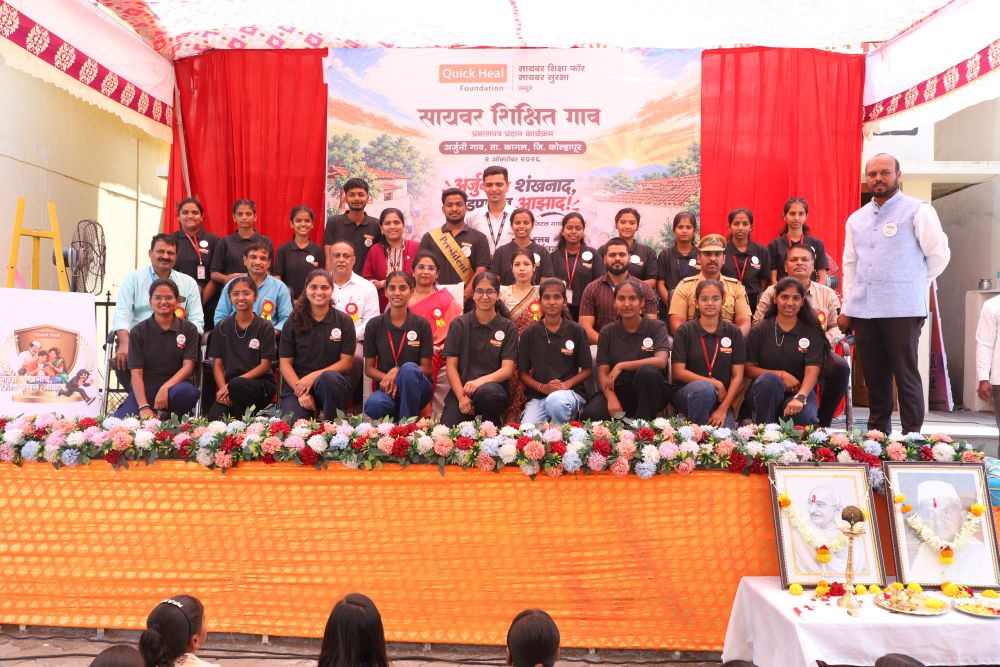
Pune, October 6, 2026: Quick Heal Foundation, the CSR arm of Quick Heal Technologies Limited, has launched its Cyber Shikshit Gaon initiative in Arjuni village in Kolhapur, Maharashtra, with the aim of making it India’s first cyber-safe village.
The initiative is being implemented under the Foundation’s flagship Cyber Shiksha, Cyber Suraksha programme. It takes a community-wide approach to cybersecurity through awareness sessions, household outreach and hands-on digital security interventions designed to help residents prevent, identify and report cyber threats.
Built around three pillars — Prevention, Protection and Reporting — the initiative seeks to address cybersecurity risks associated with increasing digital adoption. These include exposure of personal information through third-party applications, excessive app permissions, unknown platforms and unverified links.
Anupama Katkar, Chairperson, Quick Heal Foundation and Chief of Operational Excellence, Quick Heal Technologies Limited, said, “Digital access can open doors to opportunity, but those doors can only truly empower communities when people have the knowledge and confidence to stay safe online. Through Cyber Shikshit Gaon, we want to take cybersecurity beyond awareness and make it a part of everyday life, helping people protect their personal information, recognise fraud, secure their devices, and know where to turn when they need help. Arjuni is more than a village where we are taking this initiative; it is a reminder that every citizen, regardless of where they live, deserves the confidence to participate safely in the digital world. If we can help even one family feel safer online, we are taking one more meaningful step towards a truly cyber-resilient India.”
A baseline survey covering 273 households and 675 mobile users in Arjuni identified gaps in digital security. Of these users, 539 were smartphone users, while 193 households reported daily internet use and 155 reported regular or occasional UPI usage.
As part of a Mobile & Digital Security Check-up Camp, 519 mobile devices were assessed across nine security parameters. The assessment found 445 devices with five or more security gaps, while 623 harmful or suspicious apps were detected. The assessment also identified 327 devices with unnecessary app permissions, 390 devices where two-factor authentication was disabled on social-media accounts and 102 devices lacking basic phone-security practices.
The initiative is being supported by members of the Cyber Warrior Club at Devchand College, Arjuni, who are conducting household outreach and awareness sessions while helping residents improve device and account security.
Community sessions cover OTP, PIN and password safety, UPI and QR-code fraud, fake KYC and customer-care scams, social media and WhatsApp security, as well as cyber safety for children and senior citizens. Residents are also being encouraged to report financial cybercrime immediately through 1930.
A Village Cyber Safety Committee under the Arjuni Gram Panchayat has also been established to support complaint registration and local response. A WhatsApp Cyber Safety Network, along with 10 cyber-safety banners and six wall paintings, will further support community-level awareness.