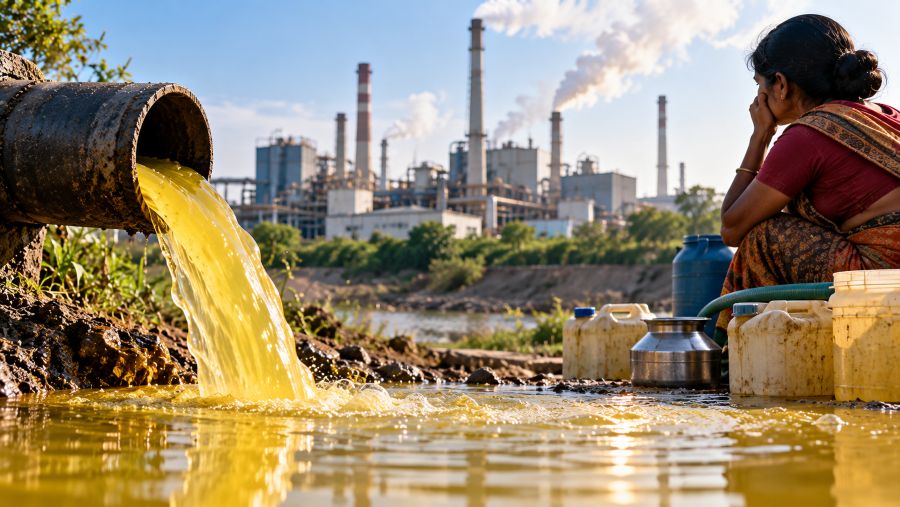

New Report Highlights Near-Term Climate Risks Along India’s Coastline
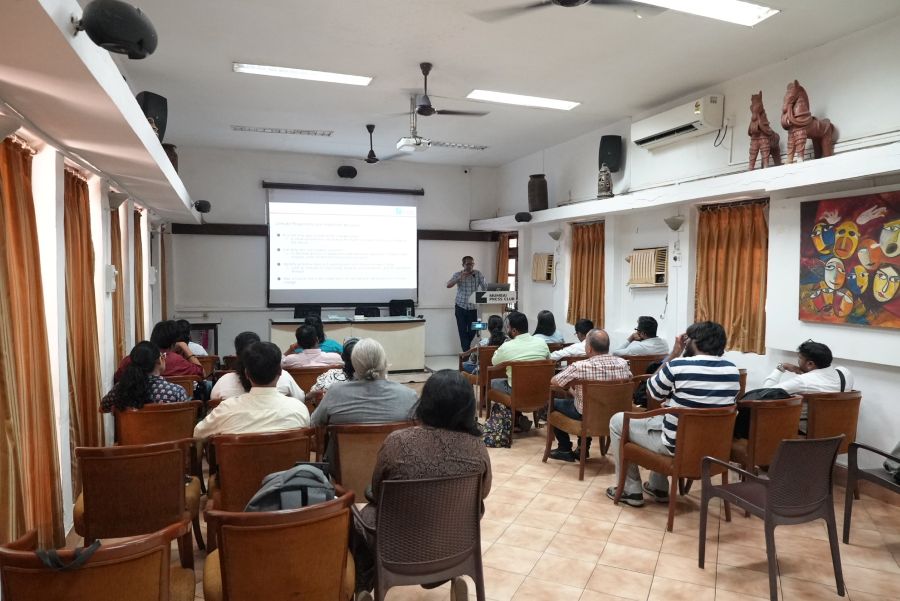
Mumbai, 29 May 2026: A new report released by Azim Premji University, Bengaluru, has highlighted growing climate-related risks across India’s 11,000-km coastline, warning that rising temperatures, changing rainfall patterns, sea-level rise, and increasing cyclone intensity could significantly impact communities, livelihoods, and ecosystems over the coming decades.
Titled “Indian Coastal Region: Climate Projections 2021–2040”, the report provides district-level climate projections by comparing conditions expected between 2021 and 2040 with a baseline from the 1960s. The study uses high-resolution 25 x 25 km data and climate model projections corrected for regional bias to improve accuracy.
According to the report, India’s administrative regions are expected to approach the 1.5°C warming threshold in the near future, narrowing the window available for adaptation measures.
Anurag Behar, CEO, Azim Premji Foundation, said, “Climate change is not some distant future challenge—it is the reality of today. 2040 is just 14 years away. This dataset brings to life the impacts of climate change with much greater immediacy, highlighting how we must restructure our infrastructure and governance to ensure we collectively address this crisis.”
The report identifies several emerging climate trends along India’s coastline. Average temperatures across the country are projected to rise by 1.5°C, with around 40 coastal districts expected to record summer temperature increases of more than 1°C. Coastal regions of Kerala and Tamil Nadu are also projected to experience higher wet-bulb temperatures, approaching levels considered dangerous for human health.
Among individual districts, Ernakulam in Kerala is expected to witness the highest increase in maximum summer temperatures, with a projected rise of 1.3°C. On the west coast, coastal Maharashtra and Gujarat are likely to receive significantly higher rainfall, with suburban Mumbai projected to experience nearly an additional week of heavy rainfall compared to historical averages. Surat is expected to record a 23% increase in southwest monsoon rainfall.
The study also points to growing risks from sea-level rise and coastal erosion. Under moderate emissions scenarios, global sea levels are projected to rise by around 15 centimetres by 2050, potentially accelerating shoreline erosion and affecting vulnerable coastal settlements. Rising sea surface temperatures, estimated at 0.27°C per decade, could also increase the likelihood of more intense tropical cyclones.
The report highlights the impact of these changes on traditional livelihoods. In Goa, unseasonal rainfall has affected salt production, while warming seas are pushing fish stocks farther offshore, creating challenges for small-scale fishing communities. In the Sundarbans, increasing salinity linked to embankment breaches has been associated with health concerns, including skin diseases and menstrual health challenges among women.
Harini Nagendra, Director, School of Climate Change and Sustainability, Azim Premji University, said, “The data in this report is a mirror that reflects a reality we can no longer afford to ignore. For decades, we treated climate change as a global abstraction — a problem of polar ice caps and distant centuries. But our findings show that for the Indian coastline, the crisis is hyper-local and immediate. Whether it is the heat stress in Ernakulam or the rising salinity in the Sundarbans, our vulnerability is visible in all aspects of our daily lives. We have a short window of time to move from reactive mitigation to proactive adaptation — we need to craft a future that acknowledges the ecological challenges faced by our nation.”
The report aims to support policymakers, local governments, and communities with location-specific climate information to help strengthen district-level adaptation and resilience planning along India’s coastline.