
India’s r-PET Industry Faces Underutilisation Despite 40% Recycled Content Mandate
New Delhi, May 27, 2026: India’s recycled PET (r-PET) industry continues to face underutilised production capacities despite the government’s push for import substitution and mandatory recycled content targets for plastic packaging, according to APR Bharat.
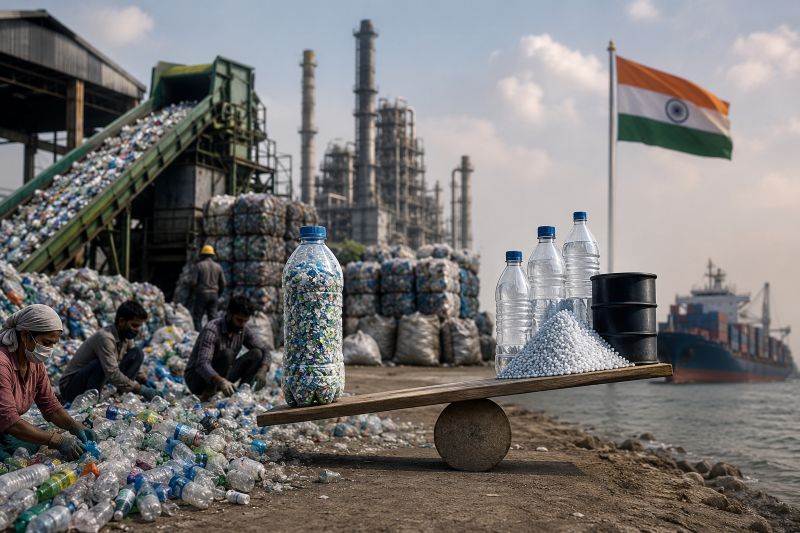
The industry body said nearly 20–25 per cent of the country’s r-PET production capacity remains idle due to limited demand from plastic packaging users and brands. The sector has established an estimated 4.39 lakh tonnes of capacity with investments exceeding ₹10,000 crore.
The Ministry of Environment, Forest and Climate Change (MoEFCC) had issued guidelines in March mandating the use of 40 per cent recycled content in food-grade PET packaging from FY 2026–27 onwards. The rules also require companies to carry forward unfulfilled targets from FY 2025–26 for up to three years.
Goutham Jain, Director General, APR (Association of PET Recyclers) Bharat said, “India imports a significant quantity of virgin petrochemical derivatives linked to crude oil. Any strategic move to reduce import dependence and encourage local alternatives creates a strong opportunity for the recycled PET industry. r-PET is not only a sustainable substitute but also a commercially viable domestic resource that can support India’s manufacturing and environmental goals simultaneously. The government’s nudge coupled with the mandate in place should have translated into a healthy demand for r-PET. However, we have not seen demand picking up as plastic packaging users/brands have not been adhering to the mandate.”
The association stated that the Indian food-grade r-PET sector currently has 17 FSSAI-approved plants with a combined capacity sufficient to meet the 40 per cent recycled content requirement for FY 2026–27, including additional carry-forward obligations from the previous fiscal year.
According to APR Bharat, the industry’s food-grade r-PET capacity is expected to expand to around 12.26 lakh tonnes by March 2027 to support future mandates, including the proposed 60 per cent recycled content target for FY 2028–29.
The industry body also highlighted the importance of r-PET adoption in strengthening India’s circular economy, reducing reliance on imported petrochemical products, and improving supply-chain resilience. It noted that increased demand for recycled PET could also benefit the informal waste collection sector, where a significant portion of livelihoods depend on plastic waste collection and processing.
Goutham Jain further said, “The technology is ready. The capacity is ready. The industry has invested and is expanding further. India can meet the current requirement and prepare for future targets. What is needed now is steady adoption by plastic packaging users/brands and consistent adherence to the rules by bottling and beverage industry.”
APR Bharat urged obligated entities and brand owners to align with regulatory timelines and work closely with recyclers to strengthen the domestic recycling ecosystem and support India’s sustainability goals.