
Hinduja Foundation Implements Water and Biodiversity Restoration Project at Pune’s SRPF Campus
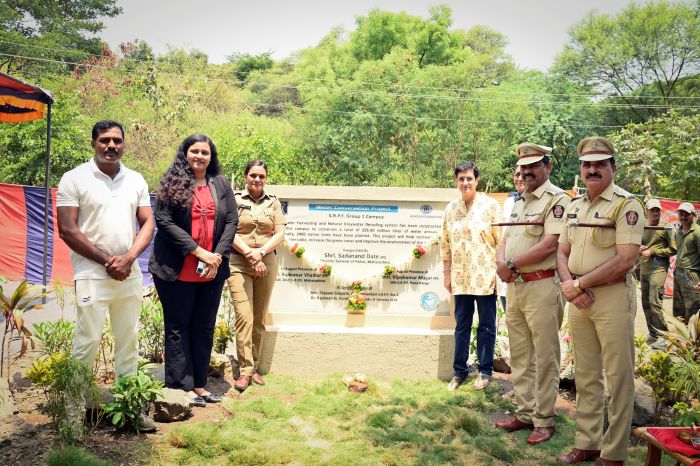
Pune, June 05, 2026: Hinduja Foundation, the philanthropic arm of the Hinduja Group, has completed an integrated environmental restoration project at the State Reserve Police Force (SRPF) Group 1 Campus in Ramtekdi, Pune, under its flagship Jal Jeevan programme.
Implemented in partnership with the Centre for Environmental Research and Education (CERE), and supported by Hinduja Renewables Energy Private Limited and Gulf Oil Lubricants India Limited, the initiative focuses on rainwater harvesting, wastewater recycling, groundwater recharge, and urban afforestation. The project is expected to benefit more than 4,000 SRPF personnel and residents while strengthening ecological resilience in the region.
The project included the planting of 2,400 saplings representing 55 species, of which 44 are native. Other interventions included the development of a natural wastewater recycling system for 330 households, construction of 13 deep recharge pits, 55 stormwater drain puncturing interventions, restoration of 250 running metres of a nala, and creation of water absorption trenches covering 400 square metres.
A floating reed bed system spanning 100 square metres was also installed to support pond rejuvenation and natural wastewater treatment. Additional infrastructure such as floating aerators, vortex micro-aeration systems, and treated water recirculation facilities were introduced to improve water quality and ecosystem health.
Raman Kalyanakrishnan, CEO, Hinduja Foundation, said: “At Hinduja Foundation, we believe environmental sustainability must be built through integrated, community-driven solutions that create long-term impact. This initiative at the SRPF Group 1 Campus demonstrates how water conservation, wastewater recycling, and biodiversity restoration can come together to create climate-resilient ecosystems within urban environments. By strengthening groundwater recharge, improving green cover, and promoting ecological restoration, we are not only enhancing environmental resilience but also contributing towards healthier and more sustainable communities for future generations.”
According to the Foundation, the restored ecosystem now supports 31 bird species, 15 insect species, nine butterfly species, and several mammal and reptile species. Notable sightings include the Indian Grey Hornbill and Indian Peafowl.
Dr. Rashneh N. Pardiwala, Founder & Director of the Centre for Environmental Research and Education (CERE), said: “This project demonstrates how simple nature-based solutions can effectively address urban environmental challenges. Through scientific planning and on-ground implementation, CERE has worked to restore water systems, improve biodiversity, recycle wastewater so as to reduce soil pollution, and enhance green cover across the SRPF campus. This initiative while creating a healthier and more sustainable environment for the people training and working within the campus has also helped farmers surrounding the SRPF campus whose crop productivity suffered due to wastewater seepage into the ground.”
Ms. Tejaswi Satpute, the Commandant of State Reserve Police Force Group 1 Campus, added: “The project has brought significant improvement to the SRPF Group 1 Campus by solving water management and wastewater treatment issues. The pond rejuvenation and plantation activities have greatly improved the campus ecosystem and created a greener and healthier environment for our police personnel and residents.”