From Vision to Village: How Kathiwada is Building a Model for Rural India
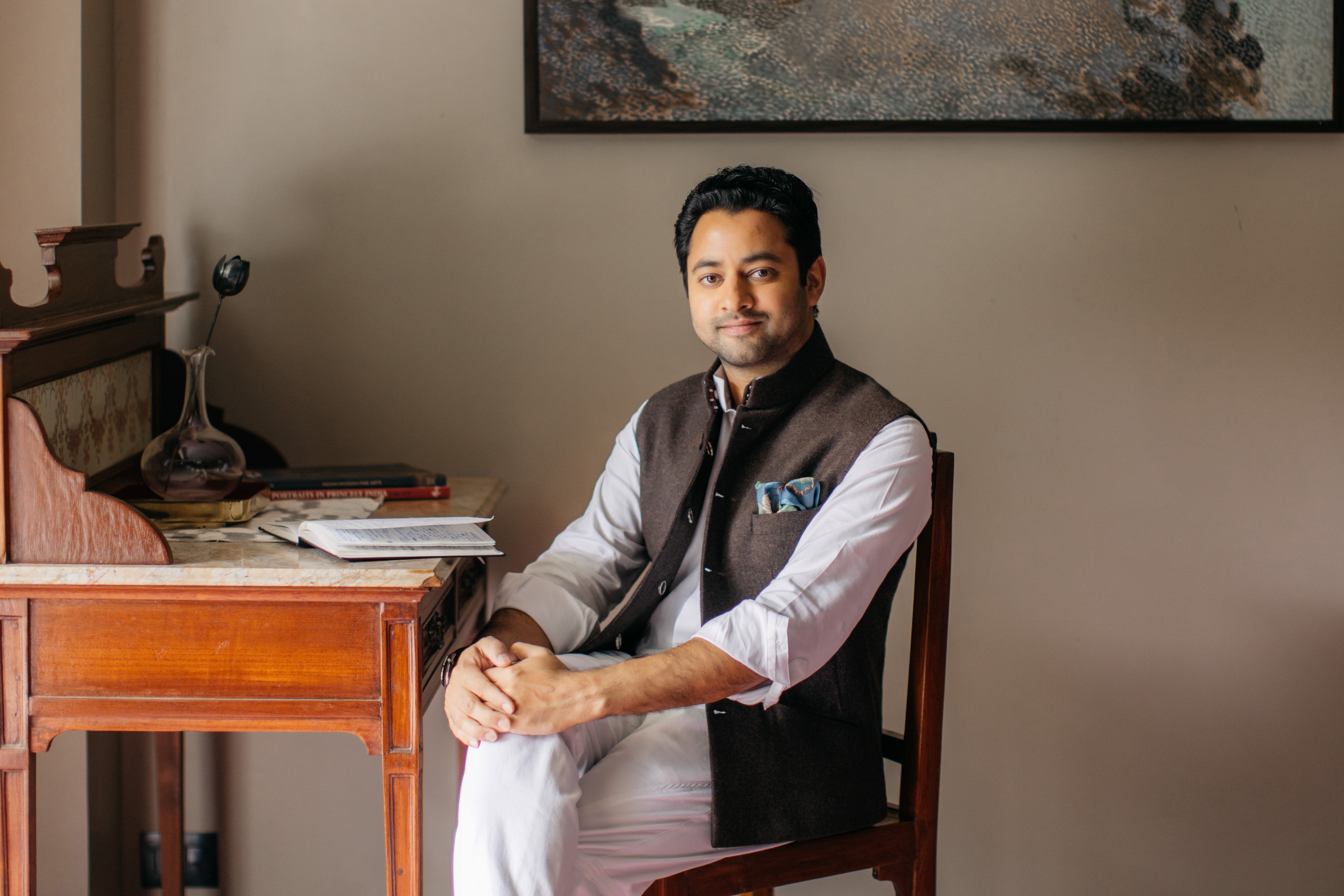
What if one small region could show the way for transforming rural India—where education, environment, and livelihoods grow together? In the remote district of Alirajpur, Madhya Pradesh, this vision is steadily becoming a reality through the work of the Kathiwada Foundation.
In this insightful conversation, Rana Digvijay Sinh Kathiwada shares how the foundation is building a long-term, community-led model of rural development rooted in three core pillars—education, ecology, and economy. From Kamal Vidya Niketan, a unique learning space for first-generation students, to Swarnabhoomi, a regenerative farming initiative, the foundation is creating systems that empower people while restoring nature.
The interview also explores how sports are strengthening community bonds, how farmer training programs are promoting climate-resilient agriculture, and how partnerships with CSR and institutions are helping scale impact. With a bold vision to turn Kathiwada into a replicable model district by 2034, this conversation offers a powerful look at how grassroots innovation can unlock the true potential of rural India.
Scroll down to read the full Interview:
Q. What is your vision behind the Kathiwada Foundation's work, and what key gaps are you trying to address in Alirajpur?
A. Kathiwada is a place of extraordinary natural and cultural richness and yet it has remained consistently underserved. Alirajpur district carries the lowest literacy rate in India. Infrastructure is thin, healthcare is distant, and economic opportunity has largely bypassed the region. The Foundation exists to address these realities through long-term institution-building.
Our vision is for a self-sustaining Kathiwada. One where communities are empowered, the environment is restored, and cultural heritage is preserved. We believe that communities are the architects of their own progress and that small and consistent actions lead to long-term and permanent transformation. Our theory of change focuses on three mutually reinforcing pillars; 1. human development 2. environmental sustainability and 3. cultural preservation because we've learned that addressing one in isolation doesn't work.
Q. What are the main objectives of your current initiatives across education, ecology, and community development?
A. Our work is organised around a Threefold Framework of Education, Ecology, and Economy which are interconnected and not as separate sectors. Example: When water is restored in the valley, farming stabilises. When farming stabilises, families invest in their children's futures (in this case a heavy focus on quality education) and when education takes centre stage it expands capability so new forms of work become possible and enjoyable.
In practice, this translates into building our flagship institution —- Kamal Vidya Niketan — a pioneering school which will be the most advanced rural campus in Madhya Pradesh and go beyond just being a school but it will anchor all sorts of educational programming which is context based for the region. Alongside this we have watershed restoration, a 55-acre permaculture farm, drip irrigation adoption, a farmer training institute, sports infrastructure, Aanganwadi upgrades and teacher training courses for capacity building in-house. Together, these aren't isolated projects. They are the components of a living, regenerative community system. This is just the beginning, there’s a lot more to come.
Q. Kamal Vidya Niketan focuses on first-generation learners. How is this model different from traditional schooling, and what outcomes have you seen so far?
A. Most rural schools in India are designed for a generic child in a generic rural place. Kamal Vidya Niketan is designed specifically for the children of Kathiwada and the region. A first-generation learner whose parents are farmers and whose world is shaped by forest, season, and community.
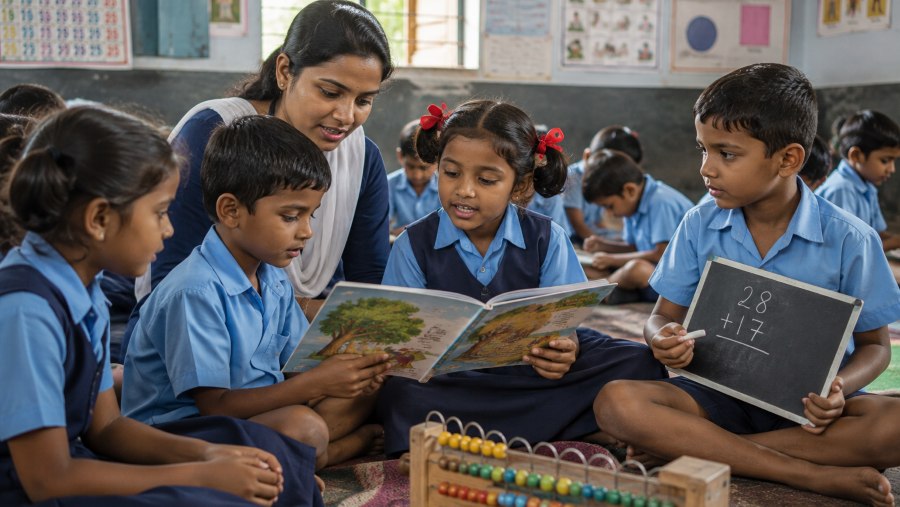
The pedagogy is tailor-made. Rather than positioning the valley as something to escape, KVN asks children to understand and engage with it deeply. Learning happens both inside classrooms and across the wider landscape in orchards, on farms, through sport, through cultural practice. We integrate nutritional support, after-school programs in computer literacy, spoken English and provide scholarships to ensure no child is excluded on economic grounds. The biophilic campus itself is designed around nature which signals to every child who enters that their environment is worth understanding.
The school currently serves 120+ children (with a total capacity of 500+ in the years to come) on a 2-acre campus with 17 acres of sports and community centre infrastructure as its neighborhood project. The most important outcome we're already seeing is a shift in aspiration when children and their parents see possibility within their own valley, not just beyond it.
Q. Swarnabhoomi Kathiwada is a regenerative farm initiative. What are its core goals, and how is it benefiting the local community and farmers?
A. Swarnabhoomi Permaculture Campus is the first regenerative farming campus in Madhya Pradesh. The 55-acre initiative was born from a decade of on-ground agricultural experimentation like testing mango, chiku, banana, moringa, watermelon, turmeric, ginger and dozens of other varieties across different soil and climate conditions.
Its core goals are to restore soil health and biodiversity, demonstrate viable alternatives to chemical-dependent agriculture, and build farmer capability through training and direct exposure. We work through farmer field days, intercropping templates, and real-number sharing on yields and cash flow.
Crucially, the Foundation guarantees purchase of specialty and high-value produce from local farmers, which gives them the confidence to diversify. In the next phase we will also handle processing, packaging, and onward sale capturing value locally rather than letting it drain to distant markets and intermediaries. Example: For a farmer growing and bringing moringa to us, we dry it, pack it, store it, and sell it forward. That margin stays in Kathiwada without burdening the farmer on forward processing but being a part of the profits.
Q. Your sports initiatives have engaged a large number of youth. What role do sports play in community development in this region?
A. Sports were the first real infrastructure we built in Kathiwada, and they remain one of the most powerful community building initiatives. Sports is the only tool that bridges the gap between religion, politics, caste and wealth. The cricket ground began as a casual space, and as young people's skills grew, we upgraded it into a professional-standard facility responding to demand faster than we anticipated. That experience taught us something important: when you invest seriously in youth, they meet you there with more enthusiasm and spirit than any other age group.
The Khel Maha Utsav, our annual 10-day sports festival, brings together the community across cricket, kabaddi, volleyball, and other sports. It's not just a sporting event it's one of the most significant moments of collective identity in the year. The DSK Sports Club and Community Centre, spread across 17 acres, has become a hub for recreation, learning, and socialising.
We believe sports are among the most efficient tools for social cohesion in a tribal region. They break barriers, build discipline, and give young people a reason to stay, learn and something to work toward voluntarily.
Q. Through farmer training programs, how are you promoting sustainable and climate-resilient agriculture at the grassroots level?
A. Our Farmer Training Institute was established to model eco-friendly methods and support a transition away from input-dependent agriculture. We introduced drip irrigation to reduce water usage and improve yields. We work with farmers on organic practices, soil health, crop diversification, and rotation planning. These are practical, economics-grounded learning rather than theoretical instruction.
Climate resilience, in our experience, begins with diversification. A farmer growing only maize is vulnerable. A farmer managing orchards, short-cycle crops, and perennial species has a much broader floor to stand on. We are also building composting and biogas systems that create closed nutrient loops reducing external inputs and cutting household fuel costs simultaneously.
We collaborate with the Krishi Vigyan Kendra (KVK) to anchor our training in institutional credibility and our approach is backed by real data from over a decade of agricultural experimentation on our own land.
Q. You are working towards making Kathiwada a model district. What are the key elements of this model, and how can it be replicated in other regions?
A. The Kathiwada model rests on a few core ideas. First, that Education, Ecology, and Economy must be developed together not sequenced. Second, that every intervention must build both physical infrastructure and the human capability to sustain it in-situ. Third, that a single anchor site which we call the Nucleus Development Plan can serve as a working demonstration system from which lessons radiate outward. No policy intervention, no red-tape, just build what can’t wait.
We're developing 153 acres across eleven interconnected zones from heritage hospitality and orchards, to a permaculture campus, watershed corridors, a native nursery, a city centre, sports infrastructure, a school, health facilities, and housing. Each zone has a specific function but together they form a living model of rural regeneration.
The broader ambition is that Kathiwada 2034 becomes a template that any committed custodian or corporate partner can adapt for any tehsil or place in India. The ingredients in our view are simple - a champion, a coherent framework, patient capital, and community trust. That’s the winning formula. What's missing is often just the proof of concept. That's what we're building.
Q. How have collaborations with CSR partners, NGOs, or other stakeholders helped strengthen and scale your efforts?
A. No institution can regenerate a place alone, and we've never believed otherwise. Collaboration has been central to how we work. Our partnership with The Circle India led by Sandeep Rai is a cornerstone of our educational framework. Another example is Saahas on the Swacch Kathiwada initiative is a good example. Rather than attempting to design a waste management system from scratch, we brought in expert NGO knowledge, built internal capacity through hands-on training, and then implemented a structured waste management framework across three gram panchayats. That knowledge now lives with us and with local governance bodies.
We've also worked with the district administration donating land for the Community Health Centre to enable government delivery rather than duplicating it. Aligned with the Krishi Vigyan Kendra on agricultural training. The principle is consistent – activate the State where it can deliver (KVK), partner with specialists where expertise is needed (Education), and lead directly where gaps persist (Sports/Community Center).
We are 80G, FCRA, and CSR compliant, which makes formal partnership straightforward for any corporate wishing to contribute.
Q. What is your future roadmap for Kathiwada Foundation, and what are your key priorities in the next phase of growth?
A. The immediate priorities are to complete and commission all our base projects that are in need of infrastructure. Like the Kamal Vidya Niketan school, expand our permaculture and organic farming operations, and advance watershed restoration across the valley. We are also working to establish the ICU at our Community Health Centre, which will provide critical care locally reducing the burden on patients who currently travel hours for emergency treatment.
Longer term, Kathiwada 2034 is our fifteen-year roadmap that started in 2019. Now in 2034 will be the year our family marks 600 years of unbroken lineage and marking Kathiwada as a living inhabited legacy so the goal is an integrated, self-sustaining community system: economically diverse, ecologically restored, and educationally capable by 2034.
Beyond Kathiwada itself, we want to contribute to a replicable model for rural India. If even a fraction of committed leaders, institutions, or corporates applied a similar (not same) framework to their own regional contexts, the cumulative impact could be transformational. Rural India is not a problem to be managed. It is a frontier of possibility and Kathiwada is our proof of that.


.png)