
Atria University, MiniMines Partner to Advance AI-Based Critical Mineral Recovery
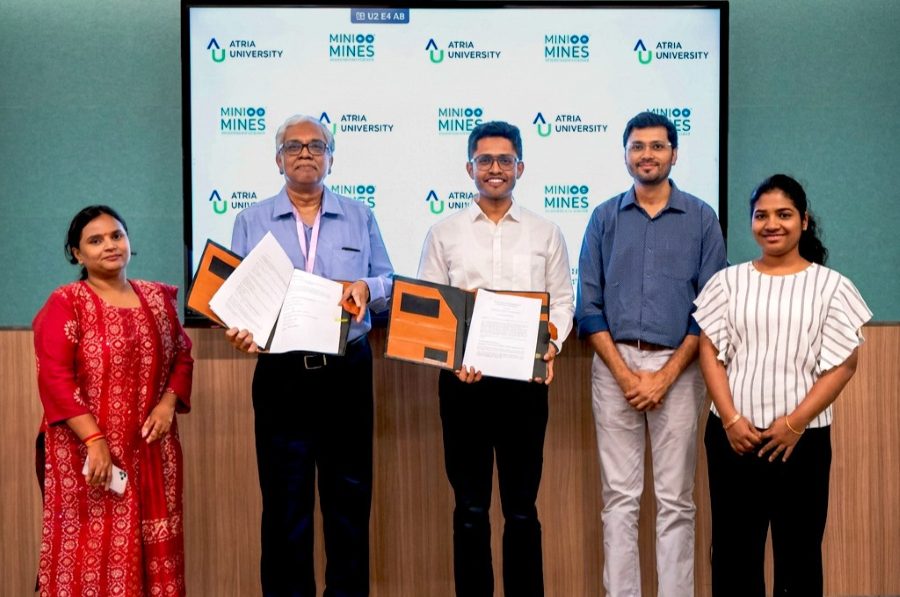
Bengaluru, July 16, 2026: Atria University and MiniMines Cleantech Solutions have partnered to establish the MiniMines-AU Laboratory for Sustainable Resource Recovery, a research facility focused on recovering critical minerals from spent lithium-ion batteries using artificial intelligence (AI) and synthetic biology.
Located at Atria University's campus, the laboratory will combine the university's expertise in AI and life sciences with MiniMines' capabilities in lithium-ion battery recycling, critical mineral recovery and process commercialisation. The collaboration aims to accelerate the development of sustainable resource recovery technologies while supporting India's critical mineral security.
The first phase of research will focus on recovering lithium from spent lithium iron phosphate (LFP) batteries while preserving high-grade iron phosphate, a material often degraded during conventional chemical recycling. The laboratory will undertake the complete research process, including microbial cultivation, bioleaching experiments and laboratory-scale validation.
The initiative aligns with the Government of India's BioE3 (Biotechnology for Economy, Environment and Employment) Policy and the National Critical Minerals Mission (NCMM), which promote bio-based manufacturing, circular economy solutions and self-reliance in critical minerals.
Commenting on the partnership, Dr. Madhavan Nair Rajeevan, Vice-Chancellor, Atria University, said, "Securing critical minerals is central to India's clean-energy transition and economic resilience. This partnership demonstrates how industry and academia can build strategic technologies together by combining our strengths in artificial intelligence and life sciences with an industry partner's real-world expertise, ensuring research translates from the laboratory to the ground."
Mr. Arvind Bhardwaj, CTO, MiniMines Cleantech Solutions, said, “India's transition to clean energy will depend not only on manufacturing batteries but also on securing a sustainable domestic supply of critical minerals. At MiniMines, we believe the future of resource recovery will be driven by a combination of advanced metallurgy, artificial intelligence, and biological innovation. Together with Atria University and its capabilities in AI and life sciences, we aim to accelerate the development of scalable, high-impact solutions for the circular economy."
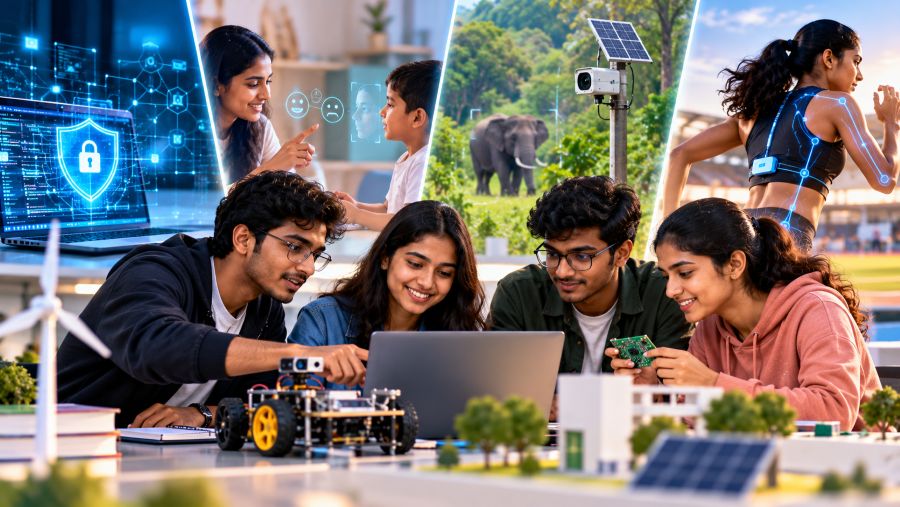
The laboratory will operate under Atria University's SynBioAI initiative, an AI-guided synthetic biology platform that uses specialised AI models to accelerate the development of high-performing microbial strains. The partnership also seeks to evaluate the scalability and commercial viability of bio-based recovery processes, enabling successful laboratory innovations to be integrated into industrial recycling operations.
According to the partners, the collaboration is expected to contribute to sustainable battery recycling while strengthening domestic capabilities in critical mineral recovery through industry-academia cooperation.