
74% of Security Professionals Have Experienced Gender-Based Discrimination Despite Formal DEI Policies, Finds IIRIS-CII Survey 2026
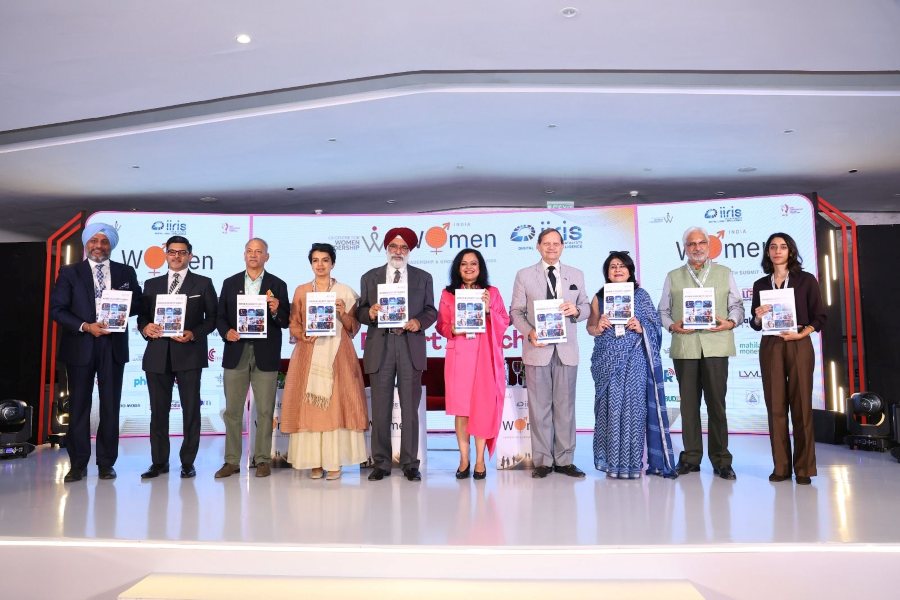
New Delhi, 24 June, 2026: IIRIS Consulting, in collaboration with the CII Centre of Women Leadership, has released the Women in Security Survey 2026 (WISS 2026), revealing a persistent gap between formal inclusion policies and the actual workplace experiences of women in security functions.
The survey finds that while 92.7% of organisations report having formal inclusion measures, flexible work arrangements or DEI frameworks in place, 74% of security professionals said they have personally experienced or witnessed gender-based discrimination in a security workplace. Additionally, 84.5% of respondents believe women remain underrepresented across security functions, while 96.8% say more opportunities should be created for women in the sector.
Policy adoption is widespread. The report shows that 89.6% of respondents noted a formal DEI policy at their organisation, 90.7% cited gender-neutral frameworks, 91.2% reported unconscious bias initiatives and 92.7% pointed to flexible work arrangements. However, workplace culture continues to be the biggest barrier, with 39.7% identifying stereotypes and male-dominated cultures as the primary deterrent to women entering security careers.
Sagarika Chakraborty, Chief Executive Officer, IIRIS Consulting, said, "What concerns us is that the conversation around inclusion has continued for years, yet the everyday experience of many women has not changed enough. Policies are important, but they cannot become the finish line. Real progress begins when organisations listen more closely, question what is not working and take responsibility for the outcomes. Women should not have to constantly prove that they belong in security. They must be given the trust, support and opportunities to lead, influence decisions and build long-term careers. The way forward is to move from good intent to consistent action, with leadership held accountable for creating change that women can actually experience."
Mentorship has emerged as the sector's most sought-after intervention, with 45.2% of respondents identifying it as the single most important measure to improve women's participation and advancement. The report also finds strong appetite for collective action, with 90.3% of respondents supporting an industry-wide gender parity pledge.
Shivani Kumar, Executive Director, CII Centre of Women Leadership, said, "The findings of this report are a wake-up call. Despite years of discussion around inclusion and representation, significant gaps continue to persist. Policies alone cannot drive change unless they are supported by consistent implementation, regular review and clear accountability. Organisations must move beyond a compliance-led approach and build systems that evolve with workplace realities. The objective should not only be to increase women's participation, but also to ensure that they have equal opportunities to lead, influence decisions and shape the future of their industries."
Garry Singh, President, IIRIS Consulting, said, "The security sector is undergoing a fundamental shift. Risk, resilience, trust and preparedness are now boardroom priorities. If the sector is to evolve meaningfully, inclusion has to become part of how organisations build capability, not just how they frame policy. WISS 2026 is an important step towards creating the evidence base needed for more accountable industry action."
The report was released at the India Women Leadership & Growth Summit 2026 in New Delhi. It builds on previous editions from 2022 and 2025, with the 2026 edition specifically examining whether industry awareness has translated into measurable action on the ground.