
FORCES Honours 14 Childcare Workers at International Day of Care and Support
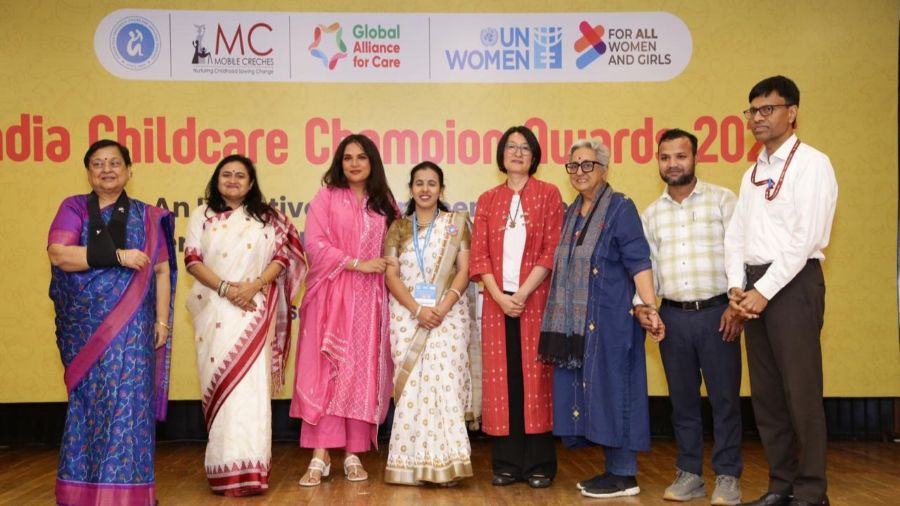
New Delhi, October 30, 2026: The Forum for Creches and Childcare Services (FORCES), in partnership with the Global Alliance of Care and UN Women India, commemorated the International Day of Care and Support in New Delhi by recognising 14 childcare workers for their contributions to early childhood development.
Actress and producer Richa Chadha joined the Annual Childcare Champion Awards ceremony, where the 14 award recipients from different states were felicitated for their work in providing care to young children. The event highlighted the role of frontline care workers and the need to recognise their contributions to India's childcare ecosystem.
The ceremony also brought together policymakers, economists and civil society representatives to discuss gaps in India's care workforce and ways to strengthen professional childcare services. Discussions focused on care-related skills, workforce development and the need to expand quality childcare infrastructure across the country.
Speaking at the ceremony, actress Richa Chadha said, “This International Day of Care and Support, I want to celebrate the women who make care possible every day: our Anganwadi workers, ASHA workers and childcare workers. Care is skilled work. It deserves recognition, dignity and fair compensation.”
Dr. M Srinivas, Member, Niti Ayog, highlighted the role of entrepreneurship in strengthening community-based care services. He said, “Niti Ayog is promoting a program that Promotes Entrepreneurship ("CAREpreneurs") Supporting innovative workforce models that blend care competencies with business and management training to foster women-led micro-enterprises and community-based care delivery. This is a model that can help form more care circles and build women entrepreneurship”
Justice Gita Mittal (retd) emphasised the importance of linking care-related qualifications with fair employment opportunities. She said, “Before we promise a return on skilling, we need to link qualifications to decent work by paying care workers skilled labour wages as a baseline, not a bonus.”
Shoko Ishikawa, Country Representative of The United Nations Women in India, said, “Care work across childcare, eldercare and disability care is skilled and essential work. India's commitment to training 1.5 lakh multi-skilled caregivers presents an important opportunity to strengthen the care workforce. Building on NITI Aayog's recommendations, we need to connect standardised qualifications, practical training and certification with decent employment, social protection and career progression across childcare, eldercare and disability care.”
The event also highlighted the growing demand for formal care services in India. According to a paper from the Economic Advisory Council to the Prime Minister cited in the press release, the country may require between 31 million and 38 million formal care workers by 2050. Of these, an estimated 15 million to 22 million could be needed specifically for childcare.
India has approximately 350 million children below the age of 14, while changing urban family structures are adding to the demand for organised care services. The projections point to the need for greater investment in professional childcare training and infrastructure, with the potential to create employment opportunities, particularly for women, while supporting children's development.
FORCES is a network of organisations, trade unions, academic institutions and individual experts working on the rights of children from birth to six years and their mothers or primary caregivers. The network has a presence in 12 states and focuses particularly on women and children facing poverty and deprivation.