
CII-IGBC Launches Report on Nature-Based Wastewater Solutions in Tamil Nadu
Chennai, October 22, 2026: The Confederation of Indian Industry’s (CII) Indian Green Building Council (IGBC) has launched a report on nature-based wastewater treatment solutions in Tamil Nadu, highlighting approaches that can complement conventional infrastructure, improve water management and support ecological sustainability.
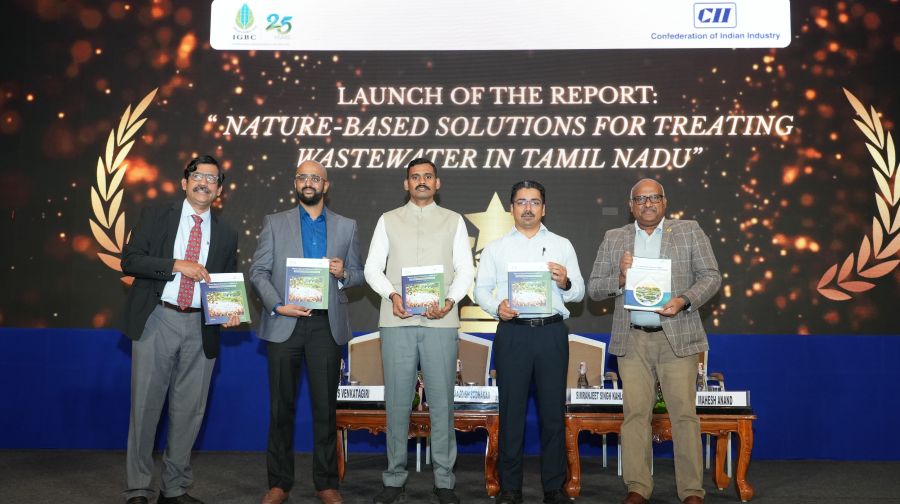
Titled Nature-Based Solutions for Treating Wastewater in Tamil Nadu, the report was launched at a conference held at ITC Grand Chola, Chennai. The session brought together government representatives, industry experts, researchers and sustainability practitioners to discuss decentralised and nature-inspired wastewater treatment systems for urban and community settings.
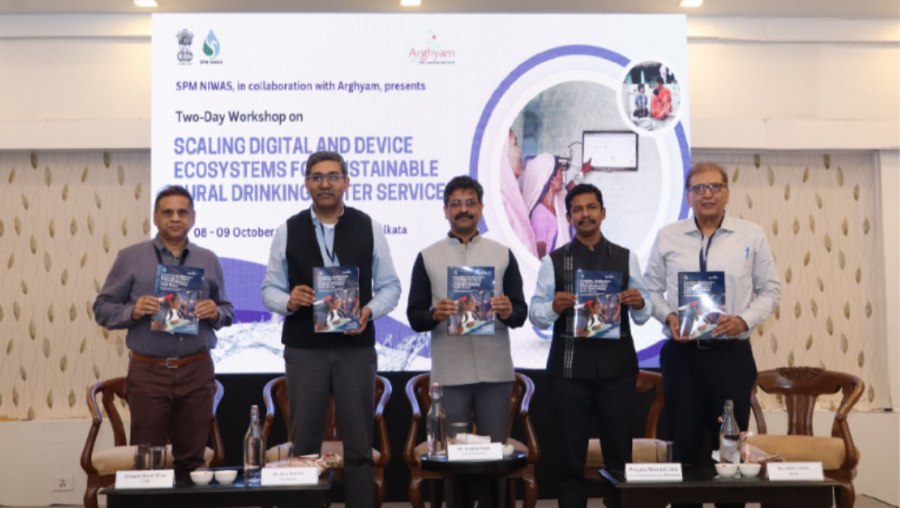
The report was launched by Thiru. Simranjeet Singh Kahlon, I.A.S., Managing Director, Chennai Rivers Transformation Company Limited (CRTCL), and Thiru. Bakan Jagdish Sudhakar, I.F.S., Chief Executive Officer, Tamil Nadu Green Climate Company.
Speaking at the event, Thiru. Simranjeet Singh Kahlon highlighted the link between wastewater management, river restoration and urban waterbody conservation.
“Effective wastewater management is critical to restoring our rivers and protecting urban water bodies. While Tamil Nadu has made significant progress in wastewater treatment, gaps in sewage collection and treatment across urban and rural local bodies highlight the need for innovative, context-specific solutions. Nature-based solutions offer considerable potential, particularly for decentralized wastewater treatment, while urban areas require approaches suited to higher and fluctuating wastewater volumes. Collaboration between government, industry and technical institutions will be essential to scale up these solutions and advance Chennai’s river restoration and sustainable urban development efforts.”
Thiru. Bakan Jagdish Sudhakar emphasised the role of nature-based approaches in climate-responsive infrastructure and ecosystem restoration.
“Nature-based solutions have tremendous potential to address environmental challenges at multiple scales, from restoring coastal ecosystems to enabling sustainable wastewater treatment. Tamil Nadu has demonstrated leadership in ecosystem restoration and is already implementing nature-based wastewater treatment solutions in schools across Greater Chennai. The CII IGBC guidelines provide an important opportunity to scale up these practices across cities and urban local bodies through collaboration among government, industry and other stakeholders. Such solutions will be critical to Tamil Nadu’s green transition and its ambition to achieve carbon neutrality ahead of 2070.”
Welcoming delegates, Mr. Mahesh Anand, Chairman, IGBC Chennai Chapter, said Tamil Nadu had 1,520 IGBC-registered projects covering approximately 1.02 billion square feet. He noted that rising urbanisation and water demand have made sustainable wastewater management increasingly important for resilient cities.
Mr. Anand said, “Tamil Nadu has emerged as a significant contributor to India’s green building movement, with 1,520 IGBC-registered projects covering approximately 1.02 billion sq. ft. As urbanisation and water demand increase, sustainable wastewater management has become critical to building resilient cities. CII IGBC’s Report and Guidebook on Nature-Based Solutions for Wastewater Treatment in Tamil Nadu aims to equip urban local bodies, engineers and planners with practical insights into adopting nature-based solutions for wastewater treatment and safe water reuse. Through greater collaboration among government, industry and technology providers, we hope to accelerate the adoption of suitable solutions that conserve water resources and advance sustainable urban development across the state.”
The conference also featured a panel discussion titled “From Innovation to Impact: Scaling Nature-Based Solutions for Wastewater Management,” moderated by Mr. Venkat Jayagopi, Senior Portfolio Manager, Energiva Ventures. The panel included Mr. Shreekant Jha, Co-Founder and CEO, GoWatr Private Limited; Ms. Hrydhal Damani, Director, Urban Development, ICF; Dr. Ritesh Vijay, Scientist F and Chair, Wastewater Management Division, CSIR–NEERI; Mr. R. S. Krishnaswamy, Member, Steering Committee, Siruthuli; and Ms. Kshitija Akre, SPARC.
The discussion examined the opportunities and challenges involved in applying innovative wastewater treatment methods and expanding their use across urban and community settings.
Technical presentations covered nature-based wastewater treatment approaches and their potential applications in Tamil Nadu. Ar. Saurav Choudhury, Senior Counsellor, IGBC, introduced the subject, while Ar. Asphia Taimur, Associate Counsellor, IGBC, presented an overview of nature-based solutions for wastewater treatment in the state. Mr. Ganges Reddy, Founder and CEO, BlueDrop Waters, presented innovative approaches to sustainable wastewater treatment, and Mr. Tharun Kumar, Founder and CEO, ECOSTP, discussed decentralised treatment systems for sustainable communities.
The programme concluded with discussions on locally adaptable wastewater treatment models, resource efficiency and collaboration among government, industry and technical institutions. CII-IGBC said the initiative was aimed at supporting the adoption of nature-based solutions and advancing sustainable water management in Tamil Nadu.