Building India’s Workforce with Women at the Centre
India’s factories, project sites and power corridors have long relied on a familiar workforce blueprint, one that has delivered scale but also quietly limited who participates in that growth. Today, as investments surge across infrastructure, manufacturing and clean energy, that model is beginning to show strain, with talent shortages emerging as a real and immediate constraint. At a time when industries are under pressure to scale, relying on traditional talent pools is no longer sustainable. The question is not just where the next wave of talent will come from, but how the system itself must evolve to include those who have long remained on the margins.
Women represent one of the most underutilised segments of this workforce. Their low participation in technical and industrial roles reflects gaps in access, skilling and workplace design rather than capability. Project Pragati was created in response to this reality. Designed as a structured intervention, it focuses on building technical skills, confidence and clear entry pathways for women into shop floor and site-based roles. Within the Sterlite ecosystem, it has already begun to influence how organisations approach hiring, training and workforce readiness.
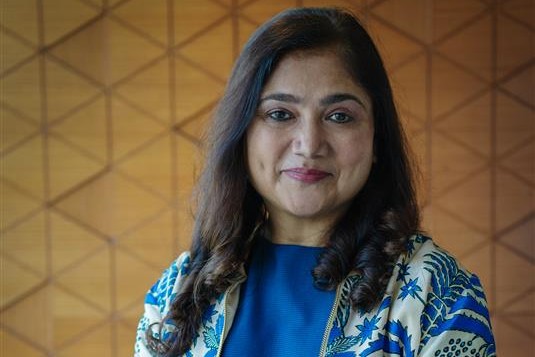
In this conversation with TheCSRUniverse, Ruhie Pande, Group CHRO and CMO at Serentica, Resonia and Sterlite Electric, shares how such efforts are turning inclusion into a measurable driver of business performance and long term workforce resilience.
Read the full interview below.
Q&A
Q. What prompted the creation of Project Pragati, and what specific gaps were you trying to address in bringing more women into industrial and technical roles?
A. Project Pragati emerged from a contradiction we could no longer ignore. As the manufacturing, power, and infrastructure sectors expand rapidly, we face an acute talent deficit, yet women remain statistically invisible in core technical and operational roles.
In my experience, this was never a question of capability; it was a crisis of access. The traditional skilling ecosystem was simply not designed with women or the granular realities of the shop floor, sites, and field roles in mind. Combined with long-standing cultural perceptions regarding ‘appropriate’ work, the system was inadvertently geared to quietly filter women out.
We built Project Pragati to deliberately re-engineer that equation. We moved beyond mere ‘intent’ to structural impact, focusing on rigorous, application-led technical training that mirrors real-world conditions. It is not a parallel initiative; it is a strategic response to a talent challenge, unlocking an underutilized workforce to future-proof the sector’s technical DNA.
Q. As India ramps up investments in power, manufacturing, and infrastructure while facing a steady outflow of skilled talent, how do you see women’s participation addressing this talent gap in a structural way?
A. India’s industrial growth story is entering a decisive phase where capacity expansion and investment are outstripping talent availability. When you factor in the steady outflow of experienced professionals to global markets, it is clear we are facing a structural, not cyclical, challenge.
In this context, women’s participation moves beyond the realm of inclusion; it becomes central to how we solve for scale. Tapping into this demographic is the most immediate and sustainable way to deepen the talent pipeline. However, this shift will not happen organically; it requires deliberate design. We must reimagine the entire lifecycle—from industry-aligned skilling and hiring to workplace integration.
When we institutionalize these credible entry pathways, women don't just bridge gaps; they bring a level of consistency, adaptability, and ownership that normalizes their presence in traditionally absent spaces. If India is to build a resilient, future-ready industrial workforce, it will have to draw from its full talent potential. Women will be integral to that shift not as a parallel stream, but as a defining force in shaping the workforce of the future.
Q. You’ve seen women’s participation increase significantly within your ecosystem. Beyond representation, what changes have you observed in terms of productivity, workplace culture, and overall business performance?
A. The most striking observation is how rapidly the conversation shifts from representation to measurable results. Once women settle into core operational roles, the impact is visible, measurable, and compounding.
On the shop floor, we see enhanced operational stability. Women who undergo structured, industry-aligned training bring a high degree of focus to execution, directly improving process adherence and quality outcomes. Culturally, the shift is equally profound. Teams become more balanced, communication is more precise, and there is a heightened sense of accountability. From a business standpoint, the advantage is a deeper, more resilient talent ecosystem that reduces reliance on external lateral hiring.
Diversity, in this sense, is not an initiative; it is embedded in how the business grows.
Q. What are the biggest barriers to hiring women for shop-floor and site-based roles today, and what has proven effective in overcoming them?
A. The barriers are less about gender and more about legacy system design. Historically, the pathways to the site and shop floor were neither visible nor accessible to women, be it in terms of skilling, hiring or on-ground integration.
The most persistent gap is at the entry level. While foundational education exists, there is a lack of structured pipelines that translate theory into industry-ready skills. This is compounded by untested assumptions - questions around safety, shift timings, and the physicality of roles - perceptions that have historically restricted access.
What has proven effective is a deliberate end-to-end intervention. It starts with building capability before the hire through hands-on training that reflects real operating conditions. But the leadership commitment is equally critical: providing clear role definition, sustained mentorship, and infrastructure that enables participation.
When you redesign the system with intention, the barriers naturally dissolve. What emerges is not just greater participation, but a more robust and future-ready workforce.
Q. You’ve worked on reducing hiring timelines and building internal pipelines. How have programs like Project Pragati changed your approach to hiring for technical roles?
A. Project Pragati has facilitated a fundamental shift from a transactional, market-led hiring model to a structured, capability-building mandate. We no longer view hiring as a one-time ‘fill-the-gap’ exercise; we view it as engineering a talent ecosystem. By building capability in tandem with business demand, we have de-risked our talent supply chain.
This approach significantly reduces onboarding friction and ensures that individuals contribute with greater alignment and ownership from day one. Crucially, we have redefined ‘job readiness.’ We now index heavily on potential, adaptability, and cultural fit rather than just technical skills or previous designations. This repositioning allows us to move from reactive management to proactive talent leadership, ensuring greater agility, improved hire quality, and stronger long-term retention.
Overall, Pragati has helped us reposition hiring as a strategic lever, where building the right talent ecosystem is as critical as filling roles for both current and future business needs.
Q. Preparing women to be productivity-ready within six months is an ambitious goal. What does that journey look like in terms of training, on-ground exposure, and confidence-building?
A. Preparing women to be productivity-ready within six months is built on a calibrated combination of technical competence, capability development, and cultural integration.
For us, readiness begins with clear, role-aligned training frameworks that focus on practical, application-led learning. Rather than separating learning from execution, training is designed to be embedded within the flow of work, enabling individuals to build skills while actively contributing to operations. By integrating participants into live operational environments from the outset, we eliminate the ‘adjustment cycle.’ Familiarity with safety protocols and operational rhythms is built progressively through real-time execution.
Equally vital is psychological safety and environment rooted in confidence and inclusion. In traditionally male-dominated settings, we ensure confidence is reinforced through structured mentoring and equitable practices. The goal is to foster solution-oriented ownership. This integrated journey, where training and exposure operate together, ensures that productivity is a natural progression, creating a workforce that is technically capable and aligned with high-performance demands.
Q. How are you expanding access to these opportunities beyond metro and corporate environments, and what challenges come with that shift?
A. Expanding access beyond metro and corporate environments requires us to rethink the geography of opportunity. A significant portion of our talent exists outside urban centers, so we must build pathways closer to where that talent resides.
Through Project Pragati, we are creating structured entry routes in non-metro regions by focusing on pre-hire capability building, embedding learning into real work, and ensuring early cultural alignment. The intent here is to create environments that are accessible, stable, and aligned to long-term growth.
The challenge, however, is often structural and cultural - limited access to technical training, deep-seated societal perceptions, and the need to strengthen on-ground infrastructure and managerial capability.
Addressing this requires a system-led approach where skilling, workplace design, and managerial behaviors evolve in sync. Over time, this transforms ‘access’ from a constraint into a strategic advantage for building a resilient, future-ready workforce.
Q. As you work toward significantly increasing women’s participation in the coming years, what broader shifts are needed across industry and policy to make inclusion a sustained workforce strategy?
A. Inclusion must be institutionalized, not treated as a parallel agenda. It must be embedded into how the workforce is built and sustained.
From an industry perspective, the priority is investing in intentional ‘build’ models with clear, intentional entry pathways. We cannot rely solely on market-ready talent in supply-constrained sectors such as energy and manufacturing. When capability development is integrated with on-ground readiness, inclusion becomes scalable.
We also need workplace designs that remove friction. From safe infrastructure to predictable work rhythms and clearly defined roles, we need to build a frictionless environment where individuals can perform effectively. A broader mindset shift around roles and leadership is also needed. Long-standing biases must be addressed through awareness, open dialogue, and stronger mentorship ecosystems. This enables women to grow without conforming to traditional leadership norms.
From a policy perspective, the focus should be on enabling continuity. Progressive policies around flexibility and safety along with everyday practices must be supported by consistent on-ground implementation to build trust and long-term engagement.
Ultimately, sustained inclusion only comes when we move beyond a ‘trade-off’ mindset. When diversity is embedded into our operating systems, it becomes a driver of operational excellence, creating a space where inclusion and business performance mutually reinforce each other.



.png)