Bridging Science and Industry: How Biocon Academy is Shaping India’s Biopharma Talent Future
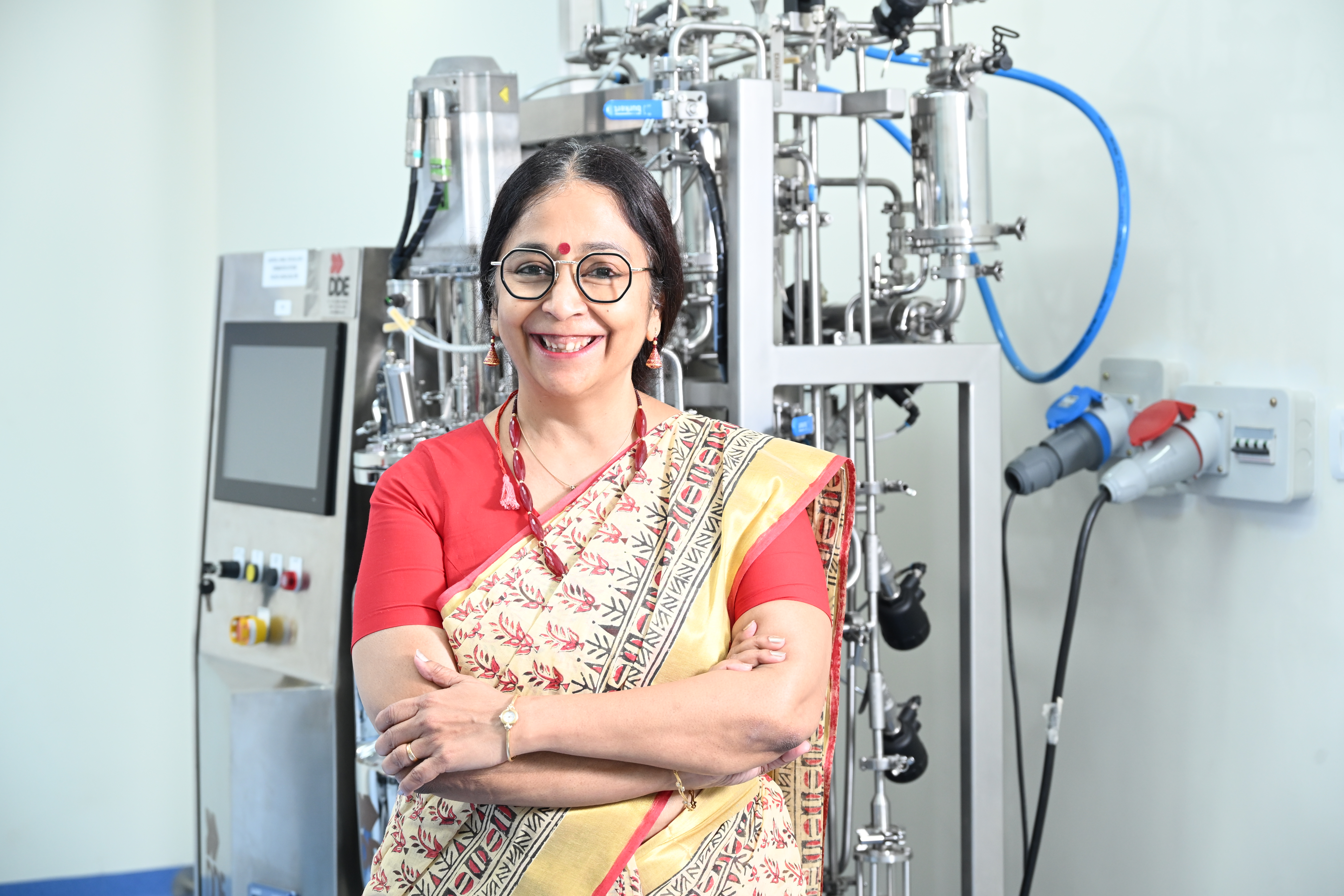
As India positions itself as a global hub for biotechnology and biopharmaceutical innovation, the need for industry-ready talent has never been more critical. In this exclusive interaction with TheCSRUniverse, Ms. Bindu Ajit, Associate Vice President and Program Dean, Biocon Academy, shares how the institution is redefining skilling in life sciences by bridging the long-standing gap between academic learning and real-world industry requirements.
Established under the aegis of Biocon, the Academy has evolved into a strategic platform that integrates academic rigor with hands-on industry exposure, enabling graduates to transition seamlessly into high-quality, regulated environments. In the interview, Bindu Ajit highlights how the Academy aligns with national initiatives such as Skill India and Biopharma SHAKTI, while also fostering gender inclusion—driven by the broader vision championed by Kiran Mazumdar-Shaw.
Scroll down to read the full Interview:
Q. Biocon Academy was established in 2013 under Biocon — what was the original vision, and how has it evolved in response to India’s growing biopharma ambitions?
A. Since its establishment in 2013 under the aegis of Biocon, Biocon Academy was conceived as a strategic intervention to address a long-standing challenge in India’s biotechnology ecosystem—the gap between academic education and industry-ready skills. While India has consistently produced a strong pool of science and engineering graduates, the rapidly evolving biopharmaceutical industry required professionals who could contribute effectively from day one in high-quality, regulated environments.
At its core, Biocon Academy was built on a clear vision: to emerge as a recognized center for advanced learning in biosciences that equips biotechnology and engineering graduates with the proficiency needed to enhance their career prospects. This vision was guided by the belief that meaningful skilling must be closely aligned with real industry needs, while remaining accessible and inclusive.
The Academy’s mission—to train and develop industry-ready talent for the biopharma sector and enable global competitiveness—has remained consistent over the years. As India’s biopharmaceutical landscape expanded beyond generics into complex biologics, biosimilars, and knowledge-intensive functions, Biocon Academy continually evolved its program offerings to remain future-ready. This includes the recent launch of industry-focused programs in Drug Metabolism and Pharmacokinetics (DMPK) and Artificial Intelligence in Life Sciences, designed to address the growing demand for specialized and digital skills across R&D, analytics, and decision-making functions.
To date, over 1,300 graduates from Biocon Academy have transitioned into meaningful roles across the biopharma and life sciences ecosystem, reflecting the strong outcomes of its industry-endorsed, job-linked skilling model. Today, the Academy plays a significant role in strengthening India’s life sciences talent pipeline by seamlessly integrating academic rigor, hands-on industry exposure, and inclusive skilling—while actively supporting India’s aspiration to emerge as a global hub for biopharma innovation.
Q. How does Biocon Academy align with recent government initiatives like Biopharma SHAKTI and India’s broader biotech innovation agenda?
A. While initiatives such as Biopharma SHAKTI are shaping India’s biotech roadmap today, Biocon Academy had envisioned and acted on these priorities more than 12 years ago. From early on, the Academy has focused on building specialized skills and strengthening industry–academia collaboration, closely aligned with India’s long-term ambition of becoming a global biopharma and biotechnology hub.
Biocon Academy’s approach strongly aligns with government initiatives such as Biopharma SHAKTI, Make in India, Skill India, and India’s broader biotechnology innovation agenda. These initiatives emphasize building indigenous capabilities, promoting high-value manufacturing, and creating a skilled workforce to support innovation-led growth. By offering specialized training in areas such as biologics and biosimilars, biomanufacturing, quality, analytics, drug metabolism, artificial intelligence in life sciences, and data-driven decision-making, the Academy directly contributes to these national priorities.
Our programs are designed not merely to impart knowledge, but to build competencies that the industry actively seeks, thereby supporting India’s ambition to become a global biopharma and biotech hub.
Q. With over 75% female participation, what specific strategies have you implemented to drive gender inclusion in biotechnology?
A. Gender inclusion at Biocon Academy is closely aligned with Biocon’s stated commitment to achieving gender parity (50:50) by 2030, a vision articulated and championed by Ms. Kiran Mazumdar-Shaw, Executive Chairperson of Biocon. Her leadership as a globally recognised woman entrepreneur strongly reinforces the organisation’s focus on equity and inclusion.
At the Academy level, gender inclusion has been a natural outcome of our learner-centric and inclusive skilling framework, rather than a standalone initiative. With over 75% female participation across programs, Biocon Academy reflects the strong aspirations and capabilities of women in the life sciences sector. This is also reflected in outcomes, with 161 out of 979 women successfully placed in R&D roles, highlighting women’s growing representation in advanced and research-oriented biotechnology careers.
This has been enabled through targeted outreach, CSR-supported scholarships that reduce financial barriers, strong mentorship, and the creation of a safe and supportive learning environment.
Importantly, women learners are encouraged to pursue careers across the entire biotechnology value chain—not only in laboratory-based roles, but also in quality, analytics, manufacturing, Regulatory Affairs, marketing and emerging digital domains such as AI in Life Sciences. By providing industry-aligned, job-linked training and clear career pathways, Biocon Academy supports women in building sustainable and future-ready careers, while strengthening gender diversity across the biopharma industry.
Q. Could you elaborate on the role of Biocon’s in-house scientists and industry exposure in shaping student outcomes?
A. A cornerstone of Biocon Academy’s success is the deep involvement of Subject Matter Experts (SMEs) from the Biocon ecosystem. Learners benefit from direct interaction with professionals who are actively engaged in R&D, manufacturing, quality systems, and regulatory functions, helping them gain a clear understanding of industry expectations, compliance standards, and real-world problem-solving.
In its pursuit of experiential learning, functional visits play a pivotal role by enabling students to observe theoretical concepts in action within real biopharmaceutical environments. Biocon Academy sincerely acknowledges the voluntary contribution of SMEs from Biocon and Syngene International, who, despite not receiving any remuneration, generously dedicate their time and expertise to train and support approximately ten batches each year. Their commitment provides students with invaluable insights, mentoring, and hands-on industry exposure.
Complemented by hands-on learning through case studies, simulations, and industry-linked projects, this integrated approach ensures that students graduate with strong technical competence as well as professional maturity, significantly enhancing their employment readiness and supporting Biocon Academy’s broader CSR mission of building a future-ready biopharma workforce.
Q. Biocon Academy collaborates with globally recognized institutions—could you share key partnerships and how they enhance learning outcomes?
A. Biocon Academy collaborates with globally and nationally recognized academic institutions and industry partners to deliver high-quality, future-ready programs. Key international academic collaborations include Keck Graduate Institute, Claremont, California (USA), while domestic partners include BITS Pilani, JSS Academy of Higher Education & Research (JSS AHER), Ramaiah College of Arts and Science, and Institute of Bioinformatics and Applied Biotechnology (IBAB). These partnerships enable the co-creation of programs that are relevant, rigorous, and aligned with evolving industry needs.
Biocon Academy also has a tie-up with the University of Glasgow as part of its M.Sc. Industrial Biotechnology programme, which includes a six-week Industrial Immersion Program in Biopharmaceutical Technology.
In addition, hands-on industry partners such as Thermo Fisher Scientific, Merck, and BiOZEEN strengthen practical learning through real-world exposure and application-oriented training. Together, these collaborations enhance curriculum quality, introduce interdisciplinary learning, bring global best practices into the classroom, and help benchmark Indian skilling initiatives against international standards—thereby improving learner outcomes and employability.
Q. How important are industry-academia collaborations in bridging the biotech skill gap, and what role does Biocon Academy play in this ecosystem?
A. Industry–academia collaboration is critical to bridging the biotech skill gap, and Biocon Academy follows a unique and impactful model in strengthening this collaboration within the biotechnology ecosystem. The Academy plays a pivotal role as a strategic bridge, translating evolving industry requirements into structured, outcome-oriented learning programs that complement traditional academic education. Very few initiatives in India offer this depth of direct industry exposure and engagement for learners.
Biocon Academy works closely with industry leaders, academic institutions, and subject-matter experts to co-create curricula that are current, application-driven, and aligned with emerging skill needs. This ensures that learners are trained not only in foundational science, but also in the practical competencies required by the biopharma and biotech industry.
Through short‑term certificate programs, hands‑on training, and exposure to real‑world industry practices, Biocon Academy enhances graduate employability and prepares learners for immediate integration into the biotech and pharma workforce. By continuously engaging with employers, policymakers, and the broader skilling ecosystem, the Academy helps address talent gaps, strengthen workforce readiness, and build a sustainable, future‑ready pipeline of biotech professionals.
Q. Could you share a few impactful success stories that highlight the Academy’s role in transforming lives and careers?
A. Over the years, Biocon Academy has witnessed several impactful success stories, with more than 1,300 graduates successfully transitioning from conventional academic pathways into meaningful industry roles. Today, Biocon Academy alumni are employed across 85+ biotech and pharmaceutical companies, with several progressing into senior management positions. The Academy’s alumni network is now spread across the globe, reflecting the relevance and quality of its industry-aligned programs.
Notable alumni include Faizan A., Principal at Foundation Medicine, California (USA); Sweety Mathew, Global RA CMC Lead at Novo Nordisk; and Arpitha R., Founder & CEO of Bionaltek, highlighting diverse career pathways across leadership, global roles, and entrepreneurship.
Biocon Academy has also played a transformative role in supporting women returning to the workforce, particularly those resuming careers after professional breaks. Stories such as those of Arya (Biosciences, Batch 21) and Sangita Mishra (GRA, Batch 1) exemplify how the Academy has empowered returning mothers to rebuild successful careers while balancing personal responsibilities.
These success stories highlight Biocon Academy’s role not only as a skilling institution, but as a platform for sustained social and professional transformation.
Q. What have been some of the key challenges in scaling a high-quality biotech skilling initiative, and how has Biocon Academy addressed them?
A. Scaling high-quality biotech skilling initiatives presents several challenges, including maintaining consistency, ensuring faculty excellence, upgrading infrastructure, identifying the right partners, and keeping pace with rapid technological change. Biocon Academy addresses these challenges through a robust four-pillar learning model that places equal emphasis on application-oriented learning, functional industry visits, hands-on training, and professional skills development.
These efforts are supported by strong governance frameworks, continuous curriculum reviews, structured industry feedback loops, and strategic partnerships.
Despite these efforts, scaling beyond a certain level remains challenging due to the critical importance of functional industry visits across all programs. To address this, Biocon Academy is actively engaging with a wider network of industry partners and is also leveraging technology such as AR/VR and AI-enabled learning solutions to supplement physical exposure and ensure learners continue to receive industry-relevant, experiential training at scale.
Q. What is the roadmap for Biocon Academy over the next 3–5 years in terms of scale, new programs, or geographic expansion? Are there plans to integrate emerging technologies such as AI, bioinformatics, or digital labs into the curriculum?
A. Looking ahead, Biocon Academy aims to expand its footprint by launching new programs aligned with evolving industry needs and by extending its geographic reach, including the introduction of the Biocon Academy model in Malaysia in collaboration with the Malaysian government. At the same time, the Academy is deepening the integration of emerging technologies, particularly Artificial Intelligence, into its curriculum. As an initial step, a new program in AI in Life Sciences has recently been launched, with plans to scale the program through increased batch sizes over the coming years.
Following the successful completion of the pilot batch, Biocon Academy is also continuing and strengthening its partnership with the University of Glasgow as part of the M.Sc. Industrial Biotechnology programme, which includes a six-week Industrial Immersion Program in Biopharmaceutical Technology. This initiative offers learners valuable international exposure and hands-on industry experience.
The focus will continue to be on developing industry-aligned, employment-linked programs that are scalable, inclusive, and impactful, while streamlining curricula and training frameworks across existing offerings. In parallel, Biocon Academy is integrating new technologies across its operations, including automation and digital learning tools, to enhance delivery efficiency, learning outcomes, and long-term sustainability.






.png)