
TREESCAPES 2026 Concludes in Delhi, Spotlighting Agroforestry’s Role in Climate Resilience
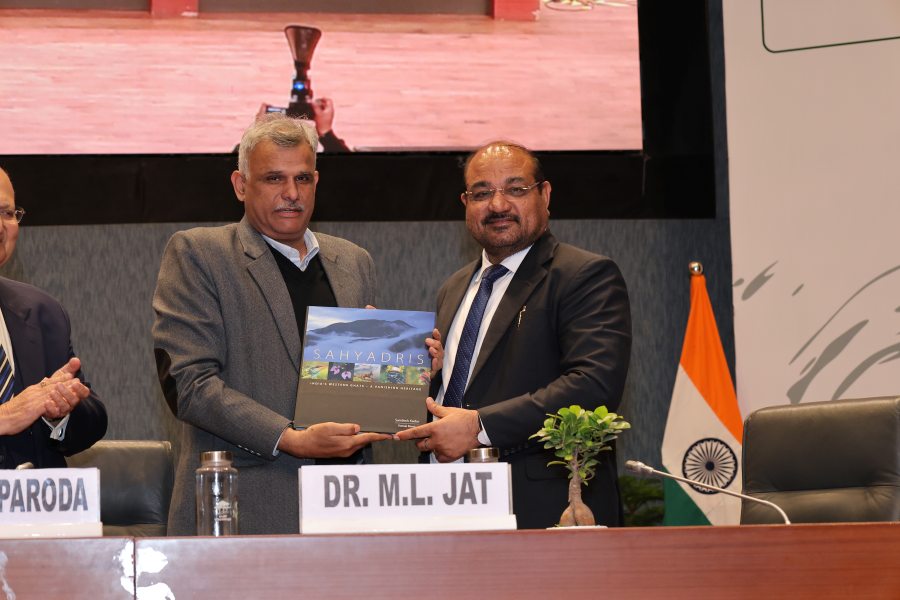
New Delhi, February 07, 2026: The Centre for International Forestry Research and World Agroforestry (CIFOR-ICRAF), in collaboration with the Indian Council of Agricultural Research (ICAR), concluded the first South Asian Agroforestry and Trees Outside Forests (AF-TOF) Congress, TREESCAPES 2026, held from February 5–7 at the National Agricultural Science Complex (NASC), Pusa Campus, New Delhi.
The regional congress brought together policymakers, researchers, industry representatives, financial institutions, civil society organisations, farmers, and youth from across South Asia to deliberate on strengthening tree-based agriculture and Trees Outside Forests systems. Discussions focused on enhancing climate resilience, restoring landscapes, improving farmers’ livelihoods, and supporting tree-based entrepreneurship and economic growth.
The event was attended by senior representatives from South Asian countries, including Dr Madan Prasad Pariyar, Minister for Agriculture and Livestock Development, Government of Nepal, and Mr Ahmed Hassan Didi, Minister of State for Agriculture and Animal Welfare, Republic of Maldives, alongside officials from India and the region.
Addressing the gathering, Dr M. L. Jat, Secretary (DARE) and Director General, ICAR, said, “Asia is home to some of the world’s most climate-vulnerable agricultural systems, yet it also holds immense potential to lead in nature-based economic transformation. Recent regional studies show that agroforestry has helped reduce deforestation and avoid tens of millions of tonnes of greenhouse gas emissions annually while supporting rural livelihoods. TREESCAPES demonstrates that scaling success will depend on unlocking green finance, empowering local institutions, and integrating youth and women into extension and entrepreneurship models. For South Asia, tree-based agriculture is not just about restoring landscapes—it is about future-proofing rural economies.”
Mr Manoj Dabas, India Country Director, CIFOR-ICRAF, highlighted the economic and climate potential of agroforestry systems, stating, “India’s tree-based systems already account for nearly 20 percent of national carbon stocks, yet the country continues to import over USD 7 billion worth of wood and wood-based products annually. This contradiction highlights a significant opportunity. TREESCAPES has brought together evidence showing that tree-based agriculture can reduce import dependence, strengthen rural incomes for marginal farmers, and deliver measurable climate outcomes. Agroforestry must be positioned not as an environmental add-on, but as core rural infrastructure.”
Over the course of the congress, participants examined policy and regulatory frameworks, forest certification with greater smallholder integration, and the role of agroforestry and Trees Outside Forests in delivering ecosystem services. The programme included plenary sessions, a dedicated ministerial hour, and thematic discussions on digital and geospatial tools, water-secure landscapes, extension systems, capacity building, and the integration of trees in urban environments.
In the context of India’s green economy ambitions and its net-zero target for 2070, the deliberations underscored the importance of institutional collaboration and public–private partnerships to scale agroforestry initiatives sustainably. The congress concluded with a shared emphasis on positioning tree-based agriculture as a practical pathway to climate resilience, improved livelihoods, and long-term economic stability across South Asia.