
The Ocean Cleanup Enters India to Address Plastic Leakage from Mumbai Waterways
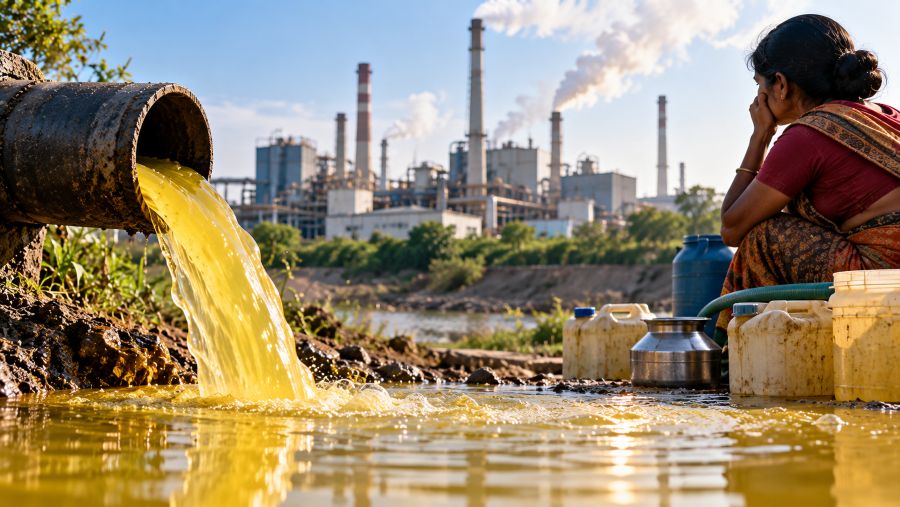
Mumbai, February 10, 2026: The Ocean Cleanup, a global non-profit organisation focused on eliminating plastic pollution from oceans, has formally entered India through its global 30 Cities Program, with Mumbai selected as a priority intervention site. The initiative aims to curb plastic waste flowing from urban waterways into the Arabian Sea and the Indian Ocean.
Mumbai has been identified as one of 30 cities worldwide that together contribute nearly one-third of global river-based plastic emissions into the ocean. As part of its preparatory work, The Ocean Cleanup conducted a Smart Rivers Survey across the metropolitan region using drones, AI-enabled remote sensing cameras, GPS drifters and data modelling tools to map pollution sources and plastic flow patterns.
The survey estimates that approximately 5 million kilograms of plastic waste enter the Arabian Sea and Indian Ocean annually from Mumbai’s waterways. This leakage affects nearly 220 km of coastline, 152 sq. km of mangroves, over 100 protected marine and coastal species, and close to 1.9 million livelihoods linked to fisheries and coastal ecosystems.
Based on data-driven analysis, the Trombay and Malad waterways have been identified as the first priority sites for intervention. The Ocean Cleanup plans to deploy river interception technologies at these locations in 2026. Once operational, the initial systems are expected to recover between 61 and 92 tonnes of plastic waste per year, preventing it from reaching marine ecosystems. Studies cited by the organisation indicate that nearly 80% of marine litter along India’s coastlines consists of plastic.
India has emerged as a strategic geography for The Ocean Cleanup due to the concentration of plastic emissions from a relatively small number of rivers. Research by the organisation shows that around 1,000 rivers globally account for nearly 80% of plastic entering the ocean. Through the 30 Cities Program, the organisation aims to cut one-third of global river-based plastic emissions by targeting high-impact urban waterways, with Mumbai identified as a critical intervention point.
Boyan Slat, Founder & CEO, The Ocean Cleanup, said, “India is a critical geography in the global fight against plastic pollution. With such a large proportion of plastic on India’s coasts, stopping waste before it reaches the ocean is crucial in safeguarding marine ecosystems. Through our 30 Cities Program, Mumbai has been identified as a priority intervention point, and by working closely with local government bodies, implementation partners, NGOs, and community partners, we aim to deploy solutions that are effective and aligned with local needs and long-term development goals.”
The deployments will be carried out in collaboration with the Municipal Corporation of Greater Mumbai and the Maharashtra Pollution Control Board, ensuring integration with existing waste management systems and regulatory frameworks.
The Mumbai initiative marks India’s first on-ground engagement with The Ocean Cleanup and is expected to inform similar interventions in other Indian cities. The organisation views the project as a scalable model for reducing ocean-bound plastic through targeted, technology-led action in high-impact urban regions.