
The Digital Bridge to Employability: Why Foundational Literacy Is the First Step Toward a Skilled India
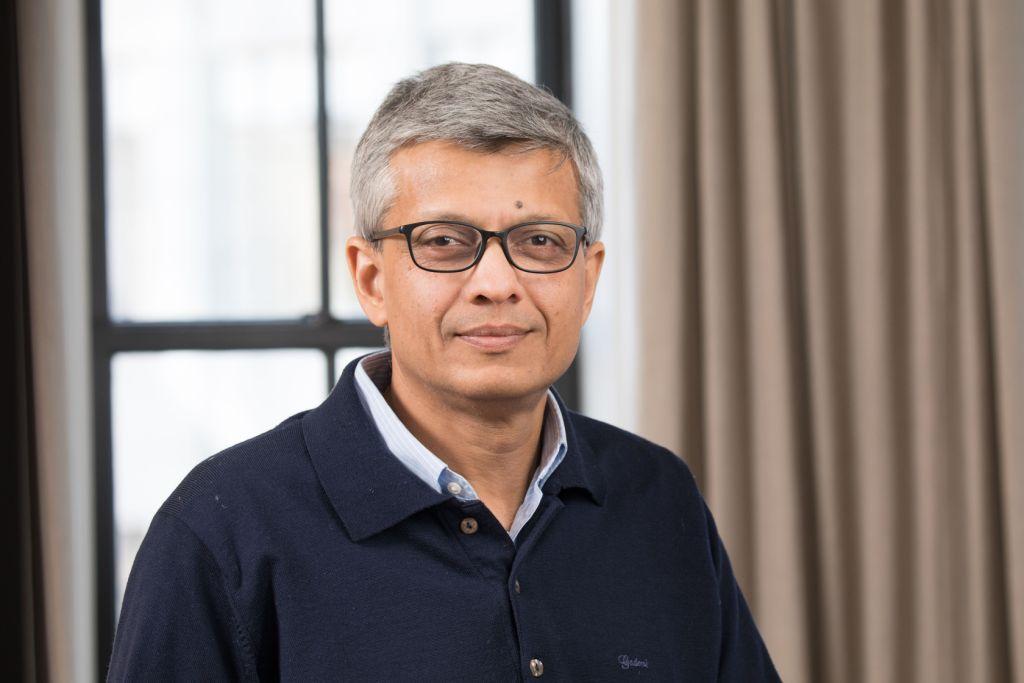
As artificial intelligence rewrites the rules of work and even “future-proof” skills like coding get automated, India stands at a critical crossroads. The conversation around employability can no longer be limited to digital skills, industry 4.0 readiness, or workforce mobility. As Mr. Deepak Verma, CEO of EnglishHelper, powerfully argues in this column for TheCSRUniverse, the real foundation of a future-ready India lies much deeper- within our ability to listen, speak, read, write, and think critically.
His article examines why LSRW skills are not just classroom competencies but the backbone of lifelong learning in a rapidly shifting digital economy. Drawing from national data and emerging state-led reforms- such as Punjab’s pioneering move to treat English as a workforce skill- Mr. Verma explains how foundational literacy determines whether India’s youth can truly benefit from advanced skilling, digital learning platforms, and AI-led transformation.
At a time when technology is evolving faster than ever before, this piece reminds us of a simple truth: the ability to learn is the most important skill of all- and it begins with literacy. This thought-provoking insight challenges policymakers, educators, and CSR leaders to reimagine employability from the ground up.
Dive in to explore why India’s skilling ambitions must start with strengthening the learning abilities of every child, youth, and worker.
The Digital Bridge to Employability: Why Foundational Literacy Is the First Step Toward a Skilled India
Technology is reshaping the world at a pace no previous generation has experienced. In just a few decades, we have moved from mainframes to PCs, to the internet, to cloud computing, and now into an era defined by artificial intelligence. Each wave has created new job categories while simultaneously transforming or eliminating existing ones. Even computer programming—long viewed as a future-proof skill—is now being disrupted by AI tools such as Cursor and Lovable, which automate code generation. The message is clear: the nature of work is fluid, and the skills that matter today may look entirely different tomorrow.
This rapid transformation has raised the bar for employability. Across sectors—from manufacturing to retail to agriculture, jobs increasingly require digital competence and the ability to work with dynamic, evolving information. Tasks that once depended solely on manual execution now rely on digital workflows: mobile reporting, remote monitoring, online learning modules, or app-based customer interactions. Digital literacy has become central to workforce participation.
Equally important, employers expect workers to stay current with constantly changing processes, regulations, and tools. Knowledge is no longer static. A trained worker once and left untouched for a decade will quickly become obsolete. In this environment, the most valued employees are not those who know one task well, but those who can learn, unlearn, and relearn with agility.
This makes one capability indispensable for India’s workforce: the ability to learn continuously. Job seekers today must be lifelong learners—able to absorb new information, adapt to emerging technologies, and build new competencies repeatedly. The future belongs not just to the technically skilled but to those who can evolve with technology.
But continuous learning depends on something more fundamental: foundational literacy. To engage with training content—whether a safety manual, a learning video, a digital interface, or a new workplace protocol—one must be able to listen, speak, read, write, and think critically. These LSRW skills form the scaffolding of all future learning.
This is where India faces a significant challenge. While the adult literacy rate is around 80%, large numbers of learners still struggle with basic communication, reading fluency, comprehension, and writing clarity. UNESCO and ASER data consistently show that many students progress through school without mastering foundational skills. These gaps persist in adulthood and directly undermine employability. A worker who cannot interpret instructions, communicate an issue, or understand digital training content is already at a disadvantage—even before advanced skilling begins.
This is why foundational literacy is not just a schooling issue; it is an employability issue. And forward-thinking states are beginning to recognize this.
A compelling example is Punjab, which now views English not merely as a language but as a skill. Recognizing that global mobility, academic readiness, and access to India’s modern workforce increasingly depend on English proficiency, the state has launched an ambitious effort to provide English skilling to all high school students. Through partnerships that leverage technology-enabled tools, Punjab aims to strengthen students’ foundational LSRW skills so they can absorb subject content more effectively, pursue higher education opportunities anywhere in the world, and participate confidently in India’s rapidly modernizing economy. The initiative reflects a critical insight: without strong foundational literacy—especially in English—students will struggle to benefit from advanced skilling or digital learning, limiting their long-term employability.
India is investing heavily in reskilling and upskilling for the jobs of the future—AI, data science, cybersecurity, advanced manufacturing, green energy, fintech. These initiatives are essential, but they implicitly assume that learners can already comprehend the material. If a trainee cannot read the module, follow the video, or ask clarifying questions, the programme’s impact is severely limited. Put simply: foundational literacy must precede or run in parallel with skilling—not follow it.
This becomes even more critical in the digital world. Digital learning platforms, virtual classrooms, online skilling courses, and workplace LMS systems all depend on language skills. Reading a prompt, typing a response, following a tutorial, or navigating an app requires LSRW. Without this foundation, the “digital bridge” turns into a digital barrier.
For India to convert its demographic potential into a truly skilled workforce, we must ensure that every learner—child, youth, or adult—has the foundational literacy needed to learn effectively. Strengthening LSRW is not an academic luxury; it is what makes all subsequent vocational, digital, and professional training meaningful.
In a world of rapid technological change, the first skill is the ability to learn—and that ability begins with foundational literacy. If India aims to build a future-ready workforce capable of thriving amid disruption, foundational literacy must stand at the center of our employability strategy.