Reframing Compassion as Systems Change: Upadhyaya Foundation on Mainstreaming Animal Welfare in India’s CSR
Animal welfare in India is no longer a peripheral question of compassion. It is increasingly a question of public health, urban governance, climate resilience, and institutional capacity. As cities expand, food systems industrialise, and zoonotic risks intensify, the boundaries between human and animal wellbeing are dissolving. In this evolving landscape, corporate social responsibility is being called upon to move beyond charity toward systemic intervention.
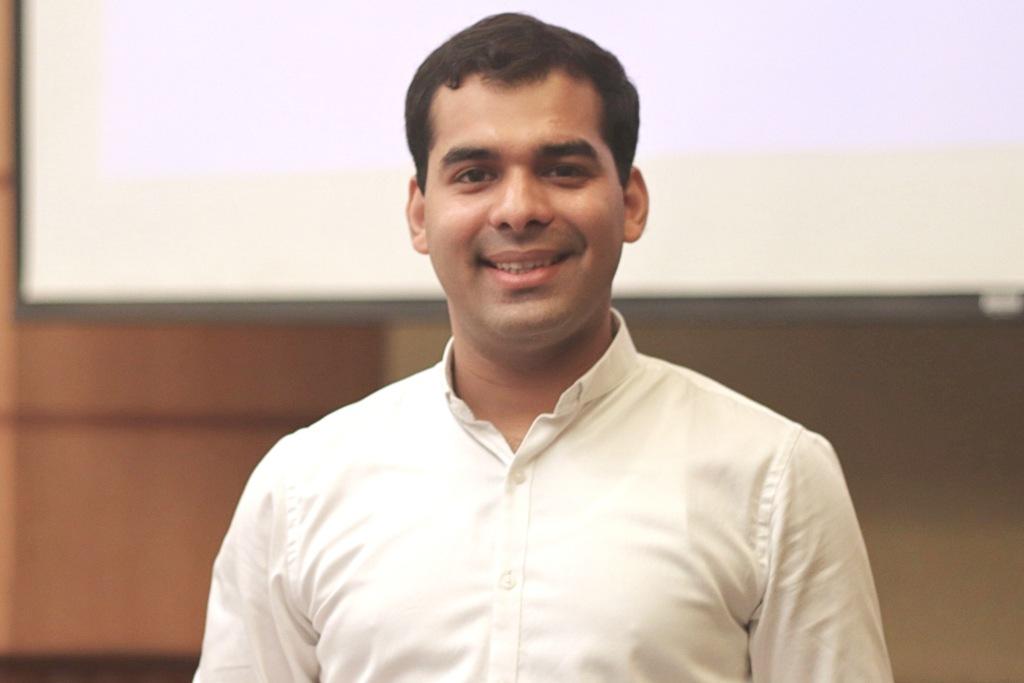
In this conversation, Siddharth Agarwal, Foundation Lead at Upadhyaya Foundation, argues that animal welfare must be repositioned as a co development priority embedded within mainstream CSR strategy. He speaks about the structural blind spots that have kept the sector underfunded, the significance of the India Animal Welfare Forum’s intersectional framing, and the launch of India’s first Animal Welfare Funding Circle with an initial corpus of ₹14 crore. From policy alignment and collaborative philanthropy to technology driven innovation and low visibility conservation efforts, Agarwal outlines a roadmap for integrating animal welfare into the broader architecture of India’s development agenda.
Scroll down to read the full interview:
Q. Animal welfare has traditionally sat at the fringes of mainstream CSR in India. From your perspective, what structural or narrative gaps have kept it from being recognised as a core development issue?
A. Animal welfare has largely been seen as a standalone or compassion-driven issue, rather than a core development concern with direct human consequences. That framing itself is a big gap. If we look closely, animal welfare is deeply connected to public health, urban safety, and environmental resilience. Zoonotic diseases are a clear example. There is strong global evidence showing that rabies transmission can be effectively controlled only when at least 70 percent of the dog population is consistently vaccinated. Without reaching this threshold, herd immunity does not sustain, and the risk of rabies transmission to humans remains high. When animals are part of our food systems and urban ecosystems, neglecting their welfare inevitably becomes a human crisis.
Another major gap lies in urban governance. Many organisations work on urban policy, waste management, infrastructure, and climate planning, yet animal welfare is rarely integrated into these conversations. This omission has real consequences. When waste management systems fail or urban planning ignores animals, human–animal conflict increases. At the same time, animal agriculture remains one of the significant contributors to greenhouse gas emissions globally, directly linking animal welfare to climate resilience and urban sustainability. These are not isolated issues. Public health, climate impact, food systems, and urban coexistence are deeply interconnected, yet animal welfare continues to sit outside mainstream planning frameworks.
What is missing is a consistent narrative that positions animal welfare as a co-development priority. Once this conversation is made mainstream, CSR can begin to see animal welfare not as charity, but as a systemic intervention that strengthens cities, public health, and social resilience.
Q. With animal welfare receiving just 1.5 percent of India’s CSR funding, how do you interpret this figure as a reflection of awareness, risk appetite, or policy alignment within corporate philanthropy?
A. The 1.5 percent figure needs to be interpreted with caution. We know that roughly 10–12 percent of CSR funding in India is broadly allocated to environment, sustainability, and biodiversity. Within that, animal welfare forms a small slice. But the real issue is not just how much funding is going in, it is where that funding is going.
Currently, we do not have sufficient data to understand whether this 1.5 percent is supporting gaushalas, preventive veterinary care, conservation work, policy advocacy, or industrial farm animal welfare. Without this clarity, it is difficult to assess whether funding is addressing systemic gaps or simply reinforcing a narrow set of visible interventions. From what we do see, there is a skew towards indirect and highly visible forms of care, such as infrastructure or shelters. Meanwhile, critical areas remain underfunded: policy work, advocacy, organisational strengthening, farm animal welfare, and the industrial-scale suffering embedded in food systems. Addressing these gaps requires sustained commitment and flexibility, elements that CSR is only now beginning to explore as it evolves from project-based funding toward more systemic approaches. This figure reflects the current orientation of CSR funding rather than a lack of intent. As the sector evolves, the conversation needs to move beyond funding volumes to a deeper examination of “where” and “how” resources are being deployed for long-term impact.
Q. The India Animal Welfare Forum positioned animal welfare at the intersection of public health, climate resilience, and urban safety. How important is this reframing in attracting more strategic and institutional CSR capital?
A. This reframing is critical. In many ways, it directly addresses the structural gaps we discussed earlier. CSR institutions are more likely to deploy capital when issues are backed by data, linked to measurable outcomes, and clearly connected to their existing thematic priorities. When animal welfare is positioned at the intersection of public health, climate resilience, and urban safety, it becomes legible to CSR decision-makers. For example, a public health-focused CSR may not initially see itself as an animal welfare funder. But when zoonotic disease prevention or urban rabies control is framed as a public health intervention, that alignment becomes clear. Similarly, climate and sustainability funders begin to see animal welfare as part of broader ecological balance and resilience.
This intersectional framing allows animal welfare to move from an emotional appeal to a strategic investment opportunity, grounded in evidence and systemic impact.
Q. Collaborative philanthropy is gaining momentum across sectors. What specific limitations of traditional and siloed CSR models prompted the launch of India’s first Animal Welfare Funding Circle?
A. Traditional CSR models often operate in silos. Funding is typically project-based, tightly restricted, and focused on short-term outputs. This makes it difficult to address systemic issues or invest in ecosystem strengthening. In animal welfare, this limitation becomes very visible. There is significant invisible suffering, especially in industrial farming and research settings, which does not lend itself to simple project metrics. We also see organisations working at the intersection of policy, law, and humane treatment of animals, but they lack the flexible funding required to build capacity or sustain long-term advocacy.
The recent street dog case in the Supreme Court highlighted this clearly. What emerged was not just a legal debate, but a gap in institutional capacity. NGOs need training, legal literacy, and resources to interpret and engage with policy effectively. Governments, in turn, often rely on NGOs for assessments, expertise, and implementation. This is not a parallel system, it is closer to a public–private partnership. Collaborative philanthropy allows us to fund unrestricted support, advocacy, narrative-building, and pilots. It allows us to invest in ideas that are not yet proven, but necessary. Without that risk appetite, scalable models will never emerge. The Funding Circle was created to break this cycle.
Q. The Funding Circle brings together multiple funders under a shared framework. How do you balance collective decision making with accountability, speed, and measurable outcomes in such a model?
A. The model is grounded in research and structure. The thematic priorities are informed by all-India level studies conducted by UK based research organisation Animal Ask, which identify gaps where interventions can unlock systemic impact at scale. The Funding Circle is managed by a neutral secretariat, which is critical. Each funder comes with their own interests and constraints, and the secretariat ensures transparency, coordination, and clarity. Outcomes are mapped clearly to each supported organisation, and funders have full visibility, even if they do not have dedicated internal teams.
At the same time, funders retain autonomy. They can choose which organisations or themes align with their priorities. The collective pool allows funding to flow across policy, advocacy, education, science and technology, farm animals, animals used in research, working animals , and community animals. Collaboration enables speed and scale without compromising accountability.
Q. Could you share how the initial ₹14 crore corpus is being structured across themes, geographies, or species to ensure both scalability and long term systemic impact?
A. To begin with, the focus is on a few key areas: farm animals, community animals, working animals, and animals used in research. As the model matures, we hope to also include wildlife conservation. Rather than being geographically restricted, the corpus is pan-India in scope. What cuts across all themes is the type of work being supported: policy, advocacy, educational initiatives, science and technology, improving welfare standards and capacity building. We are starting with a focused approach, knowing that depth is necessary before expansion.
Q. Policy alignment emerged as a recurring theme at the Forum, from the Supreme Court street dog case to urban coexistence challenges. How can CSR play a more active role in strengthening policy implementation rather than focusing only on service delivery?
A. CSR brings more than capital. It brings relationships, influence, and long-term stability. These strengths can be used to strengthen institutions, not just fund services. Policy implementation requires sustained engagement, research, documentation, and capacity building. Many NGOs are doing excellent work on the ground but lack the resources to document outcomes or engage with policymakers effectively. CSR can invest in strengthening these capabilities, funding research, supporting reporting, and reducing the compliance burden where possible. Moving from project-based funding toward partnership-led engagement is essential. This approach is built on trust, shared learning, and a long-term view of how the sector needs to grow.
Q. The launch of the Snake Conservation Coalition highlights a deliberate focus on underfunded and often misunderstood causes. What role should CSR play in supporting low visibility but high impact conservation efforts?
A. Many conservation efforts, including those that receive less public attention, depend on consistent, long-term funding because their outcomes emerge over time rather than through immediate, visible results. CSR is uniquely positioned to provide this financial resilience. While individual donors and family philanthropies may have limited capital, CSR can offer stability, safety nets, and scale. Beyond funding, CSR can also unlock networks, industry connections, and research partnerships. Investing in data and research is especially important in misunderstood areas like snake conservation, where fear and misinformation dominate narratives. Evidence-based approaches can reshape public perception and policy over time.
Q. Technology and AI were discussed as emerging tools in animal welfare. How do you see CSR funding evolving to support innovation, data driven interventions, and evidence based decision making in this sector?
A. Technology and AI require heavy infrastructure, skilled talent, and long-term investment. CSR has the capacity to support all three. For example, organisations like Electric Sheep are building AI and data-driven tools that enable animal welfare interventions to scale beyond manual, resource-constrained systems. These technologies support better decision-making, improve targeting of interventions, and allow organisations to work more efficiently across geographies. This requires capital for infrastructure, education, and salaries. CSR can directly enable such initiatives. Supporting innovation also means investing in skill development within existing organisations, so technology becomes embedded across the sector rather than remaining isolated experiments.
Q. Looking ahead, what indicators beyond funding volumes would signal that animal welfare has truly moved from the margins to the mainstream of India’s CSR and philanthropic landscape?
A. One key indicator would be cross-sector collaboration. When public health, climate, and research-focused funders actively partner with animal welfare organisations, it shows true mainstreaming. Another is serious investment in research. Much of the existing data is outdated. We need a deeper understanding of cultural contexts, belief systems, geography, and social dynamics to design effective interventions. Strengthening NGOs is equally important. Are we building capacity? Offering competitive salaries? Attracting strong talent into animal welfare? These are signs of a mature sector.
Finally, platforms like the India Animal Welfare Forum are themselves indicators. This year, we brought together perspectives from community animal welfare, farmed animals, and wildlife conservation. Many participants heard viewpoints they had never encountered before. That cross-pollination is the future.
Moving animal welfare from the margins to the mainstream is not a single leap. It is a series of intentional steps. The Forum and the Funding Circle are our first attempts at building that shared path forward.






.png)