STL’s RoboEdge and the Push to Democratise Technology Education in India

As India accelerates toward a technology driven economy, the conversation around the future of work is increasingly inseparable from questions of access, equity, and early exposure to digital skills. While innovation hubs and urban institutions continue to surge ahead, the real test of India’s digital transformation lies in whether young people from rural and small town India can participate meaningfully in this shift. Bridging this divide is not just an educational challenge but a national imperative with long term implications for workforce readiness and global competitiveness.
In this interview, Shweta Agarwal, Global ESG Head at STL, reflects on how the company’s RoboEdge initiative is reimagining technology education at the grassroots. She speaks about STL’s philosophy of building long term societal value through hands on learning in robotics, AI, and STEM, and how early exposure is reshaping student confidence, aspirations, and global outlook. From government school classrooms in Silvassa and Sambhajinagar to international robotics championships, the conversation captures how industry education collaboration, sustained mentoring, and community engagement can unlock world class talent from non metro India and position the country’s next generation as confident contributors to the global technology landscape.
Scroll down to read the full interview:
Q. As technology reshapes the future of work, how does STL view its responsibility in ensuring that young people from underserved regions are not left behind in India’s digital transformation?
A. For us, STL’s role in the future of work goes beyond building technology—we see ourselves as enablers of young minds. We are a technology company, and we genuinely believe in empowering the next generation with tech skills that will help them thrive in the future. This is not just a program for us; it reflects who we are as an organisation. We want young people to be tech-adept, confident, and future-ready. That’s why we are taking technology-enabled education directly to grassroots schools, starting with communities around Aurangabad and Silvassa, so that students from underserved regions have the same opportunities to learn, grow, and participate in India’s digital transformation.
Q. What was the founding vision behind RoboEdge, and how does the programme align with STL’s larger CSR philosophy of building long-term societal value rather than short-term interventions?
A. RoboEdge was founded with a very deliberate vision — we understand the transformative power of technology and believe that access to quality tech education should not be limited by geography or background. Our goal was to take next-generation learning to the grassroots, especially in underserved regions, and help bridge the digital divide between urban and rural India. This aligns closely with STL’s larger CSR philosophy: we focus on building long-term societal value by empowering young minds with future-ready skills, rather than short-term interventions. For us, RoboEdge is about creating sustained impact by enabling the next generation to be confident, capable and tech-ready for the world ahead.
Q. RoboEdge focuses on AI and robotics for students in rural and small-town India. What gaps in the existing education ecosystem did STL seek to address through this initiative?
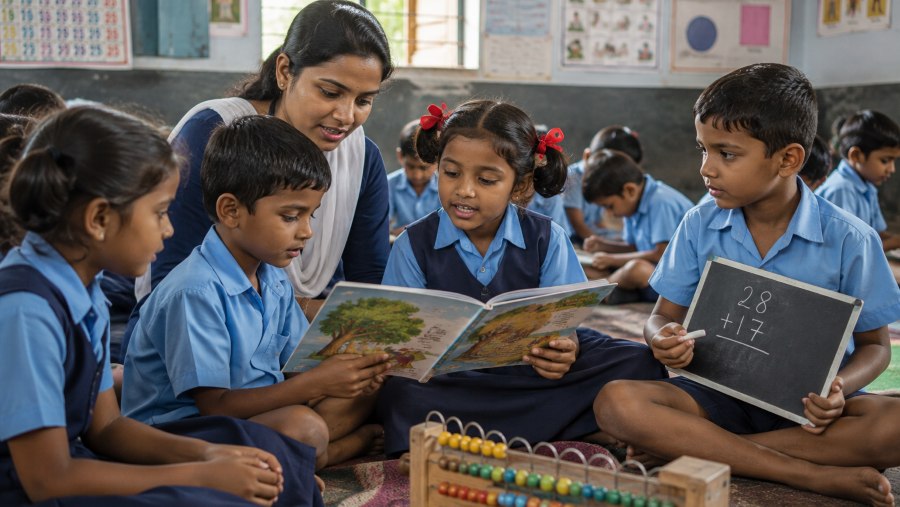
A. One of the most persistent gaps in today’s education ecosystem—especially in government schools—is the lack of hands-on exposure to emerging technologies. Many students have limited access to functional labs, trained educators, or opportunities to learn by doing in areas like robotics and AI, leaving advanced technologies as abstract concepts rather than practical skills.
RoboEdge was created to address this gap by bringing robotics, coding, AI, and IoT directly into everyday classrooms and embedding experiential learning within the regular curriculum. Students are encouraged to experiment, build, and apply concepts, not just memorise them.
This shift from rote learning to applied learning is critical, as it helps students develop problem-solving, creativity, and real-world thinking—skills essential for the future workforce and meaningful participation in a technology-driven economy.
Q. The qualification of four students from Silvassa for the International Robotex Championship 2025 is a remarkable milestone. What does this achievement signify for India’s emerging presence in global robotics and STEM education?
A. This achievement is deeply meaningful for us, not just as a milestone in robotics, but as a powerful symbol of what is possible when opportunity meets potential. Some of these children had never even travelled outside Aurangabad before, and seeing them fly to compete at an international stage like Robotex was incredibly emotional—for them, for their families, and for all of us at STL. It signifies that India’s growing presence in global robotics and STEM education will not be limited to elite urban institutions. Talent from underserved regions can compete globally when given the right exposure, tools, and guidance.
This success was enabled through strong partnerships with our implementation partners, schools, mentors, and the Robotex ecosystem, who worked closely with us to train students and build both technical skills and confidence.
Through this programme, we focused on hands-on learning, continuous mentoring, and global benchmarking, which helped 9 students represent India and achieve:
● 1st Position – Folk Race (Beginner)
● 3rd Position – Girls Fire Fight (Intermediate)
● 4th Position – Girls Fire Fight (Beginner)
For us, this goes beyond competitions and rankings. It proves that with the right long-term investment in education and technology, world-class STEM talent can emerge from anywhere in India.
Q. From STL’s experience, how critical is early exposure to hands-on technology learning in unlocking innovation and confidence among students from non-metro regions?
A. Early exposure to hands-on technology learning can be genuinely transformational, particularly for students from non-metro and underserved regions. Engaging directly with robotics, AI, and coding builds more than technical capability. It nurtures confidence, curiosity, resilience, and, importantly, a sense of what is possible—often at an age when those beliefs are still forming. One of the clearest indicators of this impact is how RoboEdge students perform beyond the classroom. At the Robotex International Championship 2025, students from Silvassa secured 1st place in the Folk Race category and 4th place in the Girls’ Fire-Fighting category. These outcomes are not outliers; they reflect what can happen when students are given the right tools, sustained mentorship, and exposure to competitive, real-world platforms.
The message is simple but powerful. Talent is widely distributed. Opportunity is not. When access barriers are removed, students from any geography can step onto the global stage with confidence and capability.
Q. Could you share insights into the scale and reach of the RoboEdge programme so far in terms of student participation, geographic coverage, and measurable learning outcomes?
A. RoboEdge was launched in 2024 and is currently implemented across government schools in Sambhajinagar, Dadra & Nagar Haveli (Silvassa), and Delhi. The programme now spans 11 schools, including the PM SHRI School at JNU, Delhi, and is impacting over 6,000 students, with the JNU initiative alone reaching nearly 2,000 students.
Alongside student engagement, we place strong emphasis on teacher capacity building. So far, 10 government school teachers have been trained under STL-supported initiatives delivered in partnership with Robotex India. This ensures the programme is sustainable, strengthens classroom delivery, and helps embed hands-on robotics, AI, and STEM learning into everyday school education.
Q. Industry–education collaboration is often discussed but not always executed effectively. What has STL learned about building meaningful partnerships through RoboEdge?
A. Our experience has shown that meaningful collaboration requires long-term commitment rather than transactional engagement. Through RoboEdge, STL has worked closely with schools, education departments, and implementation partners like Robotex India, with a shared focus on outcomes. Continuous teacher training, alignment with NEP 2020, and strong on-ground mentoring have been critical in translating intent into tangible impact for students and schools.
Q. Beyond technical skills, what changes have you observed in students’ problem-solving abilities, aspirations, or career outlook?
A. Beyond technical skills, the most powerful change we see is in students’ confidence and mindset. Through RoboEdge, they learn to collaborate, communicate, and work as teams—skills that go far beyond robotics and prepare them for real life. Many students who were initially hesitant are now more resilient, curious, and willing to experiment and fail. What truly stands out is the shift in their aspirations. They begin to see new career possibilities for themselves in technology and innovation, and more importantly, they start believing that they belong in that future. RoboEdge is not just teaching them how to build robots—it is helping them learn how to solve problems, think independently, and approach life with confidence.
Q. How has the RoboEdge initiative influenced the wider Silvassa community?
A. The impact of RoboEdge extends well beyond students. We’ve observed greater parental engagement, increased pride in government schools, and a positive shift in how communities perceive technology-driven careers. Schools have emerged as local hubs of innovation, inspiring younger students and reinforcing trust in public education systems.
Q. Looking ahead, how does STL plan to scale or evolve RoboEdge to support India’s next generation of innovators?
A. Looking ahead, our ambition is to scale RoboEdge in a way that helps place India firmly on the global map of robotics and STEM innovation. We want Indian students to represent not just themselves, but the ingenuity, intellect, and problem-solving spirit of India on international platforms.
As we expand the programme to more regions and schools, our focus is on building a pipeline of young innovators who can become the torchbearers of next-generation technologies—from AI and robotics to advanced digital systems. For us, RoboEdge is not just an education initiative; it is a long-term investment in shaping future-ready Indian talent that can lead, innovate, and compete globally while building solutions for India’s growth.



.jpg)