
Staying Back, Building Trust: A Development Journey from Gadchiroli
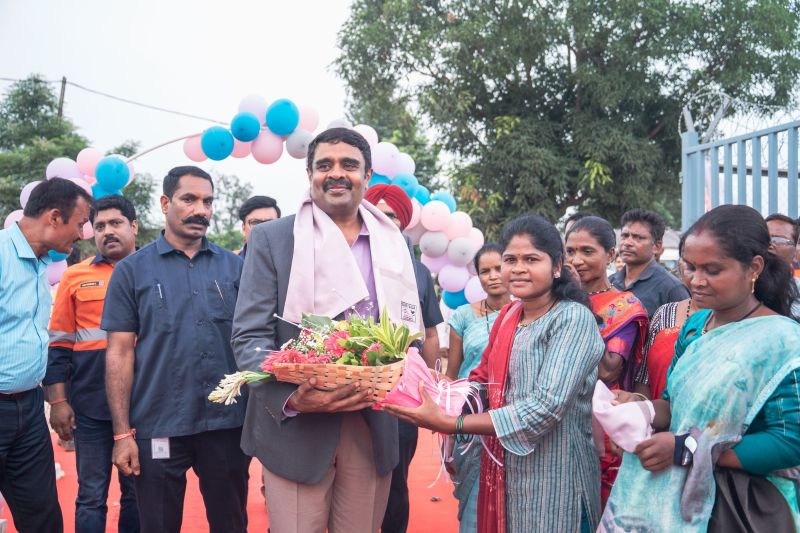
Gadchiroli has long been seen as remote, conflict-affected, and lacking opportunities. Located in the forested and hilly eastern region of Maharashtra, Gadchiroli is home to a predominantly tribal population and has historically faced challenges such as limited access to education and healthcare, out-migration, and conflict. Yet, over the past decade, a quiet transformation has taken shape, built on patient engagement, local participation, and the belief that economic growth must move hand in hand with community progress. This change was not achieved through short-term interventions, but through consistent efforts grounded in trust, dignity, and long-term value.
In this conversation with TheCSRUniverse, Mr. B. Prabhakaran, Managing Director of Lloyds Infinite Universe and Lloyds Metals and Energy Limited, shares how his approach translated into tangible outcomes. Over 5,500 local jobs were created, tribal children received free education, students from forest villages gained global exposure, healthcare became more accessible, women led new livelihood initiatives, and more than 6,300 employees gained shared ownership. Collectively, these programmes now reach over 40 villages and more than 2.35 lakh beneficiaries across education, livelihoods, and healthcare. Partnerships with local institutions, NGOs, and government bodies helped amplify these efforts.
The interview offers insights into a development model where industry grows with the community and progress is measured through shared prosperity and rising aspirations.
Scroll down to read the full interview.
Q&A
Q. Gadchiroli has often been seen as a region of conflict and limited opportunities. When most people chose to leave, what made you decide to stay, and how did you first see the potential to transform lives through trust and community-led development?
A. Gadchiroli’s narrative was previously viewed through the prism of conflict and remoteness, overlooking the strength, resilience, and coherence of the local community, with whom I got deeply connected. The decision to stay was shaped by my belief in the potential of Gadchiroli and its people and the vision that when meaningful enterprise engages deeply in communities with great challenges, the result is lasting positive and sustainable impact. Long-term value is created only when communities progress alongside industry.
From the beginning, the emphasis was on building trust before scale. This meant listening carefully, respecting local institutions, and investing time in understanding social and cultural contexts. Development was not approached as an external intervention, but as a shared process rooted in partnership. My early priorities were rooted in the core needs of the community – access to healthcare, education and meaningful livelihoods. It is important to understand that any sustainable economic activity cannot exist in isolation, without ensuring that social foundations are strong.
Over time, this consistency of intent transformed scepticism into collaboration. The experience reaffirmed a simple principle: enduring transformation is possible when development is patient, locally anchored, and aligned with community welfare.
Q. How did you build trust with tribal youth and their families while creating regular employment in the region?
A. Trust was built through consistency and clear evidence of intent rather than persuasion. The focus was on creating stable, formal employment with well-defined pathways for long-term growth, rather than short-term engagement driven purely by commercial needs. Today, more than 5,500 individuals from Gadchiroli are employed, many of them first-generation salaried earners.
Alongside employment, sustained investments were made in skill development to ensure that jobs translated into long-term capability and upward mobility. Over 1,200 local youth have been trained, including nearly 900 in technical and on-site mining roles. Families, in turn, began to witness tangible and sustained outcomes—reliable and predictable incomes, strong safety standards, improved access to healthcare, and clearly defined pathways for professional growth and advancement.
This approach reflects a deeply held belief that industry must progress alongside the community, not outpace it. By prioritising local participation, capability building, and long-term security, growth was anchored in shared outcomes—where economic development strengthened social stability and livelihoods evolved in step with the aspirations of the region.
When employment is grounded in dignity and continuity, it becomes a catalyst for social confidence and inclusion.
Q. Many first-generation tribal children are now in school. What helped parents overcome hesitation, and how did partnerships help scale this effort?
A. When we want to do good for the people, challenges – however difficult they may seem initially – can be overcome. For families dependent on daily livelihoods, long-term academic outcomes can appear uncertain. This was addressed by systematically removing barriers to education by creating awareness on the benefits of education, providing free schooling for the children with all amenities including uniforms, meals, transport, sports and hostel facilities and through sustained engagement with parents.
We established institutions such as Lloyds Raj Vidya Niketan School which was supported by outreach centres and partnerships with NGOs and government bodies, which helped demonstrate tangible progress. Parents observed growing confidence, communication skills, willingness to learn and aspiration among their children.
Gradually, education came to be viewed not as an individual risk, but as a shared community investment. This shift reflects the understanding that empowerment begins when families feel secure enough to plan beyond immediate needs.
Q. Students from forest villages have studied at Curtin University in Australia. How has this influenced their communities back home?
A. The Curtin University scholarship programme had an impact well beyond individual academic achievement. It altered perception. When students from remote forest villages accessed global education, it challenged long-held assumptions about opportunity and capability.
On returning, these students brought back confidence, perspective, and a sense of possibility. They became reference points within their communities, encouraging younger children to aspire differently and helping families reframe education as a means of strengthening, rather than leaving, the community.
This experience reinforces the belief that exposure creates leadership, and that individual advancement can elevate collective ambition.
Q. How have livelihood initiatives such as Vanya strengthened women’s economic role and influenced decision-making within their families and communities?
A. The Vanya initiative was designed around livelihoods that align with local culture and skills. Activities such as forest produce processing, tailoring, and apparel enabled women to participate economically and gain financial independence.
The deeper impact, however, lies in the shift in agency. Women have emerged as contributors to household stability, decision-makers in education and financial planning, and voices within community forums.
Experience consistently shows that women are the stabilising force in community development. When women gain economic participation, the outcomes are more balanced, resilient, and enduring.
Q. In remote tribal areas, healthcare access is often fragmented. Which gaps did you prioritise first?
A. The access to healthcare and the ability to afford quality treatments were identified as foundational gaps. Without reliable healthcare, progress in other areas remains fragile. The Lloyds Kali Ammal Memorial Hospital was established to provide quality medical care locally and free of cost.
The hospital has delivered over 1,82,391 free OPD consultations and conducted more than 800 surgeries, supported by ambulance services, mobile medical units, regular health camps, and free medicine distribution. Special attention has been given to women, maternal health, the elderly, and persons with disabilities.
Healthcare was approached as an integrated system rather than a standalone initiative, reflecting the belief that social infrastructure must advance in parallel with economic growth.
Q. Over 6,300 employees received company shares. How has first-time asset ownership changed families and aspirations?
A. The ESOP initiative extended the idea of participation beyond employment. For many employees, particularly from tribal and blue-collar backgrounds, this represented their first experience of asset ownership.
This sense of ownership shifted perspectives from short-term income security to long-term value creation. Families began planning for education, savings, and financial continuity.
Employees increasingly saw themselves as partners in the organisation’s growth.
The initiative reflects a core belief that institutions endure when prosperity is shared and success is collective.
Q. With programmes reaching over 40 villages and 2.35 lakh beneficiaries, what lessons should CSR leaders and policymakers take away?
A. The experience in Gadchiroli underscores that social impact cannot be template-driven, it must be grounded in the community. Scale becomes meaningful only when it is preceded by trust, continuity, and long-term engagement.
Livelihoods form the foundation of sustainable change. Education, healthcare, and empowerment initiatives achieve depth only when families have economic stability. Equally important is shared ownership communities must be partners in progress, not passive recipients.
Ultimately, success must be assessed by collective advancement. When economic growth aligns with community welfare and environmental responsibility, the outcome is not incremental impact, but generational transformation.