Special Interview on International Day of Persons with Disabilities: KFC Kshamata and the Journey Toward Everyday Inclusion
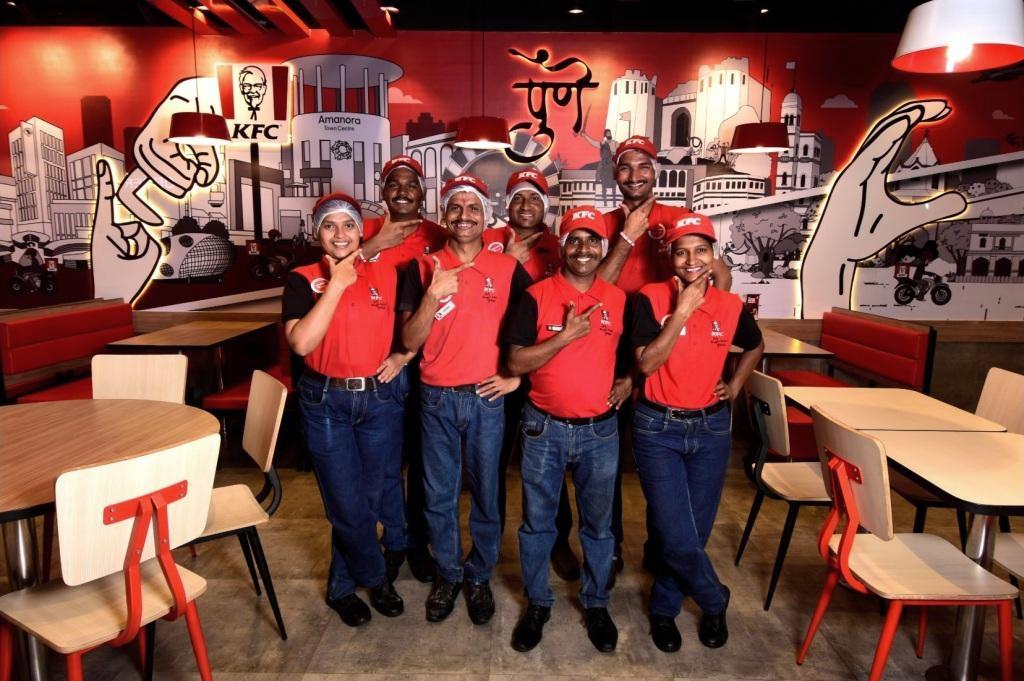
Inclusion in the workplace often grows from steady, thoughtful efforts—initiatives that gradually expand access, strengthen capabilities and allow individuals to participate fully in the economic and social fabric of an organisation. At KFC India, such efforts have taken shape over more than a decade through Kshamata, the brand’s flagship diversity and inclusion programme designed to support and advance team members from the speech and hearing-impaired community.
Beginning with the first Special KFC outlet in 2008, the programme has matured into a nationwide framework with more than 60 Special KFCs, over 260 speech and hearing-impaired employees, and a workforce where Sign Language is now a shared language—following KFC India’s decision to train all employees in Indian Sign Language, an industry first for the QSR sector. The recent launch of an English Comprehension Program with Atypical Advantage marks another step towards expanding learning and growth pathways for specially-abled team members.
For Mr. Aman Lal, Chief People Officer – KFC at Yum! Brands, these initiatives reflect a commitment to embedding inclusion into daily operations, not merely as policy but as practice. In this conversation with TheCSRUniverse, he discusses the evolution of Kshamata, the organisation’s capability-building approach, and the experiences that demonstrate how structured, sensitive inclusion can shape both workplace culture and individual advancement.
Read the full interview below.
Q&A
Q. Kshamata has grown from one Special KFC in 2008 to a nationwide programme today. What has driven this evolution, and how does it go beyond representation to build capabilities for speech and hearing-impaired team members?
A. KFC’s founder, Colonel Sanders, believed in extending a seat to everyone at the table, and at KFC India, we’ve been committed to taking this belief forward. The Kshamata program is aimed at feeding people’s potential, making focused efforts towards bridging the ability gap and working towards empowering the speech & hearing-impaired.
Over time, our journey has evolved - from representation to inclusion, and now to true belongingness, where every team member feels valued and supported to thrive. What began with one Special KFC has grown into 63 Special KFCs, 260+ speech and hearing-impaired employees, and a culture where inclusion is part of everyday life. Today, nearly 2% of our workforce represents this community - a powerful reflection of how far we’ve come.
We’ve gone beyond hiring to build a truly accessible workplace - with Sign Language video insets in every restaurant training, a dedicated Sign Language Coach, and inspiring stories that celebrate our Special team members. In 2024, KFC India became the first QSR in the country to train all employees in Indian Sign Language. Over 18,000 team members are now equipped to greet, connect, and serve guests with speech and hearing disabilities - making inclusion part of the guest experience too.
To further break barriers, we partnered with Atypical Advantage to launch a Written English Comprehension Program - helping our speech and hearing-impaired team members communicate confidently and grow independently at work.
Our commitment to the community goes beyond our restaurants. For the past 3 years, we’ve proudly supported the Indian Deaf Cricket Association (IDCA) as the principal sponsor for the national men’s and women’s teams, creating pathways for speech & hearing-impaired individuals to excel in sports.
Our roadmap is about creating ripples of change - internally, by embedding inclusion into every layer of our culture, and externally, through collaborations and initiatives that inspire a broader impact.
Q. What impact have you observed from KFC’s decision to introduce mandatory Sign Language training for 17,000 employees—in terms of workplace culture, customer experience, and employee confidence
A. Creating a culture where everyone feels valued is at the heart of KFC & bridging the ability gap is critical to creating an accessible and inclusive workplace. Introducing mandatory Sign Language training for all employees has been a transformative step - not just in building awareness, but in shaping how our teams connect with one another and with our guests. Team members who once hesitated now confidently use basic signs to greet and collaborate. Our speech and hearing-impaired (SHI) team members, in turn, feel more included and understood, knowing their language is being spoken across the organization.
Q. With the upcoming English Comprehension Program in collaboration with Atypical Advantage, how do you ensure such initiatives are sustained and create long-term career pathways for specially-abled team members? Are there challenges you face in scaling these programs further?
A. Launched on International Day of Sign Languages this year, the written English comprehension program aims to train 100% of our SHI team members by 2026. Created in partnership with Atypical Advantage, India’s largest livelihood platform for people with disabilities, the 50-hour virtual training program is based on the insight that most workplace communication is written. It will help address challenges SHI team members face due to limited exposure to languages other than Indian Sign Language (ISL).
The curriculum is focused on basic grammar, email writing, and reading comprehension & is specifically crafted to bridge a crucial learning gap faced by many speech & hearing impaired employees, who received early education only in Indian Sign Language (ISL). By strengthening written comprehension, SHI teams will be able to work more independently, communicate confidently, and grow in their careers. It is a powerful step towards fostering inclusion at scale.
Scaling programs like these comes with its share of challenges – from ensuring consistent digital access across restaurants to adapting learning content for different literacy levels. But the enthusiasm of our SHI teams, coupled with the commitment of our restaurant team, keeps us pushing forward. Each success story reinforces our belief that inclusion is not a one-time effort - it’s a journey that deepens with every new step.
Q. From the customer’s perspective, how are you raising awareness about Indian Sign Language and normalising inclusion as part of the dining experience?
A. Our annual #SpeakSign is aimed at raising awareness and acceptance for Indian Sign Language.
Over the years, we have made focused efforts towards the cause - encouraged customers to place their orders using ISL; released a short film, titled ‘Kshamata', directed by renowned filmmaker Shoojit Sircar, inspired by the lives of our specially-abled team members; taken ISL to our biggest brand asset, the KFC bucket & even launched interactive kiosks at popular locations where customers can learn to order 30+ food items across categories, not just from KFC, in Indian Sign Language.
Q. Can you share an inspiring story of a team member whose journey reflects the larger impact of KFC Kshamata?
A. One of our proudest milestones came when we appointed our first specially-abled Restaurant General Manager, Srikanth Jarugu in Hyderabad in 2022. This was not just a personal achievement for him but also a powerful reflection of what inclusive practices can unlock.
From starting as a restaurant team member to becoming a RGM , Srikanth’s journey symbolises how Kshamata creates pathways for SHI employees to grow into leadership roles.
Today, we have 14 Restaurant Leaders from the SHI community — each story reinforcing the impact of creating equal opportunities and the strength of doing things the right way.
Q. As Chief People Officer, what are some of the biggest learnings you’ve had while driving inclusion at scale in a sector like quick service restaurants, which is often fast-paced and high-pressure?
A. The biggest learning has been that inclusion is not an initiative—it has to be a way of life. In a fast-paced, high-pressure environment like QSR, embedding inclusion into every aspect of the culture makes the difference. From ensuring Sign Language interpretation in all organization-wide meetings, to tailoring training content and creating policies that support diverse needs, we’ve seen that small, consistent steps lead to big cultural shifts.
Another learning is that capability-building and empathy go hand in hand — when peers feel enabled to communicate and connect, inclusion thrives naturally, even in demanding environments.
Q. How do you see the role of Kshamata in shaping the broader food and retail industry’s approach to inclusion and workplace diversity in India?
A. At KFC India, our Kshamata program - which stands for "Feeding People’s Potential" - has been instrumental in accelerating our journey from representation to inclusion and, ultimately, to fostering a sense of belonging. Through Kshamata, we aim to set benchmarks for inclusion not just within KFC but across the QSR and retail industry. From being one of the first to hire from the SHI community, to introducing mandatory Sign Language training, and now pioneering an English comprehension program, we’ve consistently taken steps to ensure we can make inclusivity the norm and not an exception.



.png)