Reimagining Rural Classrooms: Mr. Vineet Nayar on Strengthening Teaching–Learning Systems
For more than a decade, Sampark Foundation has been quietly reshaping the architecture of primary education in India’s most underserved geographies; places where classrooms often run without reliable electricity, let alone digital infrastructure. What distinguishes the organisation is not the scale it has achieved across eight states, or the 1.8 crore children and 8.5 lakh teachers it now reaches, but the philosophy guiding its work: that transformative learning can emerge from frugal, offline-first innovation designed for the realities of government schools, not the assumptions of urban EdTech.
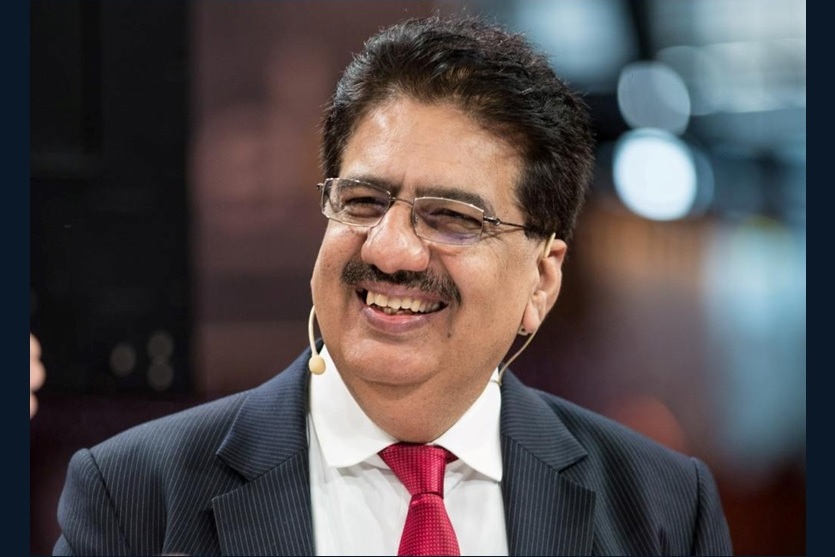
At the heart of this philosophy is Mr. Vineet Nayar, Founder & Chairman of the Sampark Foundation and Former CEO of HCL Technologies. Globally regarded for his pioneering “Employees First, Customers Second” approach- which went on to become a Harvard Business School case study- Mr. Nayar led one of India’s most remarkable corporate transformations before turning his attention to public education. His transition from corporate leadership to social impact did not dilute his design thinking; it redirected it. The same principles that once propelled a global technology company- trust in people, decentralised ownership, and simple, repeatable systems—now anchor Sampark’s work in government schools.
 The result is a model that demonstrates what is possible when innovation begins with constraints, not despite them. Whether through the widely adopted Sampark TV classrooms, interactive Teach-Easy learning kits, or a pedagogy built explicitly around teacher empowerment, the Foundation has shown that quality learning does not demand high-end devices or internet-enabled ecosystems. It demands clarity of design, deep alignment with state systems, and solutions that teachers can own and children can experience with joy.
In this exclusive conversation with TheCSRUniverse, Mr. Nayar reflects on India’s teaching–learning design crisis, the discipline of frugal innovation, and the rigor required to deliver measurable learning outcomes at less than one dollar per child. His insights offer a compelling reimagining of what systemic change can look like when education reform is grounded in purpose, design, and partnership.
Scroll down for more insights.
Q&A
Q. What is the single most misunderstood aspect of India’s learning crisis?
A. The biggest misunderstanding is the belief that the learning crisis exists because children cannot learn. The real issue is that the system does not consistently create the conditions for learning. In rural government schools, teachers are overburdened, classrooms are under-resourced, and teaching time is fragmented. India does not have a learning crisis as much as a teaching–learning design crisis. When teachers are empowered with the right tools, training, and simple methods, learning outcomes rise quickly, even in the most remote villages.
 Q. Why did you choose frugal, offline-first solutions instead of expensive, internet-driven EdTech?
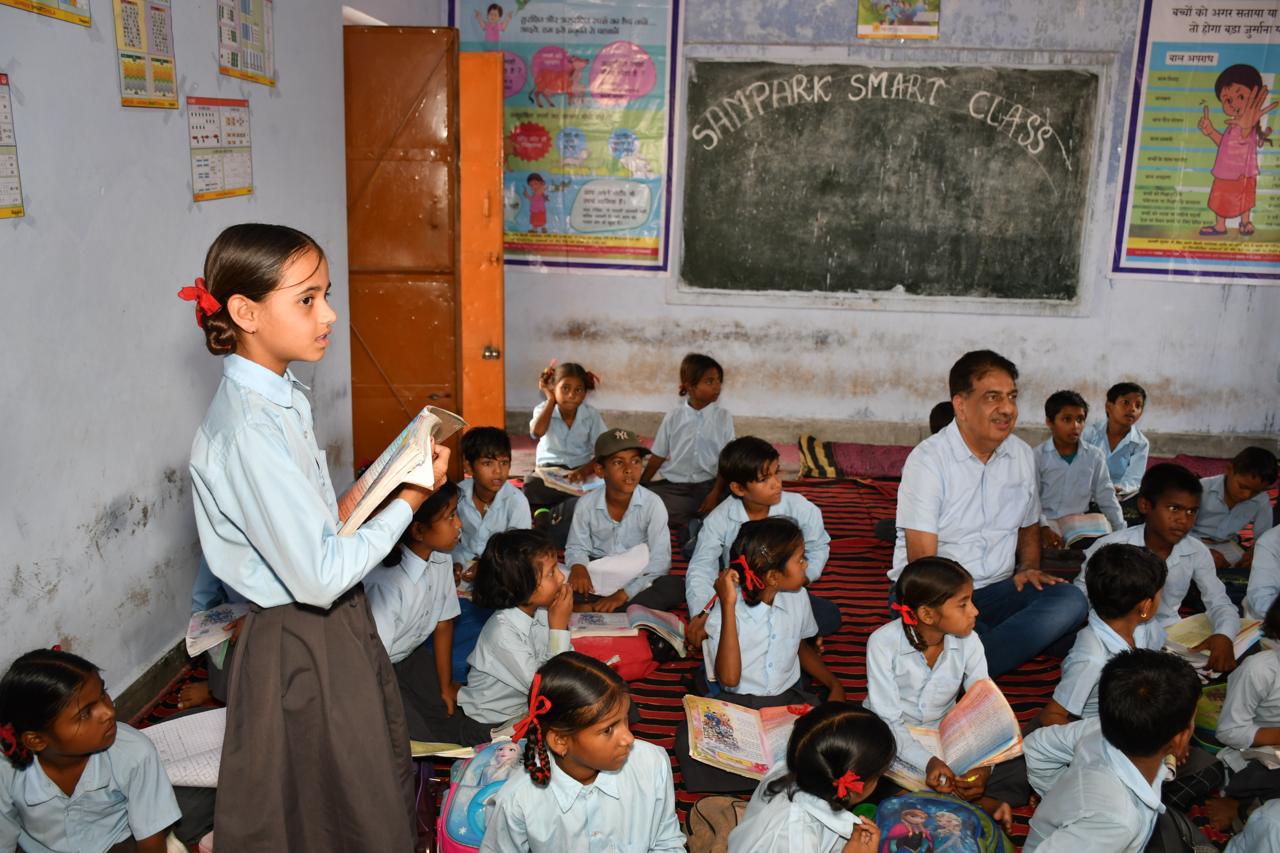
A. Because 80 percent of the schools we serve do not have reliable internet, electricity, or digital infrastructure. A solution that works only in ideal conditions is not a solution for India. We chose frugal, offline-first tools because they work everywhere, every time. A child in Pithoragarh deserves the same learning opportunity as a child in Pune. When you design with scarcity in mind, you create solutions that are scalable, robust, and sustainable.
Q. Why is the Sampark Smart Shala model built on a “Teachers First” approach?
A. Because teachers are the real force multipliers. Classrooms change only when teachers change the way they teach. Student-only tech solutions often fail because they bypass the most important person in the room. Our Sampark Smart Shala model strengthens the teacher by giving them a clear pedagogy, simple Teach-Easy tools, and engaging audio-visual content. When teachers feel confident, children learn faster and with joy. Today 5 Lac teachers across 2 Lac schools use this program every day because teachers see it as their program, by them, for them and because of them.
Q. What have been the biggest enablers and hurdles while working across eight states?
A. The biggest enablers have been visionary state leadership, committed district officials, and teachers who want to see their children succeed. The toughest hurdles are systemic—frequent transfers, lack of consistent training time, and varying levels of teacher and parent motivation. But once the system sees sustained improvement in learning outcomes, alignment becomes easier, and momentum builds. When a child performs an English play on a village square, the village transforms into a supportive force that drives transformation.
Q. Which Sampark innovation has driven the strongest improvement in FLN?
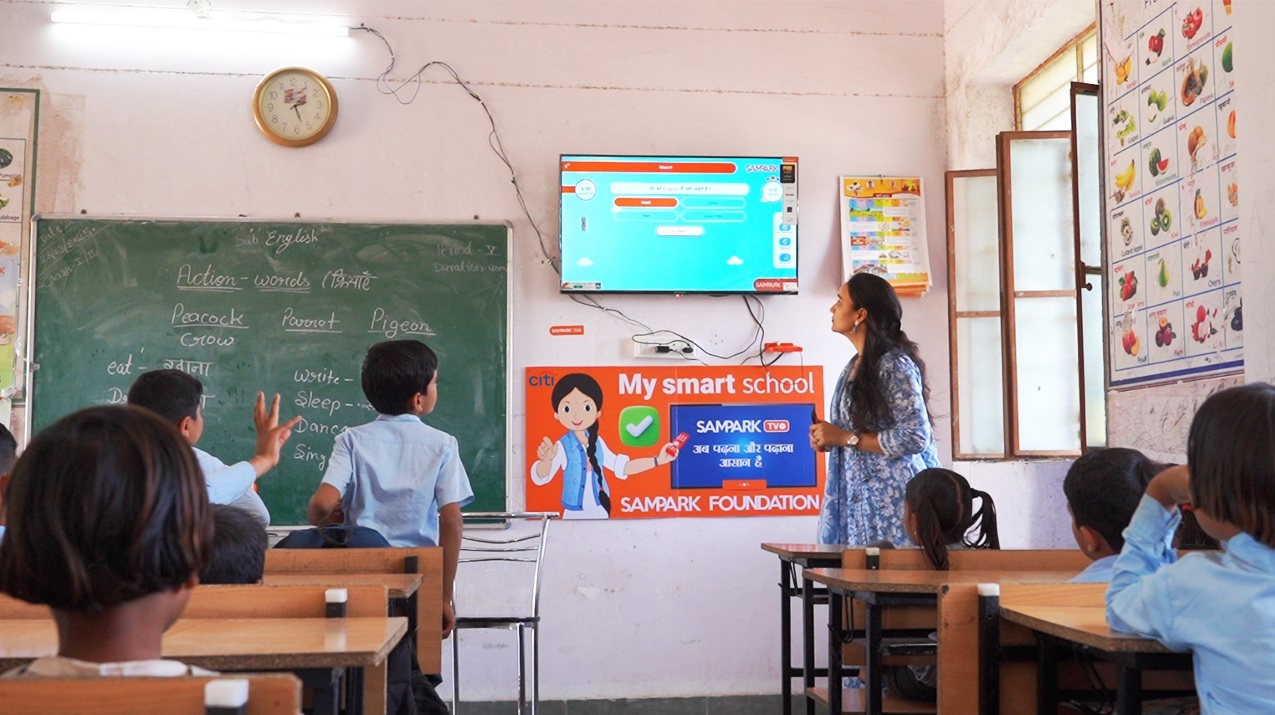 A. Sampark TV now installed across over 50,000 classrooms across 8 states has emerged as the strongest driver of learning improvement in FLN. It converts every rural classroom into an audio-visual learning space without requiring internet or expensive devices. It gives teachers high-quality 3D videos, songs, activities, and a structured lesson plan, ensuring consistent delivery in every class. Paired with Teach-Easy kits and the app, it creates a complete ecosystem. We have seen over 30% increase in learning outcomes, increase in children enrolment and attendance and higher enthusiasm by teachers as it reduces their workload. Sampark AI gives real time data of what is happening in these 50,000 classrooms for BEO (Block Education Officer)/DEO (District Education Officer) to take corrective action. If you measure efforts in a classrooms, impact follows.
Q. What would you tell CSR funders who prefer high-end technology?
A. High-end technology is valuable, but only when it solves the real problem. Don’t feel satisfied by providing the tool, look at the degree of difficulty in implementation and usage as what matters is impact not intent. In schools with low connectivity, limited staff, and high student-teacher ratios, expensive solutions often fail. Low-cost, offline innovations offer deeper reach, wider adoption, and more sustainable impact. At scale, frugality is not a compromise, it is a strategic advantage. Impact is not created by price; it is created by design. Yes, this is a more difficult path to follow however transformation is never easy, that is why despite increase in spending on education learning levels have only gone down. It needs a new way of thinking -a design approach to change.
Q. What must any education innovation get right to work in constrained government schools?
A. Three things: simplicity of the idea, relevance to the local classroom, and teacher ownership. If a solution is too complex, it will not survive in a school with limited time and resources. It must fit into the teacher’s daily routine and not add to it. And it must produce visible learning gains quickly for all participants to start believing in that change. Teachers adopt what works, not what is fashionable.
Q. How do you balance quality, scale, and cost while delivering outcomes at one dollar per child?
A. We design with constraints from day one with an obsession for frugality and use of AI and technology. Every tool must be affordable, durable, and scalable without high recurring costs. We invest upfront heavily in content and pedagogy while keeping technology simple. Like IT companies we believe in repeatable processes create high quality outcomes at scale. Our field teams work closely with teachers to ensure adoption and consistent use. We work with and through government systems as it is their program. Scale comes not from spending more, but from designing smartly. If for profit companies think scale from day 1, why are we shy of being ambitious and smart in design thinking from day 1.
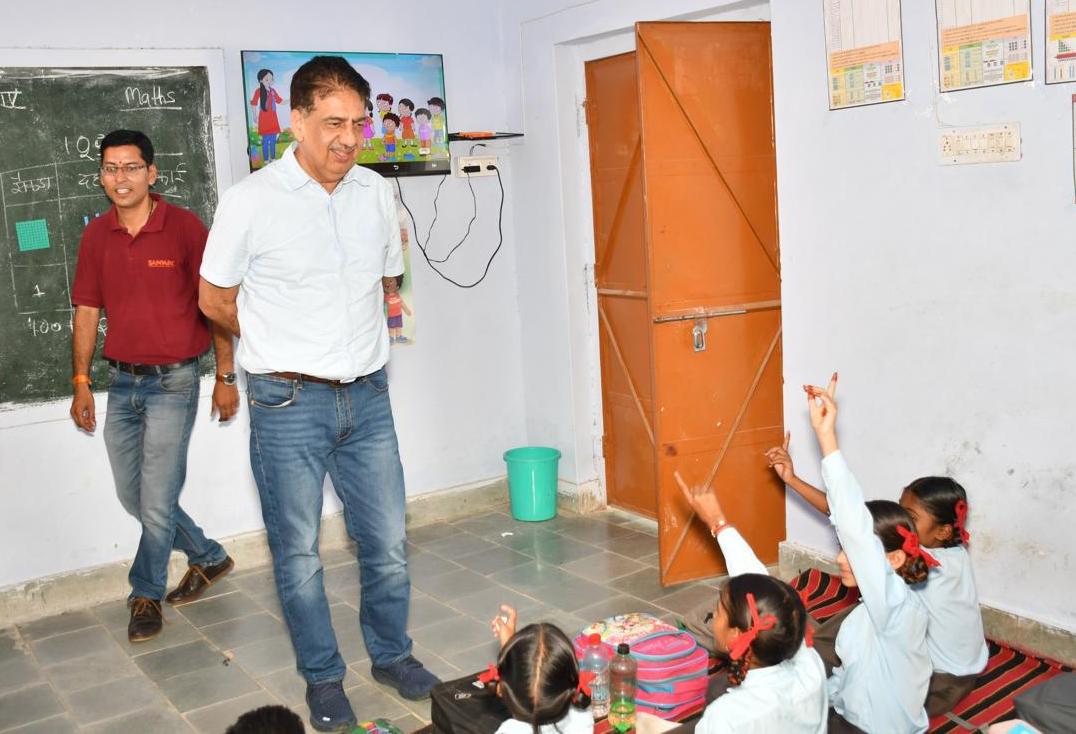 Q. How has your leadership journey from HCL to Sampark shaped your approach to social impact?
A. My corporate experience taught me that large-scale transformation happens when you trust people, decentralize control, and create simple systems that empower individuals and focus on repeatable processes. At Sampark, the same principles apply. We treat states as partners, not clients and reducing workload of teachers as a red line we have to meet every time. We build long-term relationships, not one-year projects. And we measure success not in activities, but in learning outcomes and impact on a child, teacher and parents. Leading Sampark has reinforced my belief that with the right design and the right people, impact can be delivered at unprecedented scale.





.png)