Preparing Engineers for a Digital Future: The TechnoStruct Academy Perspective
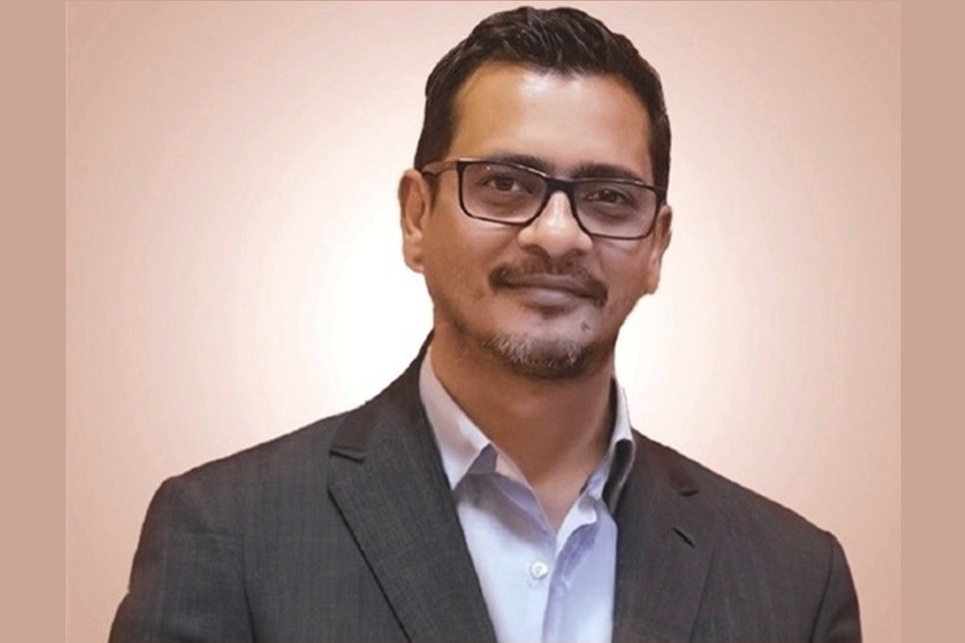
India’s construction and infrastructure landscape is undergoing a profound digital acceleration, with BIM, VDC, AI, sustainability, and automation rapidly reshaping how projects are planned and executed. Yet the country continues to grapple with a persistent gap between traditional engineering education and the real demands of a technology-driven AEC industry. In this evolving context, TechnoStruct Academy has emerged as one of the most influential institutions redefining digital construction learning. In this interview with TheCSRUniverse, Mr. Roy Aniruddha, Founder and Chairman of TechnoStruct Academy, highlights how TSA is transforming engineering education through live global project exposure, region-tailored curricula, next-generation technologies, and a powerful industry-academia model that delivers immediate job readiness and global competitiveness.
Scroll down to read the full interview:
Q. TechnoStruct Academy emerged at a time when the AEC industry was experiencing rapid digital transformation. What core gap in global engineering education were you most driven to solve when you co-founded the Academy?
A. TechnoStruct Academy emerged to bridge a critical and pervasive gap: the disconnect between theoretical academic learning and practical industry execution.
While universities taught engineering fundamentals, they lacked a robust framework for integrating BIM (Building Information Modeling) and VDC (Virtual Design and Construction) workflows using live, complex projects and the latest digital tools. Students were graduating with degrees but without the immediate job-readiness required by leading global AEC firms. Our core drive was to replace passive learning with active, project-centric digital skill acquisitionthat mirrors the real demands of the industry.
Q. With TSA now training students from over 50 countries, how do you ensure the curriculum remains universally relevant while still addressing regional industry needs and construction practices?
A. We ensure our curriculum's relevance through a dual-pronged strategy:
● Universal Core: Our foundation focuses on the global standards and principles of BIM (ISO 19650), VDC, Lean Construction, and advanced software like Revit, Navisworks, and Synchro. These digital construction tools and methodologies are fundamentally the same whether you're building in the US, Europe, or Asia.
● Regional Adaptation: We incorporate regional-specific modules that cover local building codes, contract types (e.g., FIDIC, AIA), and unique construction practices (e.g., seismic regulations, material sourcing differences). Furthermore, our faculty, who are also active industry professionals from TechnoStruct LLC, bring in case studies from the student's own regions, ensuring the learning is immediately applicable to their local job market.
Q. Live project-based learning is central to TSA’s pedagogy. What, in your experience, fundamentally differentiates students trained through real-time global projects such as Google Bayview or Apple Headquarters from those trained through conventional BIM instruction?
A.
|
Feature |
Conventional BIM Instruction |
TSA's Live Project Training (e.g., Google Bayview) |
|
Context |
Isolated tasks or small, simplified dummy projects. |
Multi-disciplinary, gigantic, live, global projects with real complexity (clash detection, constructability issues, coordination). |
|
Mindset |
Focus on learning software commands. |
Focus on solving engineering problems and understanding the entire project lifecycle (4D scheduling, 5D cost estimation). |
|
Deliverable |
Simple models or drawings. |
Industry-standard deliverables (LOD 350+ models, VDC coordination reports, fabrication models) that demand precision and adherence to strict BIM Execution Plans (BEPs). |
|
Result |
Software operator. |
Problem-solving VDC Engineer with proven experience on flagship projects, leading to immediate high-impact roles. |
Q. TSA has consistently emphasized the importance of bridging the industry–academia gap. What structural changes do you believe Indian engineering institutions must adopt to align more closely with global BIM and VDC standards?
A. To align with global BIM/VDC standards, Indian engineering institutions must undertake these structural changes:
- Mandatory Digital Curriculum Integration: BIM/VDC should be a mandatory, credit-bearing subject across all core engineering disciplines (Civil, Mechanical, Electrical) and not just an optional elective.
- Faculty Training & Sabbaticals: Institutions must mandate that faculty undergo annual industry training or sabbaticals with leading AEC firms to stay current with live practices and software versions.
- Industry Collaboration: Establish formal, active Project-Based Learning (PBL) partnerships with prominent construction and consulting firms. These partnerships should involve providing institutions with access to sanitized versions of live project data for student coursework.
- Outcome-Based Assessment: Shift from purely theoretical exams to assessments based on project deliverables (BIM models, clash reports, quantity takeoff sheets) that demonstrate hands-on competence.
Q. As TSA expands its global footprint, what internal quality benchmarks or processes help you maintain educational rigor and ensure that scaling does not compromise the learning experience?
A. As we scale globally, we adhere to rigorous internal benchmarks to protect the quality of the learning experience:
- Faculty-to-Student Ratio: We maintain a strictly controlled low ratio to ensure personalized, one-on-one mentorship, which is crucial for complex VDC workflows.
- Standardized Curriculum Delivery: Every course follows the same TSA Global Learning Framework (GLF), ensuring consistent content quality across all regions and instructors.
- Weekly Quality Audits: Our senior VDC Managers from TechnoStruct LLC conduct weekly audits of student project submissions and instructor feedback to ensure the output meets the stringent demands of our Level 3 - Live Project Certification.
- Mandatory Lifetime Mentorship: This commitment ensures that even post-graduation, students have continuous access to professional guidance, effectively making every alumnus a continuous reflection of our teaching quality.
Q. Could you share any data or insights on how TSA’s live project exposure and lifetime mentorship model have impacted student employability, particularly in terms of international placements and immediate job-readiness?
A. The impact of our live project exposure and lifetime mentorship is significant and quantifiable, particularly in global placement:
- Immediate Job-Readiness: Our students transition from learning to execution with virtually no need for on-the-job training. They graduate with a portfolio of real-world deliverables (models, reports) that are far more valuable to employers than a degree alone.
- International Placements: We've seen a sharp rise in students securing roles in major international hubs. Over 70% of our successful graduates have been placed in US, UK, Middle East, and Australian markets, often with leading Tier-1 and Tier-2 AEC firms.
- Salary Differential: Students trained on live, global projects consistently command 20-40% higher starting salaries compared to their conventionally trained peers, reflecting the high value employers place on immediately deployable VDC skills.
- Mentorship Model: The lifetime mentorship provides students with career navigation, interview preparation specific to global roles, and access to an extensive alumni network, significantly accelerating their career trajectory.
Q. With AI, sustainability, and automation reshaping workflows in the AEC industry, how is TSA integrating these emerging technologies into the next phase of its curriculum?
A. We are actively embedding the next generation of AEC technologies into our curriculum:
- AI and Automation: Introducing modules on leveraging Generative Design (Dynamo, Grasshopper) and AI-driven tools for automated clash detection, design option generation, and optimizing construction sequencing.
- Sustainability (BIM-to-BEM): Integrating workflows that link BIM models directly to Building Energy Modeling (BEM) software, teaching students how to use VDC processes to drive LEED/Green Star compliance and optimize energy efficiency.
- Digital Twin and Reality Capture: Courses now include the use of Lidar scanning data and photogrammetry to create as-built models and leveraging these models for facility management and creating digital twins, closing the loop from design and construction to operations.
Q. TechnoStruct LLC and TechnoStruct Academy operate in close synergy. How does this partnership fuel innovation, and what advantages does it offer students that traditional BIM education platforms may not provide?
A. The close synergy between TechnoStruct LLC (a global VDC consulting firm) and TechnoStruct Academy is our single greatest competitive advantage:
- Innovation Feedback Loop: LLC is constantly using cutting-edge VDC technology on billion-dollar projects. This innovation is immediately fed back into the Academy's curriculum, ensuring students are learning the latest industry practices, not practices from five years ago.
- Real Project Access: Academy students get to work on sanitized data and projects currently being executed by LLC, such as major data centers, healthcare facilities, and headquarters (e.g., Google Bayview). This level of real-time project immersion is impossible for traditional academic platforms.
- Expert Faculty: All our instructors are VDC Engineers, Managers, and Directors from LLC. They don't just teach the theory; they share the real-world constraints, compromises, and challenges of delivering a project on time and budget.
Q. Having worked across continents, what shifts do you anticipate in global BIM talent demand over the coming decade, and how is TSA preparing its learners to remain adaptable and competitive?
A. I anticipate two major shifts in global BIM talent demand:
1. Shift from Modelers to Managers/Coordinators: The demand will move from simply needing BIM modelers to requiring VDC/BIM Managers who can manage the entire digital workflow, coordinate disciplines, and leverage data for decision-making. The required skillset will be less about software proficiency and more about process expertise.
2. Focus on Specialty Integrators (4D/5D): There will be a massive surge in demand for specialists in 4D (Scheduling) and 5D (Cost Estimation) integration, utilizing tools like Synchro and Assemble. The goal is to move beyond geometric modeling to using the model as a core data source for planning and financial control.
TSA is preparing learners by:
- Emphasizing Process over Tool: Training is focused on the BIM Execution Plan (BEP) and VDC processes.
- Advanced Modules: Mandatory advanced modules in 4D, 5D, and Facility Management (6D) are now core to our curriculum.
- Adaptability: Promoting a culture of continuous learning and emphasizing the fundamentals of data management, which remain constant even as tools evolve.
Q. Looking ahead, what is your long-term vision for TechnoStruct Academy’s role in shaping the global BIM ecosystem, and how do you plan to position it as the world’s leading platform for digital construction education?
A. Our long-term vision is to position TechnoStruct Academy as the "MIT of Digital Construction"—the world’s definitive and most respected platform for BIM/VDC education.
We plan to achieve this by:
- Global Ecosystem Development: Continuing to partner with global industry bodies, major software developers, and leading AEC firms to continuously refine our curriculum and provide certifications recognized as the global standard for VDC competency.
- Research & Thought Leadership: Establishing a research arm that contributes new methodologies and best practices to the global BIM ecosystem, cementing TSA not just as a training provider, but as a driver of innovation.
- Unifying the Industry: Leveraging our global alumni network to foster collaboration, knowledge sharing, and setting the benchmark for the next generation of digitally-enabled AEC professionals worldwide.









.png)