Pioneering Circular Innovation for a Greener India: The LNJ GreenPET Vision
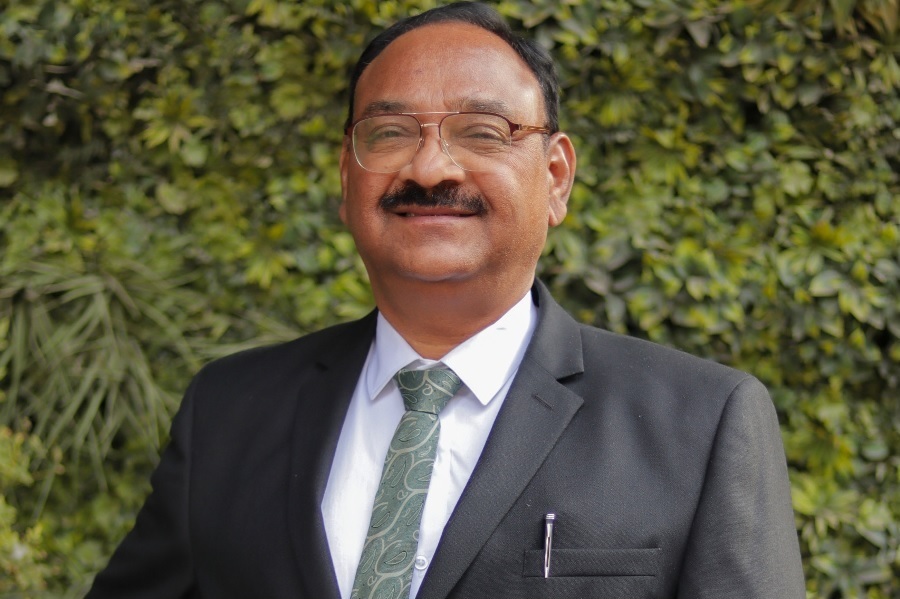
India stands at a defining moment in its circular economy transition, where sustainable manufacturing, responsible material recovery, and large-scale recycling are becoming national imperatives. As industries navigate rising environmental expectations and ambitious net-zero commitments, recycled PET is emerging as a transformative force capable of reshaping production, consumption, and waste systems across the country. In this context, LNJ GreenPET has rapidly positioned itself as a key driver of India’s plastic circularity revolution. In this exclusive conversation with TheCSRUniverse, Mr. Mahesh Kumar Yogi, CEO and Director at LNJ GreenPET, shares insights into how the company is building India’s largest rPET ecosystem, strengthening domestic and global supply chains, empowering waste-picker communities, and redefining what sustainable manufacturing can achieve at scale.
Scroll down to read the full interview:
Q. LNJ GreenPET represents a significant step in India’s circular economy journey. From your perspective, how do you define the role of recycled PET in shaping India’s sustainable manufacturing future?
A. At LNJ GreenPET, we see recycled PET (rPET) as far more than just a sustainable material, it represents a movement that is set to redefine the future of India’s manufacturing landscape. By diverting millions of PET bottles from landfills, we’re effectively closing the loop and reducing the nation’s dependence on virgin plastics. This directly supports India’s sustainability ambitions, strengthens compliance with EPR mandates, and empowers brands to meet global ESG benchmarks. Our advanced recycling technologies produce food-grade rPET that meets international safety standards, making it a viable alternative for use across FMCG, beverage, pharmaceutical, and packaging sectors. Equally significant is the environmental benefit, rPET production consumes up to 70% less energy compared to virgin PET, offering a substantial reduction in emissions and contributing meaningfully to India’s net-zero-by-2070 vision. From an economic standpoint, the global rPET market is projected at around USD 6.9 billion, roughly ₹61,000 crore in Indian terms, underscoring the immense scale of opportunity. The domestic industry already accounts for close to USD 1.1 billion (approximately ₹9,750 crore) in turnover. Beyond the numbers, integrating nearly four million informal waste-pickers into the formal recycling ecosystem is creating meaningful livelihood opportunities and driving inclusive social impact. At LNJ GreenPET, we’re building this transformation at scale. Through strategic partnerships, such as our recent MoU with Japan’s Sumitomo Corporation, and world-class infrastructure;our vision is clear: to position India as a true circular-economy powerhouse where environmental stewardship and economic progress move forward together.
Q. As part of the larger LNJ Bhilwara Group, how does GreenPET’s vision align with the group’s broader sustainability roadmap, and where does it carve its unique identity?
A. Being part of the LNJ Bhilwara Group gives us a strong and purposeful foundation. The Group’s sustainability strategy already spans clean energy, recycling, and responsible production across its diverse businesses, creating a cohesive vision for sustainable growth. At LNJ GreenPET Pvt. Ltd., we carve our unique identity within this larger ecosystem by focusing exclusively on the circular economy of PET resin and bottle-to-bottle recycling. This is our niche and our way of contributing meaningfully to the Group’s broader sustainability roadmap. Our Managing Director, Sh. Riju Jhunjhunwala ji, firmly believes that India and its people possess immense potential,what’s required is the right direction, the right infrastructure, and the right vision. At LNJ GreenPET, we are translating that belief into action by producing high-quality, food-grade rPET, formalising livelihoods for waste collectors, and driving India’s manufacturing transformation through a truly circular plastic economy.
Q. India is witnessing increasing pressure on industries to comply with Extended Producer Responsibility (EPR) regulations. What challenges and opportunities do you see in helping FMCG and beverage companies meet their obligations through r-PET adoption?
A. EPR has placed the responsibility squarely on brands, creating both urgency and opportunity within the packaging ecosystem. The most significant challenge today lies in ensuring a consistent supply of high-quality, food-grade rPET that brands can confidently use for primary packaging. Maintaining uncompromised quality, particularly for food-contact applications, is absolutely essential. Equally important are traceability of recycled materials and seamless regulatory compliance, which remain top expectations from FMCG and beverage partners. That said, the opportunities far outweigh the challenges. rPET empowers companies to not only meet India’s EPR mandates but also to strengthen their sustainability commitments, reduce carbon emissions, and enhance consumer trust. At LNJ GreenPET, we see ourselves not merely as a supplier, but as a circular-economy partner, working closely with brands to provide reliable sourcing, strong technical support, and advanced bottle-to-bottle recycling solutions that make responsible packaging truly scalable in India.
Q. With the launch of India’s largest rPET resin manufacturing plant, what scale of impact (in terms of tonnage of plastic recycled or carbon savings) are you aiming to achieve in the next 3–5 years?
A. At LNJ GreenPET Pvt. Ltd., we are developing India’s largest rPET resin manufacturing ecosystem with a steadfast commitment to circularity and climate leadership. Over the next 3 to 5 years, our target is to recycle more than 135 KTPA of post-consumer PET bottles annually by 2029, effectively diverting vast quantities of plastic waste from landfills and oceans, and reintegrating them into the value chain as high-quality rPET. This transformation at scale is expected to deliver a direct carbon savings impact of approximately 125–140 KTPA of CO₂ emissions across the lifecycle of recycled plastics, contributing significantly to India’s net-zero pathway. Equally critical is our focus on resource stewardship. From the outset, our operations are designed to be fully water-circular. We will utilize around 700 KLD of process water (equivalent to nearly 350 million liters annually) which will be 100% recycled through advanced Zero Liquid Discharge (ZLD) systems, ensuring sustainability alongside production excellence. Beyond the environmental gains, this initiative also reinforces the livelihoods of waste-management communities who form the backbone of India’s circular economy. For us, this is not just about building capacity, it’s about reshaping the sustainability narrative and advancing toward an India that recycles more, wastes less, and uplifts every hand that contributes to the journey.
Q. Could you share insights into how advanced manufacturing practices at your Bhilwara facility integrate sustainability with operational efficiency, and what lessons other manufacturers could learn from this approach?
A. At our Bhilwara facility, sustainability and operational efficiency are not parallel pursuits, they are engineered together from the ground up. We’ve invested in advanced manufacturing technologies that enable precise material handling, closed-loop water and energy systems, and real-time traceability, ensuring that every bottle recycled is fully accounted for across the value chain. Our emphasis on automation, rigorous food-grade quality control, and predictive maintenance enhances reliability while minimizing waste and downtime. We continuously optimize logistics and plant layout to reduce energy consumption per tonne of output, creating an efficient, low-emission production model that exemplifies responsible manufacturing at scale. For manufacturers the key lesson is to see sustainability as a competitive advantage. When innovation, accountability, and resource optimization come together, operational excellence and environmental stewardship naturally reinforce each other,driving both profitability and long-term impact.
Q. The partnership with Sumitomo Corporation has been described as a milestone for creating a robust r-PET value chain. How do you envision this collaboration strengthening global supply chains and India’s positioning in sustainable plastics?
A. Our partnership with Sumitomo Corporation represents far more than a business collaboration, it is a strong validation of India’s capability to lead the next era of sustainable plastics. By combining Sumitomo’s global reach and technical expertise with our manufacturing scale, we are building a reliable, traceable, and globally benchmarked rPET value chain. This collaboration strengthens supply security for major FMCG, beverage, and packaging brands; not only within India but across international markets as well. Equally, it positions India as a preferred sourcing hub for high-quality, food-grade rPET resin, thereby expanding export potential and accelerating technology transfer into the country. Most importantly, this partnership underscores a shared conviction that sustainability must be supported by scalability and responsible procurement. Together, we are creating a platform where Indian innovation contributes meaningfully to global circular-economy goals.
Q. ESG integration often poses difficulties for legacy industries. What specific strategies have you found most effective in embedding ESG principles, energy efficiency, and lean operations into a traditional manufacturing setup?
A. Legacy industries often tend to view ESG as an external obligation, at LNJ GreenPET, we see it as a performance multiplier. For us, ESG is not an add-on; it’s embedded directly into our operational DNA through three focused pillars.
• First, energy efficiency - We prioritise automation, renewable power integration, and continuous monitoring to reduce energy consumed per tonne produced
• Second, lean and circular operations - We aim to minimise waste at every stage while maintaining full traceability,from bottle collection to food-grade resin output
• Third, people and planet impact - We are formalising livelihoods for waste-picker communities and driving ethical, transparent supply chains that strengthen social and environmental value alike
When these principles are applied proactively, ESG stops being a compliance challenge and becomes a strategic advantage,unlocking resilience, cost efficiency, and long-term stakeholder trust. When ESG is viewed only as a regulatory checkbox, it can feel burdensome. But when it becomes integral to decision-making and performance metrics, it turns into a catalyst for competitiveness. At LNJ GreenPET, we see sustainability as a value creator, not a checkbox. Through energy-efficient systems, digital transparency, and responsible sourcing, we’re not only reducing operating costs but also enhancing product credibility. Ultimately, ESG gives us stronger resilience in a volatile world,better risk management, greater efficiency, and more sustainable long-term growth. We don’t pursue ESG because we must; we do it because it makes us a more future-ready organisation.
Q. Looking beyond India, what global trends in circular plastics and sustainable manufacturing do you find most compelling, and how is LNJ GreenPET positioning itself to lead or adapt to these shifts?
A. Globally, we are witnessing a decisive shift toward high-purity, food-grade recycling, stronger traceability standards, and design-for-recyclability principles becoming mandatory. Brands are setting clear recycled-content targets, while consumers increasingly expect packaging that reflects their sustainability values. At the same time, supply chains are becoming more regionalised, a move aimed at reducing logistics emissions and ensuring greater reliability of recycled feedstock. LNJ GreenPET is positioned right at the intersection of these global trends. With advanced bottle-to-bottle technology, a quality-first approach, and the capacity to serve both domestic and international markets with consistent specifications, we are building a platform that establishes India as a trusted global sourcing hub for sustainable plastics. Our goal is clear: as circularity accelerates worldwide, India should not just follow the trend, we intend to help shape it.



.png)