NIIT Foundation’s Vision for Equitable Access to Skills in the Age of AI and Automation
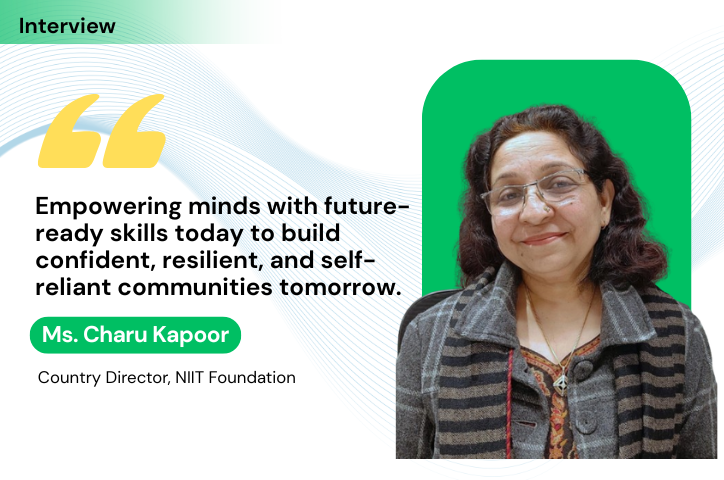
India’s demographic advantage presents both an opportunity and a challenge. As industries rapidly adopt digital technologies, artificial intelligence and automation, the demand for future ready skills is evolving far beyond traditional education and training models. The need today is not only to equip young people with technical competencies, but also to foster adaptability, financial capability and the confidence to navigate an increasingly dynamic job market.
In this context, Ms. Charu Kapoor, Country Director, NIIT Foundation, shares how the organisation is strengthening pathways to sustainable livelihoods through an outcome driven approach to skilling. With a footprint spanning 84% of the country’s districts, NIIT Foundation is focusing on employability, entrepreneurship, digital inclusion and financial literacy while expanding access to emerging technologies for underserved communities. Kapoor discusses the shifting realities of India’s workforce, the lessons emerging from grassroots interventions, and the importance of partnerships in building a more inclusive and economically resilient future.
Scroll down to read the full interview:
Q. NIIT Foundation has expanded its footprint to 84% of India’s districts and reached over 14 million beneficiaries. In a sector where scale is often celebrated, how do you internally define “meaningful impact” beyond numbers, and what indicators now matter most to the organisation?
A. For us at NIIT Foundation, meaningful impact has never been only about the scale of outreach. While numbers help us understand the breadth of our work, what matters more is whether our interventions are creating genuine and lasting change in people’s lives.
We see impact in meaningful shifts — when a young person gains the confidence to pursue employment, when a woman becomes financially and digitally empowered to make informed decisions independently, or when learners from underserved communities begin accessing opportunities that earlier felt out of reach.
Our work is closely aligned with the Sustainable Development Goals, particularly around improving livelihoods, expanding access to education and digital learning, and ensuring inclusion for women and underserved communities. Because of this, we increasingly focus on outcomes such as employability, continuity in learning, financial and digital awareness, and the confidence individuals develop to navigate systems more independently.
Inclusion also remains very important to us. We constantly reflect on whether our programmes are truly reaching those who are often left behind due to geography, economic barriers, gender, or limited digital access. Ultimately, meaningful impact for us is when education and skilling contribute to greater dignity, confidence, self-reliance, and a more stable future — not only for individuals, but for their families and communities as well.
Q. As India’s skilling ecosystem evolves rapidly alongside AI and automation, what do you believe are the biggest gaps between traditional skill development programs and the actual realities of the future workforce?
A. One of the biggest gaps in traditional skilling models today is that they often remain focused on static curriculum and certification-based outcomes, while the future workforce increasingly demands adaptability, digital fluency, problem-solving, and continuous learning. With AI and automation reshaping industries at an unprecedented pace, technical knowledge alone is no longer sufficient. Employers are looking for individuals who can learn, unlearn, and evolve with changing technologies and work environments.
At the same time, many young people, particularly from underserved communities, continue to face barriers in accessing practical exposure, confidence-building opportunities, and industry-relevant digital skills. The challenge before us is therefore not only to prepare learners for jobs that exist today, but to build resilience, communication skills, computational thinking, and lifelong learning capabilities that will help them remain relevant in the workforce of tomorrow.
Q. NIIT Foundation is now shifting towards an outcome-driven skilling model focused on employability, entrepreneurship, and financial capability. What prompted this strategic transition, and how are you redesigning programs to ensure long-term economic mobility rather than short-term certification?
A. At NIIT Foundation, we realized early on that certification alone does not necessarily translate into meaningful economic mobility. Many learners were completing courses, but still faced challenges around employability, financial literacy, career direction, and long-term income stability. This prompted us to rethink skilling through a more outcome-driven lens focused on livelihoods, confidence, and sustained economic participation.
Our programs are designed not just around course completion, but around real-world outcomes such as employment, entrepreneurship, and financial capability. Alongside technical training, we integrate career counselling, mentorship, industry exposure, grooming, resume building, interview preparation, placement support, digital literacy, and financial awareness into our learning journeys. The industry itself is also evolving rapidly, with employers increasingly prioritising practical, application-based skills over theoretical qualifications alone. For us, success is ultimately measured not by certificates issued, but by whether learning genuinely improves an individual’s quality of life and future opportunities.
Q. The foundation certified over 3.2 million students in FY 2025–26 and facilitated nearly 100,000 job placements. Could you share insights into the sectors that generated the highest employment opportunities, and what these trends reveal about India’s changing job landscape?
A. Over the past decade, I have observed that India’s growing digital integration across industries has fundamentally reshaped how employment opportunities are created and accessed. With internet penetration crossing 750 million users and affordable mobile data enabling wider participation, digital connectivity has become a strong enabler of economic inclusion, particularly in service-led and technology-enabled sectors.
At NIIT Foundation, this shift is reflected in our placement outcomes, where the strongest demand has emerged from sectors such as IT/ITES, retail, logistics, BFSI, healthcare support, and BPO operations. These industries are evolving rapidly alongside increasing digitization, platform-based service delivery, and automation. At the same time, employers are looking beyond technical skills alone and increasingly valuing adaptability, communication, digital fluency, and problem-solving abilities. This reflects a broader transition in India’s job landscape, where continuous learning and employability skills are becoming equally important as domain knowledge.
Q. Your expansion into emerging domains such as artificial intelligence, cybersecurity, and digital literacy reflects a forward-looking approach to skilling. How do you ensure that underserved communities are not left behind in accessing these advanced learning opportunities?
A. Access to future-ready skills should not be limited to urban centres or privileged communities. Our approach focuses on creating equitable learning opportunities for underserved communities across 84% of districts in India, including more than 90 aspirational districts, through Digital Buses, Hole-in-the-Wall Learning Station (HiWEL), Virtual Training Centres, and community-based learning models.
As industries evolve, we are continuously integrating emerging technologies into our skilling programs. This includes embedding AI components into existing career programs such as digital marketing, while also introducing specialized offerings like Program in AI Digital Productivity, AI in Smart Data Management & Reporting, and Data Analytics (Basic & Advanced).
Equally important is creating trust and relevance at the grassroots level. Through outreach sessions and Digital Bus engagements, we make technology approachable and practical, helping first-generation learners and underserved communities confidently participate in the digital economy.
Q. NIIT Foundation’s work in aspirational districts, particularly through its collaboration with NITI Aayog, highlights the growing intersection of technology and grassroots development. What have been some of the most unexpected learnings from implementing digital and financial inclusion initiatives at the community level?
A. One of the biggest learnings from our work across Aspirational Districts and Aspirational Blocks has been that aspiration already exists within communities — the real challenge is access, exposure, and sustained support for learners who genuinely want to grow. Through our partnership with NITI Aayog, we are working towards achieving 100% coverage across selected Aspirational Blocks, with a target of reaching nearly 1.2 lakh beneficiaries while ensuring strong participation from women.
What stood out most was how quickly adoption happened when digital and financial inclusion programs were introduced in a simple, relatable, and community-led manner. Many first-generation learners became confident in using digital tools, online banking services, and accessing livelihood opportunities that could positively impact their daily lives.
Another important learning is that technology alone cannot create lasting impact. Building trust, local ownership, and strong grassroots ecosystems is equally essential for creating long-term behavioural change and sustained community participation.
Q. Financial literacy has emerged as a major pillar of your outreach, with nearly 100,000 beneficiaries trained during the last fiscal year. In your view, how critical is financial capability in determining whether skilling initiatives truly translate into sustainable livelihoods?
A. Financial literacy has become a critical pillar of sustainable livelihood creation because earning an income alone does not necessarily ensure financial security. We see this across two important beneficiary segments. The first includes individuals who are newly entering formal financial systems and require support in understanding digital banking, UPI platforms, online transactions, and access to government welfare schemes. In many underserved communities, awareness itself becomes a form of empowerment, helping people confidently avail benefits and participate in the formal economy.
The second dimension relates to financial management. As more individuals become employable or start earning, there is a growing need to build capabilities around savings, budgeting, credit awareness, and financial planning. This is especially relevant as India’s digital financial ecosystem expands rapidly. While financial inclusion indicators continue to improve nationally, long-term impact depends on whether people are able to use these systems confidently, safely, and responsibly in their daily lives.
Q. Through models such as Digital Buses and Hole-in-the-Wall Education Limited (correct term is Hole-in-the Wall Learning Station (HiWEL), NIIT Foundation has experimented with alternative learning ecosystems. Which of these models have demonstrated the strongest social outcomes so far, and are there plans to replicate them at a larger scale?
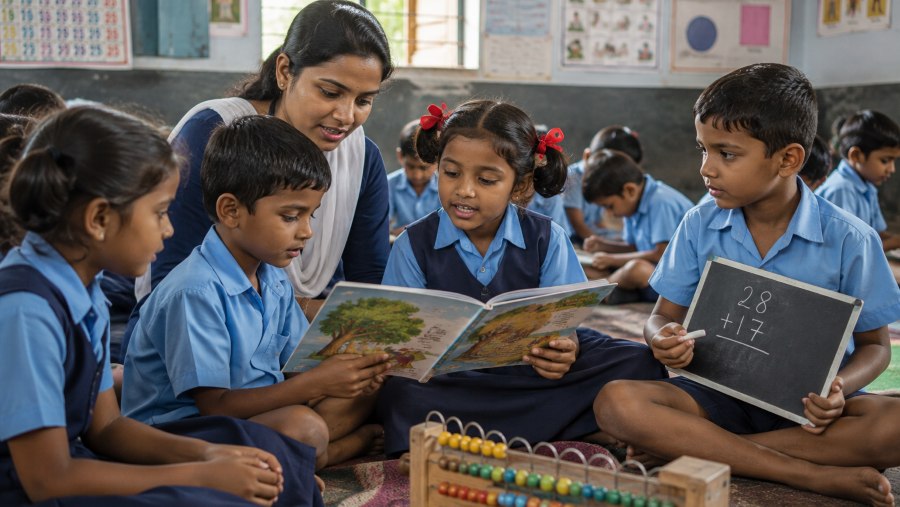
A. What has been particularly encouraging for us is seeing how alternative learning ecosystems can create meaningful impact in regions where access to formal education and digital infrastructure remains limited. At NIIT Foundation, initiatives such as Digital Buses and Hole-in-the-Wall Learning Stations(HiWEL) have helped bring technology-enabled learning directly into underserved and hard-to-reach communities.
Our Digital Buses, which function as solar-powered mobile classrooms equipped with 16–20 computers, internet connectivity, and dedicated trainers, have been especially impactful across rural regions. Currently operating 21 Digital Buses, the initiative has reached over 7 lakh learners, many of whom were first-time users of digital technology.
Similarly, HiWEL learning stations, inspired by Dr. SugataMitra’s “Hole-in-the-Wall” concept, have impacted over 2.5 million children through more than 56 active stations across India. Going forward, we see significant potential to scale these decentralized, community-led learning models further, particularly in remote geographies where access gaps continue to persist.
Q. With partnerships spanning 292 colleges and 13 government bodies, collaboration appears central to your growth strategy. What role do you believe cross-sector partnerships will play in shaping the next decade of CSR-led skilling and education in India?
A. No single institution can address India’s skilling challenge on its own, it is always a joint and collective effort where government bodies, industry, academia, NGOs, and technology partners work together with a shared vision. Cross-sector partnerships are essential in ensuring that skilling programs remain aligned with evolving industry needs while also achieving scale, accessibility, and long-term sustainability. More importantly, such collaborations help create inclusive learning ecosystems that can reach underserved communities and deliver meaningful employment outcomes. India’s skilling challenge is far too large and complex for any one institution to address independently. This is precisely why cross-sector partnerships between government bodies, industry, academia, NGOs, and technology partners will become even more important in the coming decade.
As per the Confederation of Indian Industry (CII), one of the biggest challenges today is aligning education and skilling systems with rapidly changing industry requirements. This is where collaboration becomes essential because industry partnerships help keep skilling programs relevant and future-oriented. Similarly, the United Nations Sustainable Development Goals framework strongly emphasises partnerships as a critical driver for inclusive development and large-scale social transformation. For us, collaboration is not just about scale, it is about building learning ecosystems that are sustainable, inclusive, and closely aligned with real economic opportunities.
Q. As conversations around CSR increasingly move from compliance to measurable nation-building impact, where do you see organisations like NIIT Foundation contributing most meaningfully to India’s social and economic transformation over the next five years?
A. I believe organizations like NIIT Foundation will play an increasingly important role will play an increasingly important role in India’s social and economic transformation as the country navigates the changing relationship between technology, education, and employment. The challenge today is not only about providing access to skills, but also about helping young people build the confidence, adaptability, and critical thinking needed to succeed in a rapidly evolving digital economy.
With nearly 65% of India’s population below the age of 35, there is a growing need for accessible skilling opportunities aligned with emerging sectors such as AI, cybersecurity, healthcare support, logistics, and digital services. At the same time, meaningful impact cannot remain concentrated in urban centres alone. The future of skilling in India will depend on building stronger community-led ecosystems that bring learning, employability, and digital opportunities closer to where people live, particularly in underserved rural and aspirational regions.




.png)