
Marico Partners IIT Tirupati to Develop Sustainable Bioactive Extraction Technologies for Edible Oils
Mumbai, January 06, 2026: Marico Limited has entered into a research collaboration with the Indian Institute of Technology (IIT) Tirupati to develop sustainable and science-backed methods for extracting bioactive compounds from natural, plant-based sources for use in edible oils.
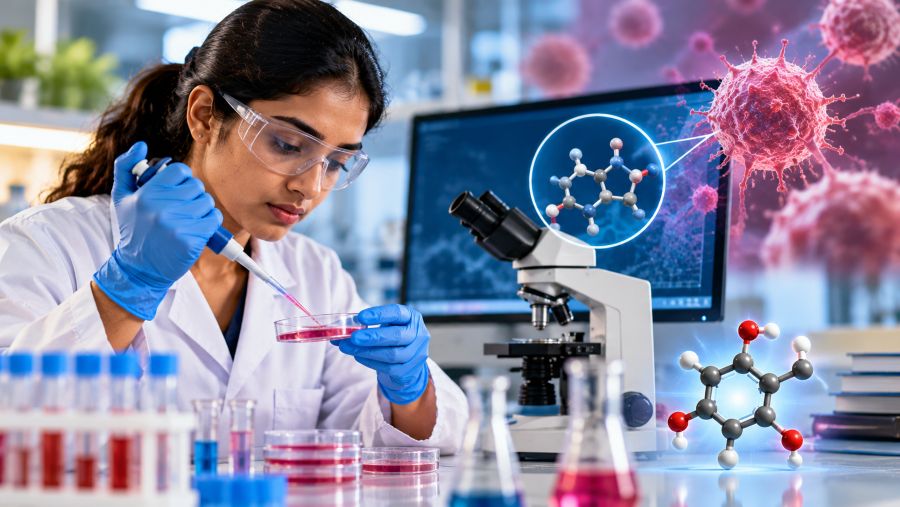
The partnership aims to leverage green extraction and purification technologies, along with detailed characterization, shelf-life studies, and efficacy testing, to support the development of healthier cooking oil options. The initiative brings together IIT Tirupati’s academic research capabilities and infrastructure with Marico’s applied R&D expertise and market insights in the edible oils segment.
The collaboration is being undertaken under the CII-ANRF Prime Minister’s Fellowship for Doctoral Research. A doctoral scholar from IIT Tirupati is working on sustainable process development under joint mentorship from IIT Tirupati faculty and Marico’s R&D team. Marico is providing regular technical guidance, reviews, and strategic inputs as part of the research process.
As part of the collaboration, the partners have published their first review paper titled “Aqueous Two-Phase Systems: Methods of Binodal Curve Generation and Applications,” which examines innovative systems for the separation and purification of bioactive compounds. A research manuscript based on ongoing experimental work is also being finalised, with plans to file joint patents and publish further studies in the future.
Commenting on the collaboration, Dr. Shilpa Vora, Chief R&D Officer, Marico Limited, said, “For decades, innovation has been the driving force behind Marico’s iconic Saffola Oils, setting benchmarks in heart health and nutrition. Our partnership with IIT Tirupati is a step forward in advancing green technologies for extraction of bioactives that open new possibilities. This holds the potential for creating advanced food innovations and bringing us closer to creating innovations that align with consumer wellness trends and sustainable manufacturing practices.”
The collaboration is expected to strengthen the scientific foundation of value-added edible oils while promoting sustainable manufacturing practices aligned with evolving consumer health and wellness preferences.