
CII Study Says 26% Green Steel Mandate Could Unlock 16 MTPA Demand by 2030
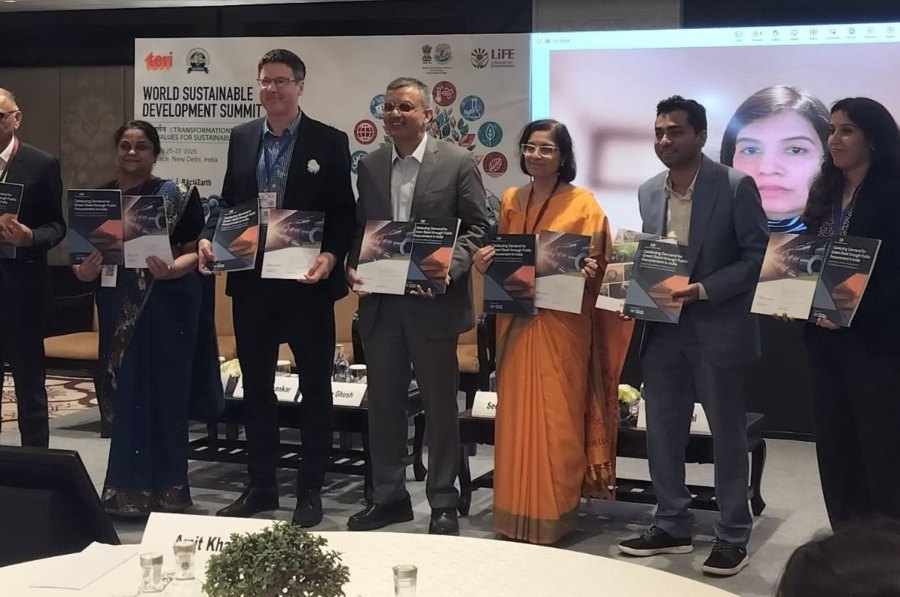
New Delhi, March 03, 2026: A new industry readiness assessment by the Confederation of Indian Industry (CII) – Green Business Centre, supported by Climate Catalyst, states that mandating 26% green steel in public procurement could unlock up to 16 million tonnes per annum (MTPA) of certified green steel demand from government projects alone by FY2030.
The study notes that public procurement in India accounts for ₹45–50 lakh crore annually, with government-linked projects consuming approximately 31.6 million tonnes of steel and generating around 70 million tonnes of CO₂ in FY2024. It estimates that a 26% mandate could avoid up to 20.9 MtCO₂ by FY2030. A higher 37% mandate could unlock up to 24 MTPA of green steel demand and help avoid up to 29.7 MtCO₂ by 2030, equivalent to removing 6–9 million cars from the road each year.
The assessment draws on inputs from 28 steel producers representing 88 MTPA of crude steel capacity and 12 major public procurers. It finds that 93% of producers (26 out of 28 surveyed) are ready to supply certified green steel once a mandate is notified, subject to mechanisms such as a price premium, GST concession, or carbon credit offset to support cost recovery.
Procuring agencies surveyed indicated readiness to implement such a mandate if four enablers are in place: a notified national mandate with defined thresholds, ready-to-use tender clauses and Monitoring, Reporting and Verification (MRV) templates, training for procurement teams, and limited, time-bound fiscal support in the initial years.
K S Venkatagiri, Executive Director, Confederation of Indian Industry and Chairman, Global Ecolabelling Network Board, said, “Green Public Procurement can play an important role in helping India’s steel sector move toward lower-carbon production. By encouraging the use of certified low-emission steel in public infrastructure, housing, and transport projects, government demand can support market development for cleaner steel and help reduce the cost gap between green and conventional products. This can also provide clearer signals for innovation and investment in cleaner technologies, and contribute to lower embodied carbon in the built environment. Such measures could improve the competitiveness of the steel industry while aligning with India’s climate goals.”
Sakshi Balani, Director, India & Director, Policy, Climate Catalyst, added, “This study makes one thing very evident, that a clear green steel mandate can shift India’s steel sector faster than any subsidy or technology push. We don’t need to wait, GPP is the missing demand signal that can immediately cut emissions, unlock large-scale investment and move the industry into a 16-24 MTPA green-steel market by FY2030. With minimal cost impact and massive climate returns, it is the most realistic tool India has, to drive real transition this decade.”
The report also finds that the cost impact of green steel adoption on large public projects such as housing, metro rail and railway infrastructure would range between 0.2% and 1.2% of total project costs.
The study recommends establishing an inter-ministerial GPP Steel Task Force under the Ministry of Steel to oversee implementation and address systemic challenges, including scrap shortages, emissions disclosure gaps and harmonised MRV systems.