
ITS Develops Palm-Based Biogasoline Technology to Support Energy Security
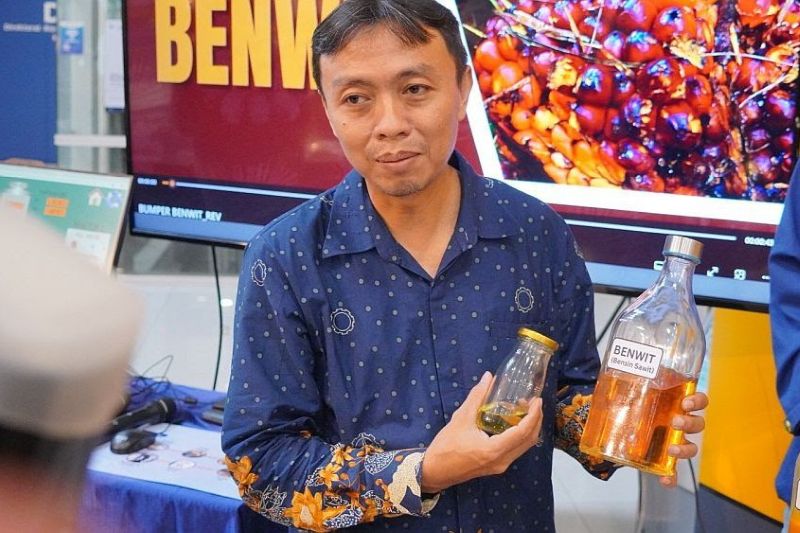
Indonesia, May 04, 2026: Institut Teknologi Sepuluh Nopember (ITS) has developed a new technology, “Benwit” (Palm Gasoline), which converts crude palm oil (CPO) into biogasoline. The innovation is positioned as an alternative fuel solution aimed at reducing Indonesia’s reliance on imported petroleum and external extraction technologies.
The development comes amid ongoing global oil market disruptions linked to geopolitical tensions, which have increased focus on energy security across Southeast Asia. Indonesia, like other emerging economies, is exploring domestic energy solutions to reduce exposure to volatile fossil fuel supply chains.
The research, funded by the Indonesian Oil Palm Plantation Fund Management Agency (BPDPKS), uses an advanced catalytic cracking method developed by Dr. Eng. Hosta Ardhyananta and his team at ITS. The process breaks down large triglyceride molecules in crude palm oil into lighter hydrocarbons suitable for combustion engines.
The team introduced a bimetallic catalyst composed of Nickel Oxide (NiO) and Copper Oxide (CuO), which reduced the operating temperature from 380°C to 320°C while increasing fuel yield from 60% to 83%. The resulting product consists of short-chain hydrocarbons (C5–C11), similar in composition to conventional gasoline.
The process also incorporates resource efficiency measures. Gaseous byproducts are reused as a heat source for reactors, while liquid residues are repurposed as fuel for industrial or household applications.
The technology has already been tested on agricultural machinery, and since April, trials have been underway on conventional internal combustion engines using blended fuel. Further testing is expected to assess its viability as a primary fuel option, in line with Indonesia’s plan to implement B50 biodiesel.
The development aligns with global sustainability goals, including clean energy and responsible production. A Life Cycle Assessment conducted by the research team indicates a lower carbon footprint compared to conventional fossil fuels.
The initiative has received support from Indonesia’s Ministry of Agriculture, and collaboration with PT Perkebunan Nusantara (PTPN) PalmCo IV is expected following the signing of a Memorandum of Understanding with ITS.
Prof. Dr. Bambang Pramujati, Rector of ITS, highlighted the relevance of the innovation in the current global context, noting that it presents an opportunity to accelerate the transition to alternative energy sources while leveraging domestic resources.
The Benwit technology is expected to contribute to Indonesia’s efforts to strengthen energy security and expand the use of renewable fuel alternatives.