India’s Development Journey Begins with Foundational Literacy and Numeracy
India's aspiration to become a developed nation by 2047 hinges not only on economic growth and technological advancement but also on the strength of its human capital. At the heart of this transformation lies Foundational Literacy and Numeracy (FLN)—the essential skills that shape a child's ability to learn, adapt, and contribute productively throughout life. While the National Education Policy (NEP) 2020 and the NIPUN Bharat Mission have brought unprecedented focus to foundational learning, significant gaps continue to persist, particularly among children who progress through school without acquiring basic reading and arithmetic skills.
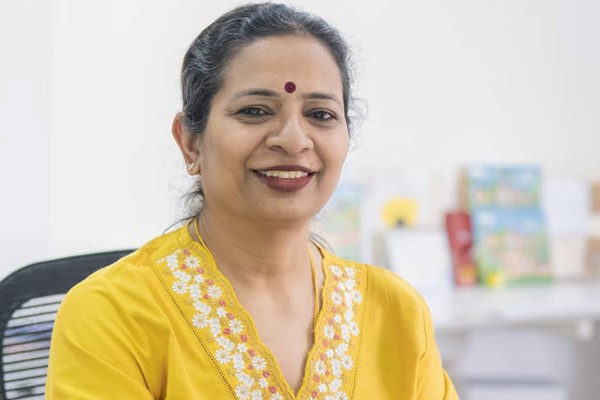
In this exclusive conversation with TheCSRUniverse, Ms. Meenakshi Ramesh, CEO of Pratham Education Foundation, shares her perspectives on the current state of FLN in India, the progress made in recent years, and the critical challenges that remain. Drawing on Pratham's extensive experience working with communities, schools, and governments across the country, she discusses innovative initiatives such as School Readiness Melas, parent-led learning support models, and accelerated learning programmes aimed at helping children catch up on foundational skills.
The interview also explores the economic consequences of weak foundational learning, the role of CSR in strengthening India's future workforce, and the policy and funding shifts needed to treat FLN as a core component of national development. Ms. Ramesh makes a compelling case for viewing foundational learning not merely as an education issue, but as a strategic investment in India's long-term prosperity and inclusive growth.
Scroll down to read the full interview:
Q. As leader of Pratham, what is your thought on the current status of FLN in India? Could you please share any initiative on FLN that Pratham has taken over the last few years, as well as future plans?
A. The National Education Policy (NEP 2020) has had a transformative impact on India's FLN landscape through its unequivocal, time-bound emphasis on foundational literacy and numeracy. Under the NIPUN Mission, FLN, especially in the early grades, has emerged as a clear priority for governments at all levels.
ASER 2024 shows that these efforts have yielded significant gains, not only in reversing pandemic-related learning loss but in improving on pre-pandemic levels, particularly in arithmetic. That said, much remains to be done to achieve universal foundational literacy and numeracy.
Pratham has undertaken several initiatives in recent years:
Supporting families to engage with children’s growth, development and learning is and will continue to be an important part of Pratham’s work: Over the past two decades, parents' education levels and aspirations for their children have risen significantly, making the home environment, where children spend most of their formative years, more important than ever in shaping their development. Pratham's early childhood and foundational learning initiatives bring parents into the spotlight in different ways. Content, material and activities are developed with parents in mind, especially mothers. Interactions with parents—via in-person and digital means—are developed and evolved.
Social structures like neighbourhood mothers’ groups are formed to enable mothers to actively participate in their children's learning journey. Wherever possible, mothers’ groups have activity workshops with Anganwadi workers or teachers so that the mother-teacher/instructor relationship gets stronger. Such initiatives are part of our direct programs where we work directly with the community as well as in partnership with governments in states such as Maharashtra (as part of the NIPUN Maharashtra Program where mother groups have been formed and supported across the state) and Himachal Pradesh (as part of the Pehli Shikshak Ma where Pratham has supported mother-teacher workshops).
Pratham introduced "School Readiness Melas" (SRM)—community-level fairs for children about to enter Grade 1, to gauge their school readiness level. Children and parents move from stall to stall, engaging in developmentally appropriate activities across domains such as language, numeracy, cognition, motor skills, and social-emotional growth. Parents see their children's developmental readiness in action, understand what to build on, and take away simple activities to continue at home. Pratham is running these melas through the summer initiative called CAMaL Ki Taiyyari in multiple states across India with support of youth volunteers and Anganwadi workers. While SRMs are a regular feature in Pratham's early years work, this year,
CAMaL Ki Taiyyari is being carried out state-wide with Anganwadis in five states—Himachal Pradesh, Punjab, Delhi, Uttar Pradesh and Bihar. It is taking place in Madhya Pradesh in four districts and in many other states where Pratham is present.
Another big focus area for us and a major gap in the current landscape is foundational learning of children in Grades 3 and above. ASER 2024 showed that more than 70% children in Grade 3 and over 50% children in Grade 5 cannot read Grade 2-level text. Similar gaps exist in arithmetic. These children urgently need focus and support via foundational learning interventions that enable them to catch up on basic skills. Pratham, through its direct work in communities as well as in partnership with several state governments, has been focusing on accelerated learning catch up for these children.
Pratham also helps in developing and revising ECE and/or early grades curricula, materials, and tools to align with evolving policies and ground realities. Some of the key components of the state partnerships are capacity building by creating and training a cadre of government resource persons, providing on-ground support beyond training, and creating and supporting the use of age-appropriate assessments to enhance program effectiveness.
Q. What, according to you, are the long-term economic costs of weak foundational literacy in India?
A. We know that children who do not acquire foundational skills by the early grades fall progressively further behind and often disengage from schooling. The costs of this are borne at every level. If a child attends school for 10 years and learns very little because of lack of foundational skills, that is a significant investment by the household with little return. Governments similarly spend on teacher salaries, school infrastructure, midday meals, and textbooks—much of which is wasted when children do not benefit from schooling.
Research indicates adults who complete primary school without learning to read earn only 6% more than those who never attended school at all. Those who complete primary school and learn to read earn 38% more. Schooling without foundational learning produces little economic return, for the family or for the country.
Q. What are your thoughts on the existing FLN solutions being implemented by various stakeholders? Where do you see the major scope gaps and implementation challenges?
A. There are many organisations working in the FLN space, focusing on ECE and Grades 1-3, doing commendable work over several years. Nurturing collaboration across this ecosystem, so it collectively supports schools, parents, and children's learning, will be essential.
As part of the ASER 2024 survey, we asked government schools questions related to the directives and support they have received with regard to FLN in Grades 1-2/3. More than 80% of schools reported receiving directions on conducting FLN activities, more than 75% reported that at least one teacher had attended an FLN training, and a similar proportion reported receiving teaching-learning materials. This is a strong foundation to build on.
The opportunity now is to translate this intent into effective classroom practice. Learning is not confined within school boundaries. Equipping families to support children's development and learning at home, as a genuine partner rather than only through formal parent-teacher meetings, can meaningfully strengthen what happens in the classroom. This is an area where the ecosystem as a whole, including CSR, can contribute significantly.
Q. How can CSR investments in FLN be aligned with workforce development goals?
A. Foundational literacy and numeracy is the bedrock of all future learning and workforce readiness, CSR investments in FLN are, in effect, investments in India's human capital. These foundations must connect to the broader skills. NEP 2020 articulates a compelling vision for India’s students—curious, creative, capable of critical thinking and problem solving, able to collaborate and communicate across languages and contexts. CSR investment that sees foundational learning as the first step in a continuum is the kind of investment that will serve both children and the country's workforce goals.
Lasting change requires long-term commitment—CSR partners should plan for a minimum three-year horizon and resist the pull of short-term results. Metrics like children reached or immediate learning gains are important but they can distract from the longer-term change that ultimately matters: whether communities have genuinely adopted practices, whether parents are engaging with children's learning in sustained ways, whether schools and Anganwadis have shifted practices. These changes are harder to measure but are the real indicators of whether an investment will have lasting impact. We believe success metrics should be
collectively defined with the CSR partner at the outset so that both parties are accountable to the same vision of what they are trying to achieve.
Finally, supporting organisations that work closely with government systems is strategic, as the practices they embed today have the potential to become institutionalised at scale. To make this feasible, flexibility with respect to government decision-making processes and ad-hoc requests is an integral part of building strong working relationships. CSR stakeholders should deepen their understanding of this reality and invest in the people within organisations who cultivate and strengthen these relationships. While this may not lead to immediate tangible outputs, over time, it can contribute to influencing policy, practice, and priorities in meaningful ways.
Q. What kind of policy or funding shifts are needed to treat FLN as infrastructure towards better education and skilling?
A. Treating early childhood education with the same seriousness as primary schooling calls for shifts across three fronts. First, Anganwadis and pre-primary classes need to be adequately staffed, trained, and resourced. Second, the NIPUN Bharat Mission should be extended to Grade 5 to address the significant learning gaps that persist beyond Grade 3. Third, CSR and philanthropy can add the most value not by plugging government gaps, but by generating rigorous evidence, building capacity, and openly sharing what works—and what doesn't—to strengthen decision-making in government and across the ecosystem.




.png)