How Mumbai Climate Week Is Building India's First Citizen-Led Climate Movement
As climate conversations increasingly move from policy corridors to public consciousness, India is witnessing the rise of a distinctly citizen-driven climate narrative. In this deeply reflective and forward-looking piece, Mr. Shishir Joshi, Founder & CEO of Project Mumbai and Mumbai Climate Week, makes a compelling case for why climate action in the Global South must be rooted in communities, not just conference rooms. Drawing from Project Mumbai’s journey of mobilising citizens for social change, the article traces how Mumbai Climate Week is being envisioned as more than a marquee climate event—it is being built as a participatory movement that connects policy with people, innovation with implementation, and global ambition with local realities.
 Set against the backdrop of Mumbai’s lived climate challenges, the narrative explains the thinking behind India’s first large-scale citizen-led climate platform, anchored in a hub-and-spoke model that takes climate action beyond elite spaces and into campuses, neighbourhoods, cultural institutions, and public forums. With a sharp focus on urban resilience, energy transition, and food systems, the article highlights how solutions emerging from the Global South can be practical, scalable, and globally relevant. Referencing global recognitions such as The Earthshot Prize, the piece positions Mumbai Climate Week within a broader ecosystem of action-oriented climate leadership- where innovation, youth participation, and cross-sector collaboration are central to accelerating impact.
For readers of TheCSRUniverse, this article offers timely insights into how citizen leadership, inclusive design, and ecosystem partnerships can redefine climate action in India—marking a shift from dialogue to delivery, and from vulnerability narratives to solution-led global leadership.
How Mumbai Climate Week Is Building India's First Citizen-Led Climate Movement
When we started Project Mumbai in 2018, we had a simple conviction: when citizens come together, change follows. From beach clean-ups and mental health drives to inclusive sports initiatives and community care programs, we saw firsthand how people power could move mountains. Now, we're taking that same spirit to a global stage with Mumbai Climate Week, scheduled for February 17-19, 2026, at the Jio World Convention Centre.
But this isn't just another climate conference. This citizen-led platform, Mumbai Climate Week, is India's first attempt to speed up climate action with real, scalable solutions from the Global South, moving past mere talk and diplomacy.
Why Citizen-Led?
Climate action has long been the domain of governments, multilateral institutions, and corporate boardrooms. Policy frameworks are important, but they often remain disconnected from the communities that bear the greatest climate burden. This problem is evident in Mumbai, a city battling pollution, floods, and infrastructure problems. The solutions that work aren't always born in conference halls. They emerge from neighborhoods, from grassroots innovators, from students asking uncomfortable questions, and from NGOs working at the frontlines.
A citizen-led model means that policy connects with people. It means innovation is transformed into real-world application. It means communities become active partners in building resilience, not passive recipients of top-down solutions.
At Project Mumbai, we've always worked as a bridge between citizens, government, and private institutions to co-create solutions for the city's most pressing challenges. Our model is rooted in participatory governance, transparency, and trust. Mumbai Climate Week expands on that principle, now designed to confront climate issues in Mumbai, India, and the Global South.
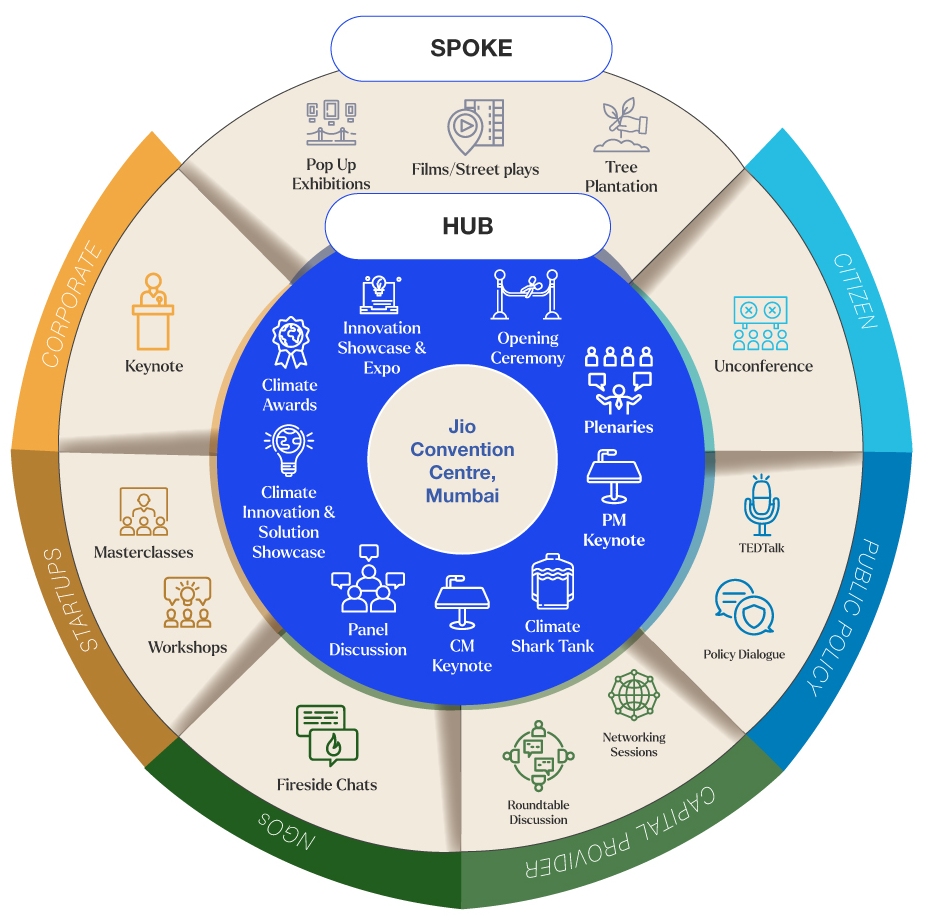 Climate action, democratized via the Hub-and-Spoke Model
One of the defining features of Mumbai Climate Week is its hub-and-spoke model. This isn't merely a practical decision; it's by design, to broaden involvement and make sure climate action includes more than the usual participants.
The three-day hub event at Jio World Convention Centre will be the site for leadership discussions, thematic panels, and innovation showcases. This is where policymakers, CEOs, climate scientists, and international delegations will converge. Prime Minister Narendra Modi has been invited to inaugurate the event, and we're expecting representatives from over 30 countries.
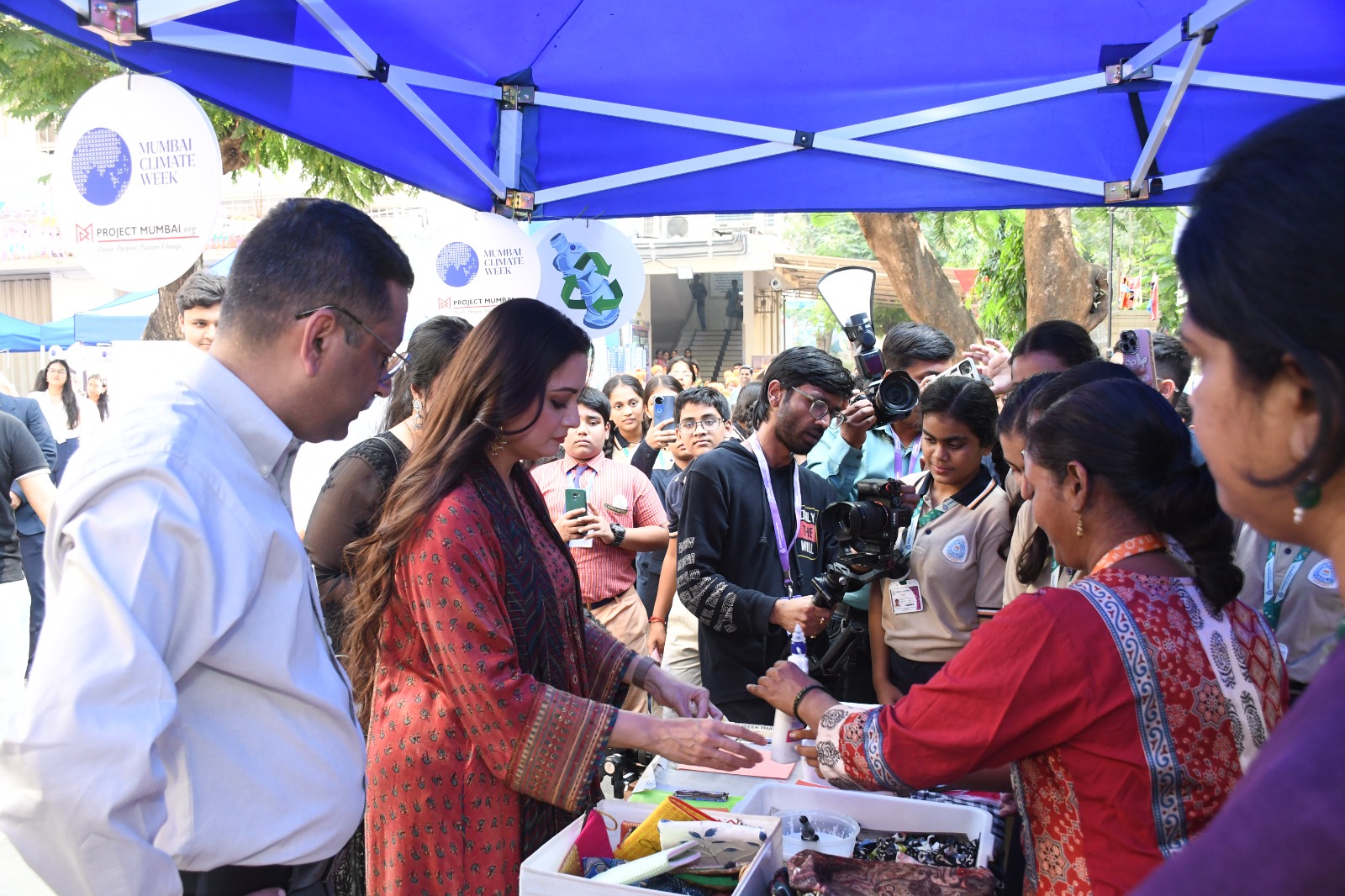
Together, the hub at Jio World Convention Centre and its spokes, a network of peripheral events spread across Mumbai, form a single citywide climate action platform, with ideas shaped at the centre and stress‑tested in real communities. Think campus roadshows led by UNICEF & YuWaah, art installations at the National Gallery of Modern Art, film screenings, food festivals exploring sustainable diets, hackathons for climate-tech solutions, climate innovation challenge led by National Stock Exchange and community workshops in neighborhoods.
This structure ensures that the conversations happening at the Jio World Convention Centre don't stay trapped in air-conditioned halls. They ripple outward—into colleges, into cultural spaces, into communities. A student attending a campus roadshow on e-waste awareness becomes part of the same ecosystem as a venture capitalist evaluating climate startups at the Innovation Challenge.
The hub-and-spoke model also addresses a critical problem: accessibility. Not everyone can afford a conference pass or take three days off work. But they can attend a film screening, join a neighborhood climate dialogue, or participate in a sustainability hackathon. This is how we make climate action truly inclusive.
Three Inter connected Themes, One Mission
Mumbai Climate Week focuses on three interconnected themes: food systems, energy transition, and urban resilience. These aren't arbitrary choices. They represent areas where development priorities in the Global South overlap most significantly with climate action needs.
Urban Resilience is led by WRI India and supported by HT Parekh Foundation and India Climate Collaborative. In Indian cities, climate change isn't a debate, but a reality they experience during each monsoon, each heatwave, and each infrastructure failure. From conversations with urban climate practitioners, it is clear to me that cities are already grappling with extreme heat, worsening air quality, erratic monsoons and flooding. Their work reinforces what we see on the ground in Mumbai: urban resilience is built through street-level solutions, not just marquee infrastructure projects. Mumbai Climate Week will spotlight these hyperlocal climate solutions, so they can be replicated and scaled across other Indian metros.
Energy Transition is anchored by ISEG Foundation, Shakti Foundation, and Eversource Capital. For us, this theme is about how India can grow differently, by using clean energy to power new infrastructure, mobility, and industry instead of locking into old, polluting models. The conversations at MCW will focus on practical pathways to scale distributed renewables, strengthen resilient supply chains, and make round‑the‑clock green power viable so that energy transition also means better access, better jobs, and a more secure future for people across the Global South.
Food Systems is led by India Climate Collaborative, addressing sustainable agriculture, nutrition security, and the climate-agriculture link. Climate change is hitting farmers hardest, yet they also hold some of the most innovative solutions—from regenerative farming practices to decentralized food distribution models.
Under each theme, solutions are showcased in four categories: commercial business and startups, development initiatives led by NGOs, policy and program initiatives led by government, and behavior change driven by community and civil society organizations.
Mumbai Climate Week Innovation Challenge: Turning Ideas Into Action
Another exciting component of Mumbai Climate Week is the Innovation Challenge, with the National Stock Exchange of India (NSE) joining as the Innovation Challenge Partner. This multi-stage program invites startups, students, researchers, NGOs, civil society organizations, and climate entrepreneurs from across India and participating nations to test, refine, and showcase high-impact ideas.
The Innovation Challenge also includes a dedicated youth track that invites young climate innovators to apply with their ideas and solutions, and this segment will be led by the YuWaah team at UNICEF.
The Challenge isn't just about identifying good ideas—it's about creating a credible pathway from ideation to deployment. Participants will go through capacity-building sessions, masterclasses, technical mentoring, and structured jury evaluations. On Day 3 of Mumbai Climate Week, we're hosting an "Investor Speed-Seeding Forum" where finalists can engage directly with capital providers.
Finalists will also gain visibility at the MCW Solutions Exhibition Arena, presenting their innovations to policymakers, funders, industry leaders, philanthropies, and global climate networks. The goal is to move promising innovations beyond pitch decks and place them on a pathway toward pilots, partnerships, and scale.
This integrated structure ensures that the innovations showcased at MCW aren't just impressive on paper—they're deployable, India-rooted, and globally relevant. We're not looking for moonshots disconnected from ground realities. We're looking for solutions that can work in Mumbai, in tier-2 cities, in rural India, and across the Global South.
A Coalition Like No Other
Mumbai Climate Week has brought together an unprecedented coalition of partners. The Government of Maharashtra, Majhi Vasundhara, and Brihanmumbai Municipal Corporation (BMC) are core partners. Monitor Deloitte is the strategic knowledge partner. Leading organizations like the Climate Group (hosts of New York Climate Week), India Climate Collaborative, WRI India, HT Parekh Foundation, Shakti Foundation, Eversource Capital, ISEG Foundation, UNICEF, Rainmatter Foundation, Mahindra Group, and the National Gallery of Modern Art, Nadhi, Climate Trends, IMC, TIFR, Avid Learning, Talk Dharti to Me, the Maharashtra Institution for Transformation (MITRA), and the Maharashtra Village Social Transformation Foundation.
The world of academia is gearing up for MCW as well, through an outreach initiative led by Project Mumbai in partnership with IIT Bombay and other like‑minded institutions, designing campus‑led climate engagements that feed into the broader MCW agenda.
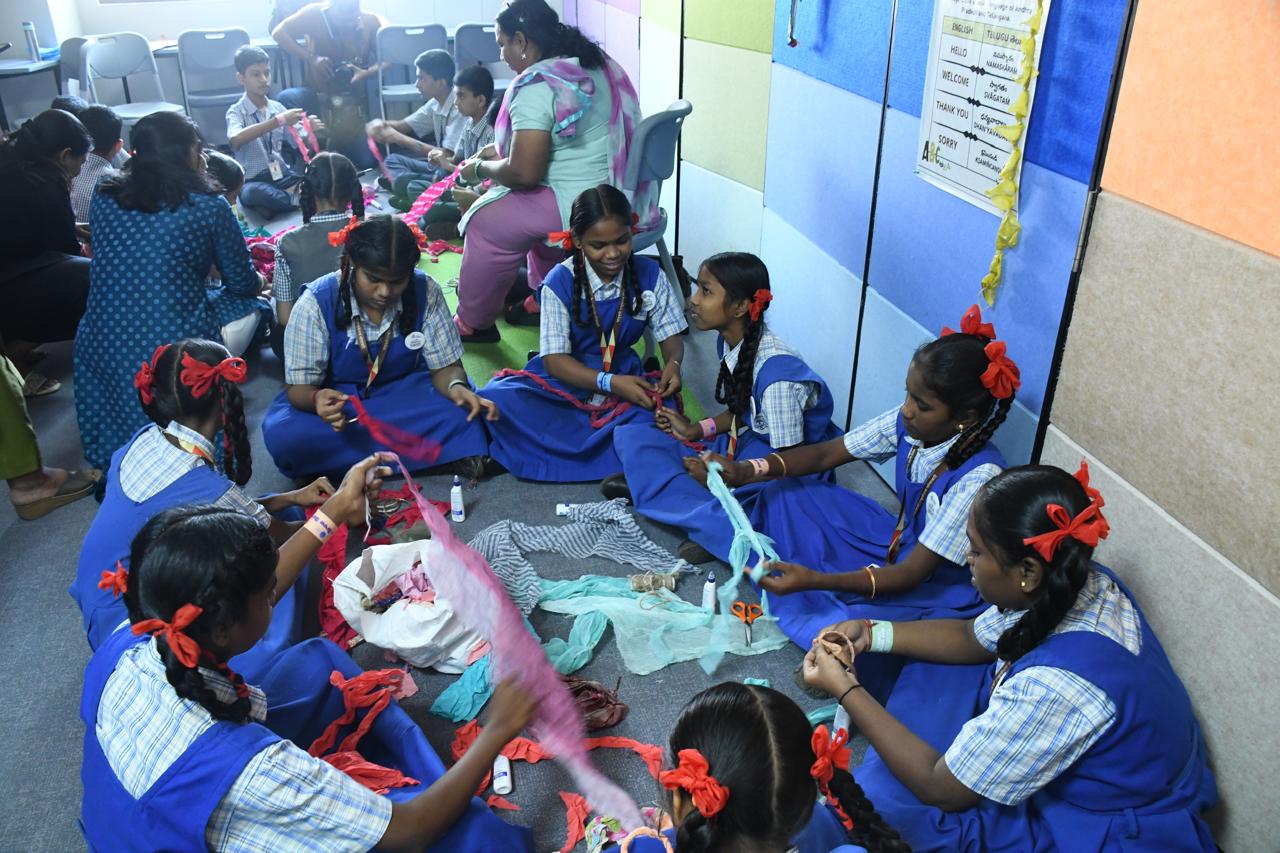
Youth mobilization is central to our vision. YuWaah (UNICEF India) is leading campus roadshows across colleges in Mumbai, blending art, gamified learning, and peer-led conversations to engage students on e-waste, sustainable food systems, energy choices, and urban resilience. The National Service Scheme (NSS) is activating student volunteers across the city. Nadhi, as our Women+ in Climate Action Partner, is building pathways for women and gender-diverse professionals through fellowships and leadership programs.
This isn't just a partnership roster—it's an ecosystem. Each organization brings unique expertise, networks, and credibility. Together, we're creating a platform that bridges sectors, scales, and geographies. As I often say, climate action requires diverse voices, deep partnerships, and a commitment to turning ideas into implementation.
Beyond February: A Movement, Not Just an Event
Mumbai Climate Week isn't a three-day event—it's a movement. The impact extends far beyond February 17-19. Preparatory activities are already underway: cross-stakeholder working groups, innovation mapping exercises, calls for applications, workshops, roundtables, and campus engagements. After the main event, we'll continue with synthesis efforts including follow-up reports, case studies, testimonials, and implementation roadmaps.
The real measure of success won't be how many people showed up in February. It will be how many solutions got funded, how many partnerships were formed, how many policies were influenced, and how many communities felt empowered to take climate action into their own hands.
At Project Mumbai, we've seen what happens when you give citizens a platform, a purpose, and a pathway to act. They don't wait for permission—they lead. That's what Mumbai Climate Week is designed to do: empower a generation of climate leaders who aren't content with incremental change. They want transformation, and they're ready to build it themselves.
India's Moment on the Global Stage
For too long, climate conversations have been dominated by Western frameworks. The Global South has been positioned as vulnerable, reactive, struggling to catch up. Mumbai Climate Week flips that narrative. We're not here to replicate what New York or London have done. We're here to showcase what Mumbai, India, and the Global South are already doing—and to accelerate it.
Chief Minister Devendra Fadnavis captured it well when he said, "It's high time we move from dialogue to action in the space of climate change. Mumbai Climate Week is a great initiative that brings citizens, businesses, and institutions together. We will reach out to the global community to make MCW a truly international event—where hope meets action."
India's cities, its youth, its innovators, its communities—they're ready. Mumbai Climate Week is their platform. And the world is watching.