
GPS Renewables and CSIR-NCL Launch Indigenous Ethanol-to-SAF Technology ‘NG SAF’
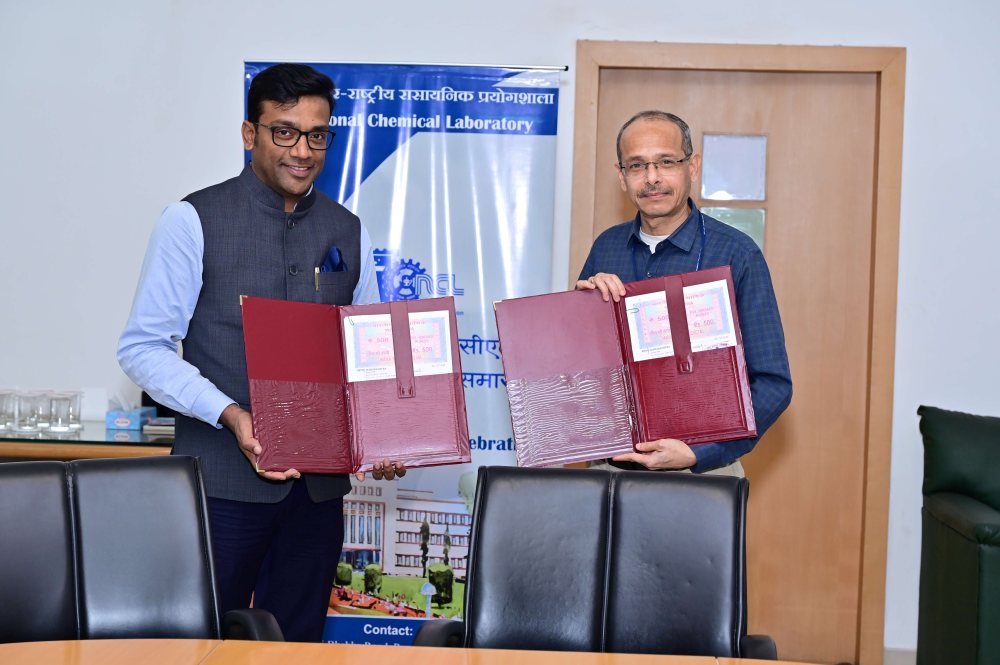
Bengaluru, September 30, 2025: GPS Renewables, a renewable oil and gas company, has launched NG SAF, an indigenous technology to produce Sustainable Aviation Fuel (SAF) from ethanol, in collaboration with the Council of Scientific and Industrial Research – National Chemical Laboratory (CSIR-NCL). The technology can also be applied to methanol.
GPS Renewables will invest in scaling up CSIR-NCL’s patented catalyst-based oligomerization process, enabling one-step conversion of ethylene and other olefins into molecules that emulate Aviation Turbine Fuel. While the ethanol-to-jet fuel process has been demonstrated at laboratory scale by multiple players, commercial-scale production has not yet been achieved. Under this project, GPS Renewables holds exclusive rights to commercialize the technology and will build the first commercial-scale ethanol-to-jet plant.
Gomatam Ravi, CTO, GPS Renewables, said, “We are thrilled to partner with CSIR-NCL to build an indigenous and breakthrough SAF technology that can position India as a leader in SAF production. At GPS, we have always prioritized technology that can fast-track India’s transition to clean energy, and this collaboration reflects that commitment. While many have demonstrated the process at lab scale, none have succeeded in producing SAF from Ethanol at an industrial scale. With NG SAF, we aim to change that.”
Dr. Ashish Lele, Director, CSIR-NCL, stated, “One of our core strengths at CSIR-NCL lies in working closely with industry leaders to transform disruptive ideas into commercially deployable solutions. This indigenous technology, named NG SAF, based on CSIR-NCL’s patented oligomerization process, can be a game-changer to decarbonize the aviation sector. GPS Renewables’ proven track record and extensive experience in clean fuels make them an ideal partner to take this innovation from the lab to the market.”
Mainak Chakraborty, Co-Founder and CEO, GPS Renewables, added, “The technical advisory team to the NG SAF project is a thing of dreams... GPSR has an engineering team of 120 people, adding up decades of experience from the likes of Petrofac, Petronas, Technip, Toyo, McDermott, Lauren USA, L&T, and other industry leaders, all of whom have come together to make NG SAF a reality.”
Currently, commercial SAF production is dominated by the HEFA pathway, which relies on used cooking oil or animal fats. Given India’s feedstock limitations, ethanol from 2G biomass is expected to be a more feasible route, making NG SAF a potential breakthrough in scaling indigenous SAF production.