From Cosmic Particles to Ocean Protection: How Shiv Nadar School Students Are Reimagining Underwater Infrastructure Monitoring
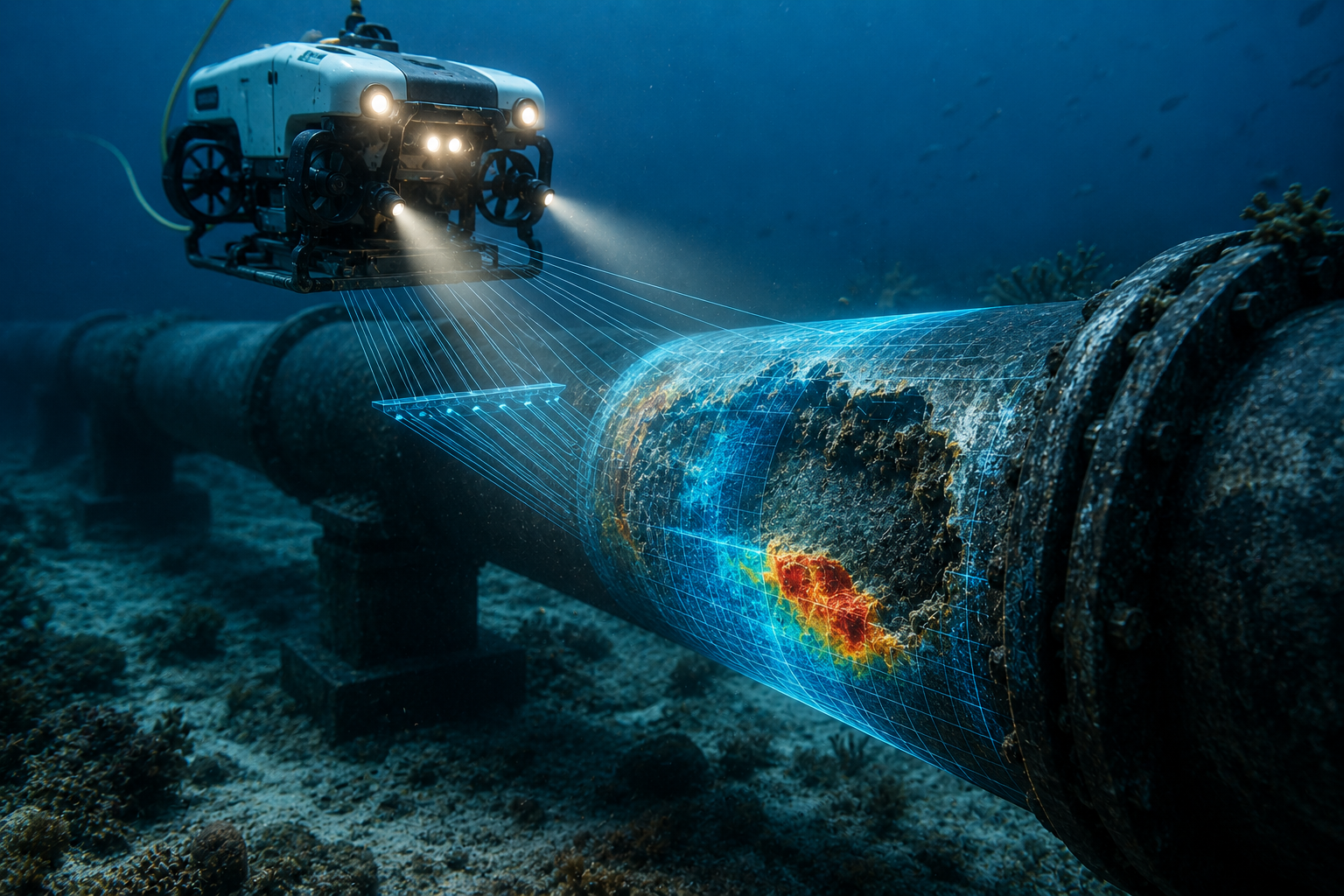
Innovation often begins with a simple question: what if we could detect hidden structural damage before it turns into an environmental disaster? For a team of young innovators from Shiv Nadar School, Noida, that question led to the creation of Project Aegis—an ambitious research-driven concept that combines particle physics, engineering, and environmental sustainability to address a critical challenge facing marine infrastructure worldwide.
Inspired by incidents such as the Deepwater Horizon oil spill and the growing risks posed by ageing underwater structures, the students conceptualised a novel monitoring system that uses naturally occurring cosmic particles known as muons to identify hidden corrosion and internal damage non-invasively. While still at the proof-of-concept stage, the project has already demonstrated promising results through GEANT4 simulations and showcases how interdisciplinary thinking can help tackle complex real-world problems.
In this exclusive interaction with TheCSRUniverse, the student team shares the inspiration behind Project Aegis, the scientific principles that power the concept, the challenges of transforming a sophisticated research idea into a practical solution, and their vision for a future where technology and sustainability work hand in hand. Their mentor also reflects on the journey, highlighting the importance of nurturing curiosity, critical thinking, and innovation among young minds to solve tomorrow's environmental challenges..jpeg.jpeg)
Scroll down to read the full interview:
Questions for the Student Team
Q. . What inspired you to work on Project Aegis, and how did you come up with the idea of solving a problem related to underwater infrastructure and environmental protection?
A. We were inspired by the growing problem of hidden underwater infrastructure degradation and the environmental consequences that can occur when it goes undetected. Incidents such as the Deepwater Horizon oil spill demonstrated how structural failures underwater can severely damage marine ecosystems. While researching underwater inspection systems, we realized that many current methods primarily inspect external surfaces and may struggle to detect hidden internal degradation non-invasively. That led us to explore whether Vihaan’s ongoing research in muon scattering could be adapted into a compact underwater structural-monitoring platform.
Q. For someone who has never heard of Project Aegis before, how would you explain the concept and its purpose in simple terms?
A. Project Aegis is a proposed underwater structural monitoring system designed to detect hidden internal corrosion or structural degradation non-invasively. The system uses naturally occurring muons, which are particles that constantly reach Earth from space. As these muons pass through underwater structures, they scatter depending on the material density inside. By measuring changes in scattering angles before and after traversal using detector panels, Aegis can identify hidden voids, corrosion, or density loss that may not be externally visible. The system also integrates sonar-assisted localization and automatic alignment to improve underwater deployment and positioning.
Q. Using cosmic particles called muons is a unique approach. How did you discover this idea, and what made you think it could help detect hidden damage underwater?
A. While researching underwater inspection systems, we realized that many current methods primarily inspect external surfaces and may struggle to detect hidden internal degradation non-invasively. This led us to explore whether Vihaan’s ongoing research in muon scattering could be adapted for underwater structural monitoring.
The idea is based on the fact that muons scatter differently depending on the density of the material they pass through. By measuring changes in scattering angles before and after they pass through a structure, the system can potentially identify hidden corrosion, voids, wall thinning, or density loss that may not be visible from the outside.
Q. As school students, how did you learn and apply concepts from physics, engineering, and environmental science while developing this project?
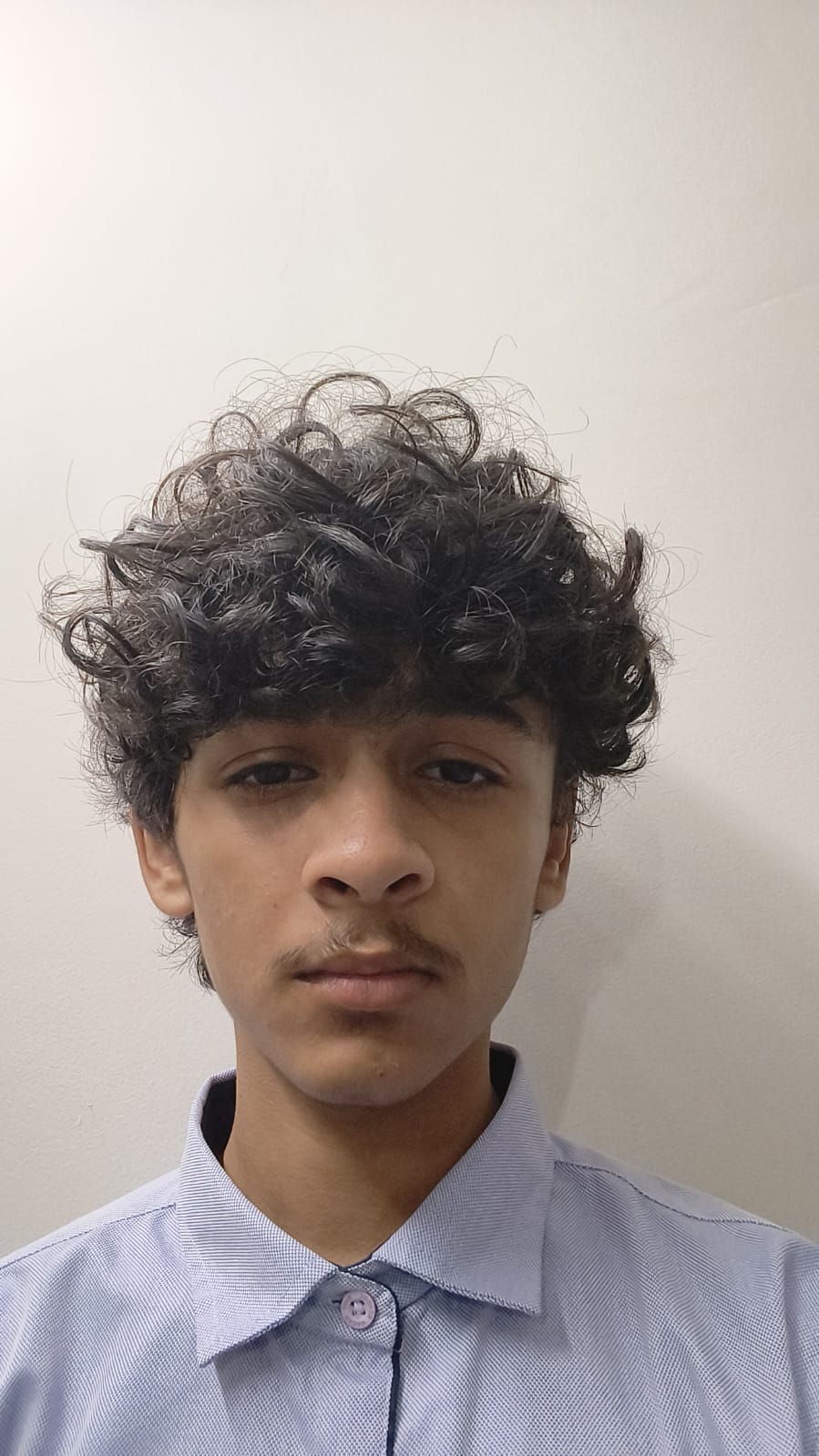 A. From physics, we studied muons and particle scattering to understand how changes in material density affect particle trajectories. We then used GEANT4 simulations to investigate whether those scattering patterns could theoretically reveal hidden internal corrosion. From engineering, we focused on how such a system could realistically operate underwater. This involved designing the detector architecture, considering waterproofing, power systems, sonar-assisted positioning, automatic alignment, and overall deployment feasibility. From environmental science, we researched how underwater infrastructure failures can impact marine ecosystems through oil or chemical leakage. This helped us connect the technical problem of corrosion detection to a broader environmental challenge. One of the biggest lessons we learned was that solving real world problems requires integrating knowledge from different fields. The physics showed us that the concept could work, the engineering helped us think about implementation, and the environmental research gave us a meaningful reason to pursue the idea in the first place.
Q. Can you take us through your journey from the initial idea to validating the concept through GEANT4 simulations?
A. The project began with researching underwater infrastructure failures and understanding the limitations of current inspection systems. We then explored whether particle scattering principles used in physics could be adapted for underwater structural monitoring.
From there, we developed simulation models using GEANT4 to study how muons scatter through materials of different densities. We analyzed scattering-angle distributions and detector resolution effects to evaluate whether internal density differences could theoretically be distinguished.
The concept was further validated through GEANT4 particle simulations. We simulated muons passing through materials such as aluminum and lead and analyzed the resulting scattering-angle distributions. The simulations showed that denser materials produced measurably broader scattering distributions, supporting the core physical principle behind the project.
Q. What were some of the biggest challenges you faced during the project, and how did you work together as a team to overcome them?
A. One of the biggest challenges was balancing scientific accuracy with practical deployment feasibility. Muon scattering is well-established physics, but adapting it into a compact underwater inspection concept introduced many engineering challenges.
Another major challenge was understanding the limitations of underwater deployment, including detector alignment and waterproofing. We addressed these challenges by performing simulation-based validation, keeping the prototype architecture modular, and carefully defining the project as a proof-of-concept monitoring platform rather than a fully commercialized system.
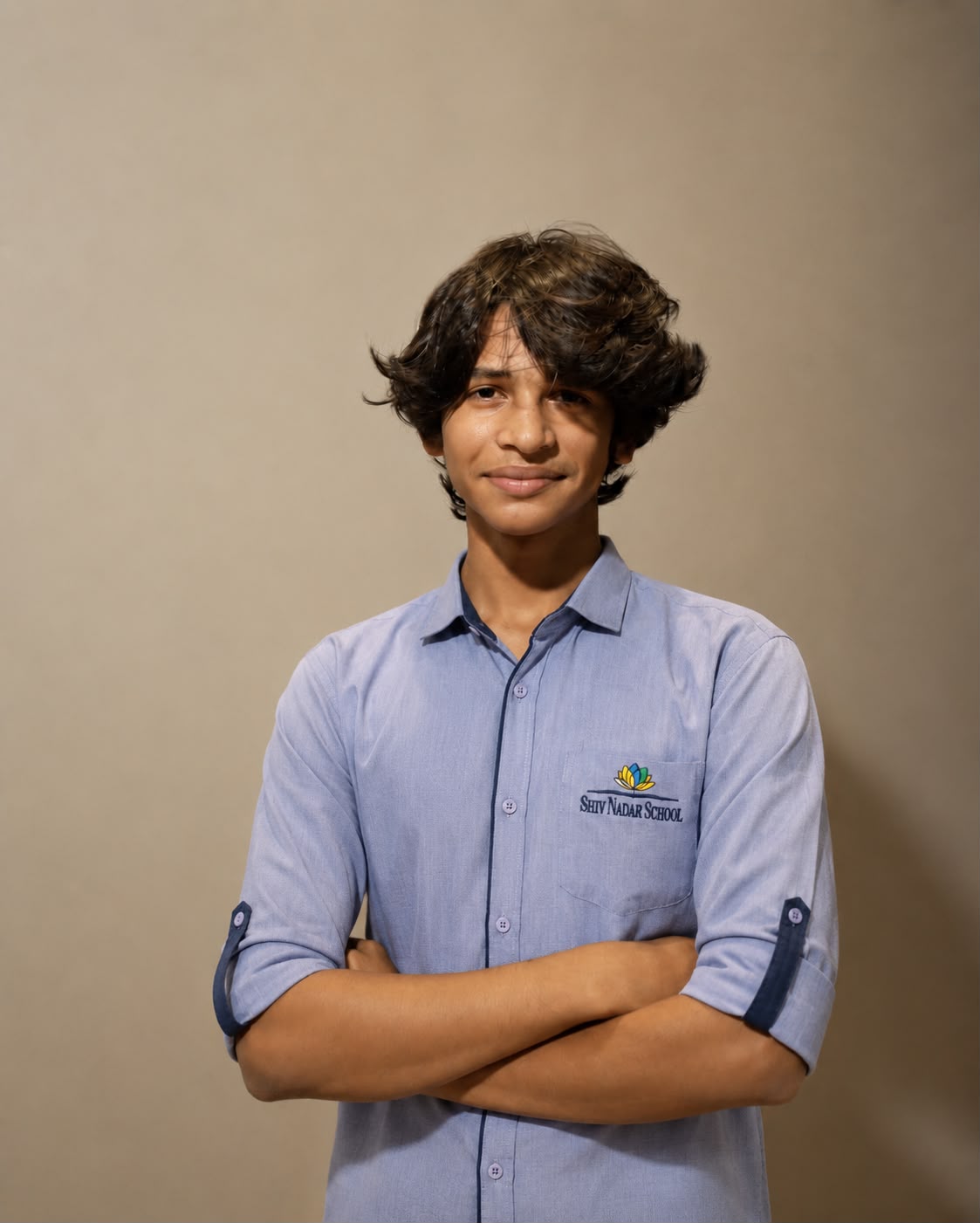
As a team, each member contributed in different areas. Vihaan handled the theoretical and technical aspects, simulations, theory validation, and prototype design. Vivaan worked on scalability, costing, and project planning, while Shauryaveer focused on research, statistics, and presentation development.
Q. What was the most exciting or surprising thing you learned while working on Project Aegis?
A. The most exciting realization was that a concept from particle physics research could potentially be adapted to address a real world environmental problem. It showed us how ideas from completely different fields can come together to create innovative solutions. What also surprised us was that the physics was actually the easier part of the problem. Once the concept appeared feasible, we had to think about detector placement, underwater deployment, waterproofing, alignment, power systems, and practical operation in real marine environments.
Q. Your proposed prototype is designed to be affordable and scalable. Why was it important for you to focus on cost-effectiveness while developing the solution?
A. Current underwater inspections often require repeated manual intervention, diver deployment, expensive infrastructure access, and invasive inspection procedures. Project Aegis explores a more compact and modular monitoring approach.
Because the system is designed around scalable detector panels and automated alignment, future versions could reduce repetitive manual inspection requirements and improve long-duration monitoring efficiency. Our focus has been affordability, modularity, and proof-of-concept feasibility rather than industrial deployment.
The estimated prototype cost is approximately ₹51,200, reflecting our effort to keep the system affordable while supporting proof-of-concept underwater deployment.
Q. How do you think Project Aegis could help protect marine ecosystems and prevent environmental disasters in the future?
A. Project Aegis is designed for industries and organizations involved in underwater infrastructure monitoring, including offshore energy operators, marine engineering companies, underwater inspection agencies, and environmental monitoring organizations.
Its primary goal is preventive monitoring. Hidden internal degradation can remain undetected until catastrophic structural failure occurs, potentially causing oil or chemical leakage into marine ecosystems. By identifying structural anomalies earlier, Aegis aims to reduce the risk of major underwater contamination events before they happen.
Q. As young innovators, how do you envision India's future when it comes to science, technology, and sustainability? What is your vision for the country, and what recommendations would you like to give policymakers to help turn that vision into reality?
A. We envision an India where scientific research, engineering innovation, and sustainability are not treated as separate goals but as interconnected priorities. Many of the challenges we face need solutions that combine multiple disciplines. One of the biggest lessons from Project Aegis was that innovation often happens at the intersection of fields. We started with particle physics, explored engineering challenges, and ultimately focused on an environmental problem. India's future lies in encouraging more of this interdisciplinary thinking from an early age. For policymakers, our recommendation would be to create more opportunities for students to access research facilities, mentorship, and innovation programs. Young people often have creative ideas, but they need exposure to real scientific tools, experts, and problem solving environments to develop those ideas further. If we continue investing in scientific .jpeg.jpeg) literacy, research culture, and sustainable innovation, India has the potential not only to solve local challenges but also to become a global leader in science and technology driven solutions.
literacy, research culture, and sustainable innovation, India has the potential not only to solve local challenges but also to become a global leader in science and technology driven solutions.
Question for Mentor
Q. As the team's mentor, how did you support the students throughout the development of Project Aegis, and what were some of the key challenges you helped them navigate while turning an ambitious scientific idea into a well-researched proof of concept?
A. As mentors our role was primarily to guide and support the students as they developed Project Aegis from an initial idea into a research-backed proof of concept.
The idea, research direction, and key decisions were driven by the students themselves. Our contribution was to help them refine their thinking, ask the right questions, and evaluate the feasibility of their proposed solution. Whenever they encountered unfamiliar concepts, we encouraged them to explore credible sources, validate assumptions, and support their conclusions with evidence.
One of the main challenges was the interdisciplinary nature of the project. The students had to engage with topics ranging from underwater corrosion and marine ecosystems to particle physics, sensors, and data analysis. We helped by pointing them toward relevant resources and discussing their findings, while ensuring that the project remained grounded in scientific reasoning.
Another challenge was narrowing a broad and ambitious idea into a realistic proof of concept. Through regular discussions and reviews, we encouraged the team to think critically about implementation, practicality, and potential real-world applications.
Throughout the process, our focus was on creating an environment where the students could take ownership of their work, develop confidence in their ideas, and strengthen their research and problem-solving skills. It was rewarding to see them independently build a project that combines scientific innovation with a meaningful environmental objective.






.png)