Driving Global Change Through Digital Innovation: An Interview with Prof. Debabrata Das
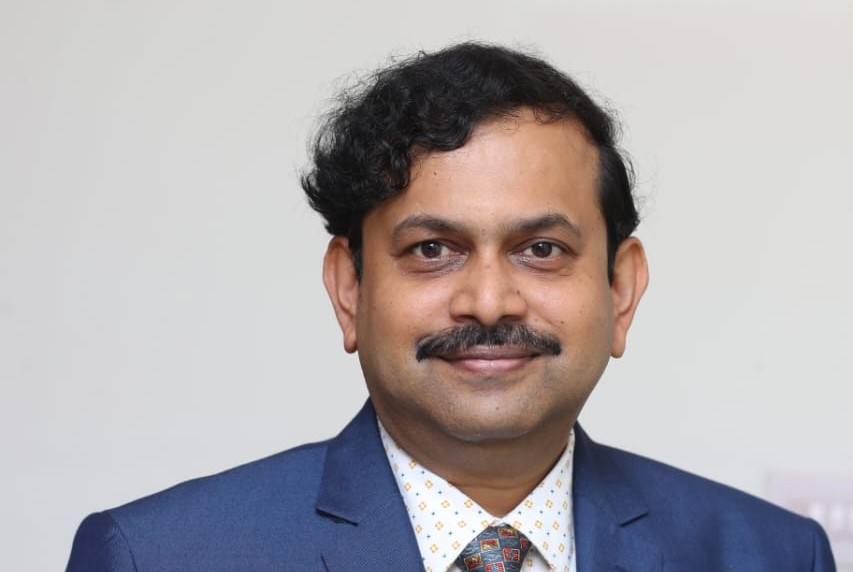
As digital systems increasingly shape how governments deliver services and engage citizens, the role of academic institutions in building and stewarding public technology has come under sharper focus. IIIT-Bangalore has been part of this shift through its work on Digital Public Infrastructure (DPI), contributing to platforms and policy-facing initiatives in India and beyond.
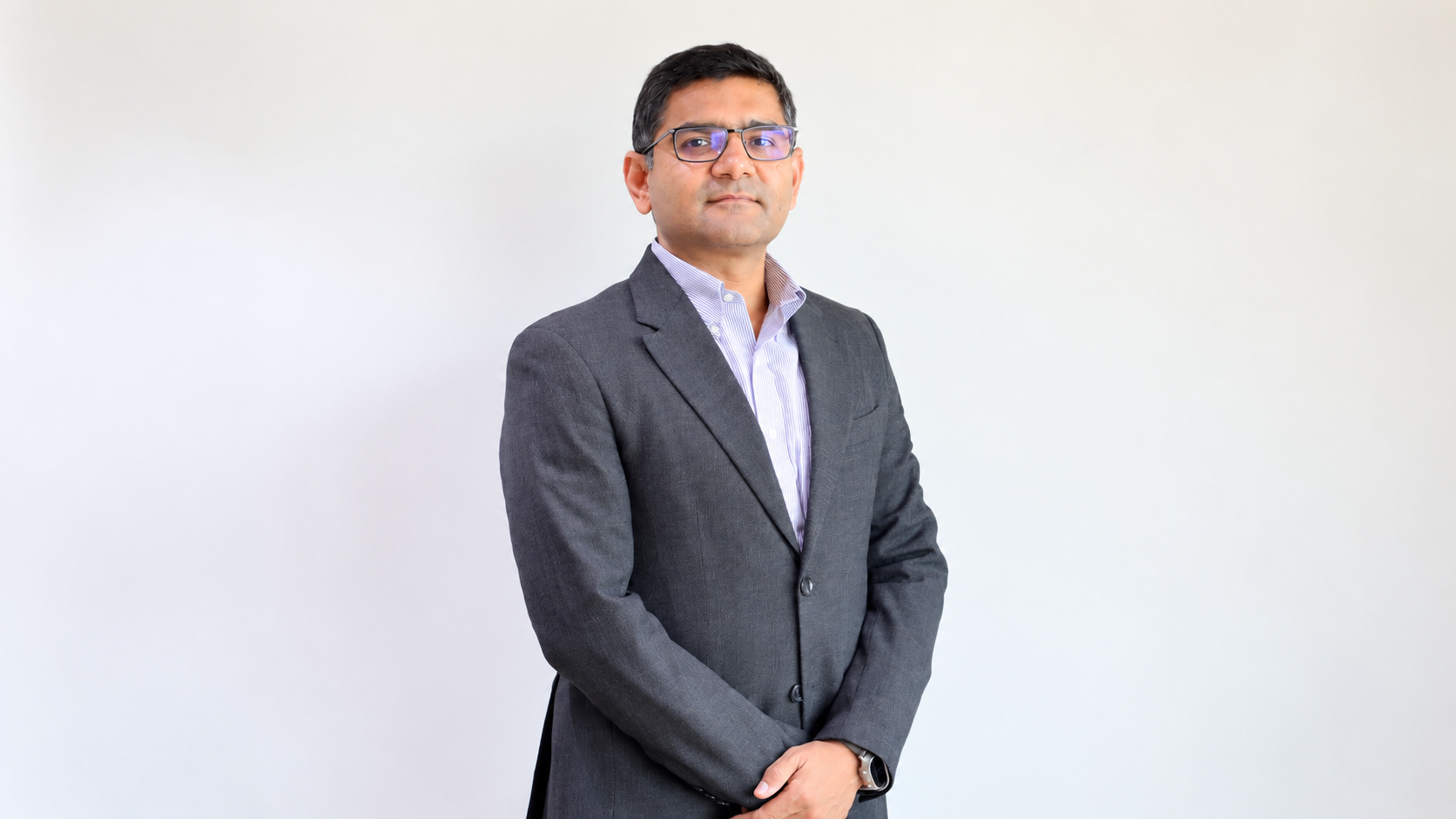
In this interview with TheCSRUniverse, Prof. Debabrata Das, Director of IIIT-Bangalore, reflects on how the institute approaches DPI as a long-term public good rather than a purely technical exercise. He discusses initiatives such as MOSIP and Tele-MANAS, the opportunities and limitations of university-led digital innovation, and the responsibilities that come with scaling technology across diverse social contexts. The conversation also touches on ethics, governance, and what “tech for good” practically means when solutions move from pilot stages to population-scale deployment.
Excerpts from the interview are below.
Q. As Director of IIIT-Bangalore, what are your immediate priorities, and how do you see the institute’s role in India’s Digital Public Infrastructure evolving?
A. As Director of IIIT-Bangalore, my immediate priority would be rapid academic and institutional transformation aligned with national and industry needs. This includes upgrading curricula in AI, Data Science, Machine Learning, Cybersecurity, 6G and emerging technologies with a strong focus on hands-on learning, interdisciplinary programs, and ethical AI. Faculty upskilling, creation of AI and data labs, high-performance computing access, and strong industry and government partnerships would be key early actions. I would also promote applied research, startups, and use of India-specific datasets to solve real societal problems.
In AI and Data Science, the focus would be on building end-to-end capabilities—from data engineering to model deployment—while embedding responsible AI, privacy, and data governance. Emerging fields such as quantum computing, IoT, and cybersecurity would be developed through our centres of excellence.
In the context of India’s Digital Public Infrastructure (DPI), the institute would evolve as a talent pipeline, research partner, and innovation sandbox, contributing to secure, inclusive, and scalable digital public platforms for not only national development but also make international impact which IIIT-B has already achieved in full measure. The efforts at IIIT-B has scaled with a strong focus on impact. DPI initiatives at the institute encompasses development and dissemination of large-scale, open, and interoperable digital platforms products following that enable governments, organisations, and communities to deliver services to their residents at population scale.
Q. From your experience, how can academic institutions contribute meaningfully to national digital public goods, beyond research papers and classroom teaching?
A. I can humbly and proudly say that the IIIT-B initiatives already serves as a model for other institutions to follow in DPI, as evidenced by various national and international experts’ views with regard to our DPI initiatives. IIIT-Bangalore has actively been engaging in the advancement of Digital Public Infrastructure around the world, through research, platform and solutions development, knowledge exchange, capacity building, and implementation support In 40 countries. Beyond, research papers and classroom teaching, the tangible products that IIIT-B has given to the world through its DPI Projects are MOSIP, OpenG2P, CDPI, COSS and INJI.
Q. MOSIP is now being used by several countries as a digital identity platform. What were the original ideas behind building it, and what has its wider adoption taught you?
A. MOSIP is a noble idea that several countries have adopted. The Modular Open Source Identity Platform was established in 2018 to support governments in providing its residents with an official form of the most important human asset – identity.
The original idea of MOSIP was to offer countries modular and open-source technologies to build and own their national identity systems like India’s Aadhar. At the beginning, countries were a little uneasy to use an open source platform. But, when they saw success in countries like Philippines, Ethiopia and Morocco, slowly more nations evinced interest. With a foundational national ID system in place, countries Philippines like countries which adopted MOSIP built effective civil registries, and serviced delivery systems, serving the population in a myriad of ways - like ease of starting new businesses, and better access to financial inclusion, better public distribution systems, healthcare, and education. For IIIT-B, the important lesson is universities like ours can play a major role in contributing to the global good, by operationalising scalable solutions like MOSIP. Today, MOSIP is the technology behind numerous ID-systems across the world, with over 161+ millions of residents registered as on date, and 29 countries engagements till date across Asia Pacific, Africa, Latin America, and the Caribbean. This digital identity helps the citizen to authenticate their identity electronically to avail multiple business and government services. This has improved the lives of people for better living.
Q. IIIT-B, through initiatives like the COMET Foundation, is closely involved in governance and implementation. Why do you think it’s important for universities to engage at this level?
A. It is important for universities like ours to engage at the level of governance and implementation because they bring long-term thinking, deep technical expertise, and a strong public-interest orientation that are often absent in purely commercial or administrative settings. Institutions like IIIT-B, through initiatives such as the COMET Foundation, help bridge the gap between policy vision and real-world deployment, translating research into scalable, trustworthy systems. IIIT-B has been involved by way of its advisory role in many digital governance projects of the Government of Karnataka for more than a decade now.
Equally important is the involvement of research scholars and students at a nascent stage. By engaging early in national digital initiatives, they become direct participants in the nation-building process, gaining first-hand exposure to governance challenges, public systems, and societal impact. This creates a generation of technologists who understand not just code, but institutions, and public value.
Universities also act as neutral convening spaces for government, industry, and civil society, ensuring openness, interoperability, and sustainability. Such engagement strengthens institutional capacity, builds digital public goods, and embeds a culture of responsible innovation rooted in national priorities rather than short-term objectives.
Q. How do centres like CTRI-DG and the Centre for IT & Public Policy help translate policy intent into workable digital solutions on the ground?
A. Centres at IIIT-B such as CTRI-DG and the Centre for IT & Public Policy (CITAPP) play a critical role in translating policy intent into workable digital solutions by operating at the intersection of policy, technology, and implementation. The Project Investigators of these projects work closely with government stakeholders to co-create systems, not just advise on them—breaking down policy objectives into clear workflows, data standards, and digital architectures that can be implemented at scale. By combining domain understanding, technical design, and regulatory insight, these centres ensure that platforms are compliant, secure, interoperable, and aligned with public-interest goals.
Equally important is their role as implementation sandboxes. Faculty, researchers, and students prototype, pilot, and iterate solutions in real settings, allowing rapid feedback and course correction before national rollout. This hands-on engagement builds institutional capacity within government, creates open digital public goods, and develops talent that understands both governance and technology. In essence, these centres convert policy vision into usable, resilient systems that work on the ground while remaining adaptable to evolving regulatory and societal needs.
Q. The EHRC–NIMHANS collaboration on Tele-MANAS applies technology to mental health support at scale. What have been some of the key learnings from this effort?
A. The mission of EHRC “Improving ICT Solutions for Large-scale Healthcare Concerns of India and other Underserved Regions Affordability, Accessibility, and Availability of medical care and services are the major concerns in India” matches that of the Tele MANAS Program - to reach the unreached - affordable (Toll free number), accessible (call from anywhere within the country with a phone), available (24x7, multilingual support) .
Our learnings in this project have been immense. Technology can be successfully used to provide better solutions for mental health field. The sustained success of the EHRC-NIMHANS collaboration can be attributed to following:-
• Quick initial setup of the systems was made with good collaboration/customization with IVR vendor
• Gradual ramp up of the solution and adding yearly big bang releases along with minor improvements throughout the year
• Discussion with NIMHANS to maintain healthy pipeline of To-Dos for continued development of the Program
What helped us provide continuous support to Tele MANAS:
• Customizable IVR adding more users and languages and workflows
• Centralized and Scalable infrastructure provided as part of the architecture so that states can ramp up quickly.
• Minimum infrastructure requirement from state and callers. The Tele MANAS Cells need to have stable and constant internet to consistently service the calls. On the callers end, basic mobile phone or landline is sufficient to connect with Tele MANAS
• Privacy and Security by Design is implemented so that data is securely stored. Data Analysis and dashboard access has been provided to defined stakeholders.
• Modularized code to help in integrating other helplines, external systems and ease of exchange of data in a secure manner. Development of parallel environments apart from audio counselling which feeds into the Tele MANAS ecosystem (video consultation, in person consultation) have been developed with access control and minimum customizations.
• Support and Training – Availability of online and in person training and support to help in easy on boarding. Utilization of technology for anonymized assessments to ensure quality services from counsellors. Unmasking number functionality have also been provisioned to help people in emergency situations.
The success of this National Mission undertaken jointly by IIIT-B and NIMHANS can be gauged from the following numbers (all nationwide) : -
· Total calls 32.19L
· Per day range 3.5 to 5k calls
· Total Video Calls started 1900. 1200 prescriptions sent
· Gender wise Male 53%, Female 45%, rest is prefer Not to Say, Other, Transgender
· 70% caller belong to age 18-45y
· Avg talk time ~ 8 mins
· Avg rating of counsellors (feedback) 4.51/5
Q. With increasing focus on AI, machine intelligence, and robotics at IIIT-B, how do you ensure that innovation remains ethical and socially relevant?
A. With the growing emphasis on AI, machine intelligence, and robotics at IIIT-B, ensuring ethical and socially relevant innovation requires a pragmatic, systemic approach, not the assumption that ethics can ever be fully “solved.” Imbibing ethics in the whole of humanity is itself a work in progress, and it will remain so as new technologies and new world orders emerge. The role of universities, therefore, is not to claim moral finality, but to build continuous ethical capacity.
Practically, this begins with embedding ethics, law, and societal impact across curricula—not as standalone courses, but as part of design, deployment, and evaluation. Research governance must include ethics review, real-world testing, and accountability mechanisms, which we do diligently at IIIT-B. Close engagement with public institutions, communities, and policymakers helps anchor innovation in real social contexts, not abstract labs.
Equally important is cultivating humility and responsibility among students and researchers—encouraging questioning of assumptions, unintended consequences, and power asymmetries. Ethical innovation is not about restraint alone, but about responsible progress, guided by feedback, transparency, and public interest rather than technological exuberance alone. A testimony to this is a large number of our students working in the research labs of industry and many have also have moved to research labs of reputed Indian and foreign universities.
Q. Finally, for students and young professionals interested in “tech for good,” what kinds of problems do you think deserve the most attention in the coming years?
A. To truly advance "tech for good," young professionals must integrate a robust civic sense and a sense of duty into their technical foundations. This means moving beyond "building things that work" to "building things that serve," where the developer views themselves as a digital steward of the public interest. Almost all of IIIT-Bangalore’s projects follow this very ethos. A sense of duty compels engineers to prioritize long-term societal stability over short-term growth hacks, ensuring that digital infrastructure—like voting platforms or public health databases—is resilient, inclusive, and protected as a common good. By treating algorithms and code as a form of social contract, you ensure that innovation doesn't just disrupt industries, but actively strengthens the civic fabric and fulfills a moral obligation to protect the digital rights of all citizens.

.png)