Cultivating Change: How Deoleo is Advancing Climate Action, Circularity and Consumer Confidence
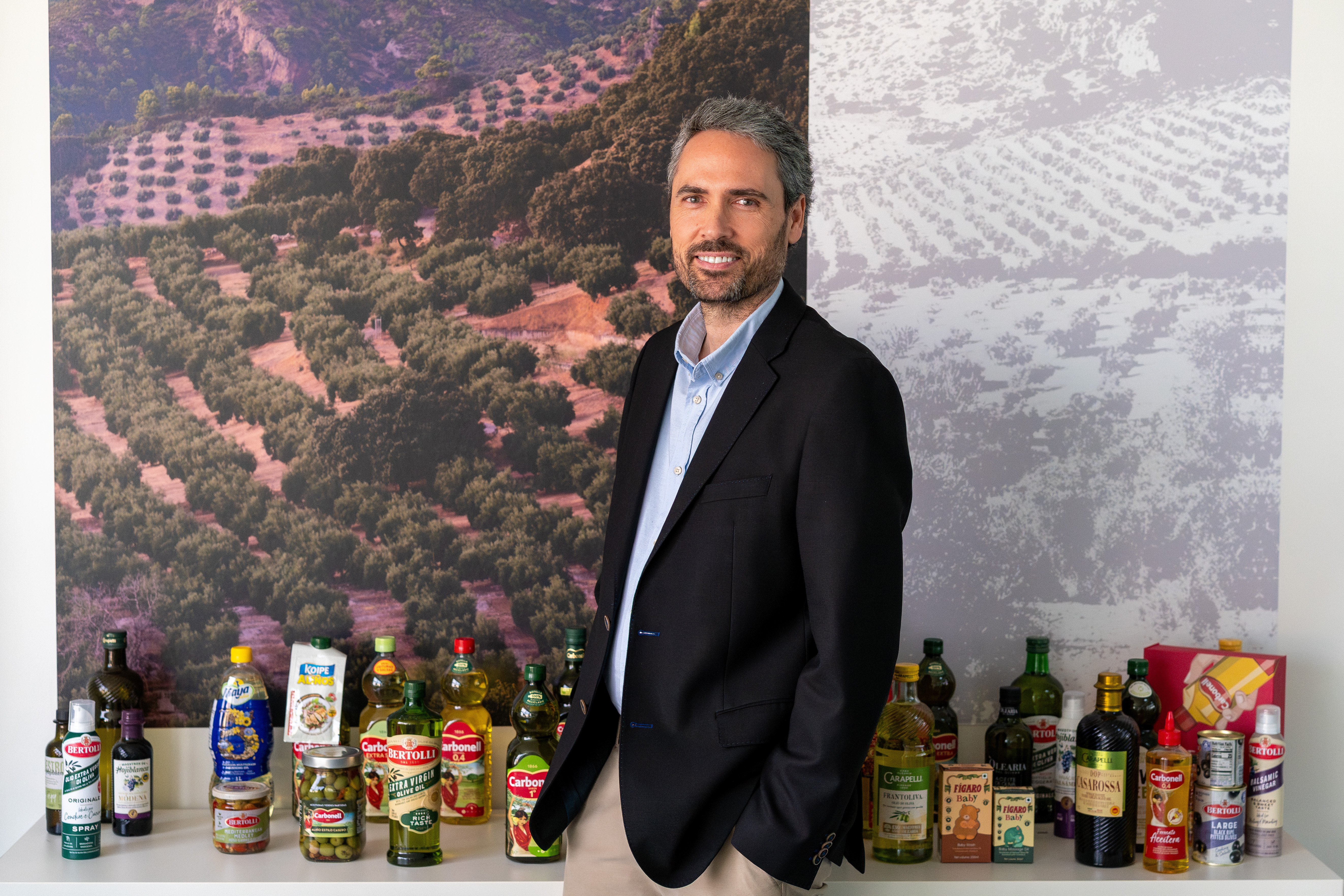
As businesses worldwide navigate the complex intersection of growth, climate responsibility, and consumer trust, sustainability is increasingly becoming a core business imperative rather than a peripheral commitment. Few companies exemplify this transition as comprehensively as Deoleo, the world's leading olive oil company and the force behind the iconic Figaro brand in India.
In this exclusive interaction with TheCSRUniverse, José María Zamora Rica, Global Marketing Director, Deoleo, shares how the company is embedding sustainability across its value chain—from regenerative agriculture and circular packaging to renewable energy, digital traceability, and responsible waste management. The conversation explores Deoleo's landmark achievements, including reaching its recycled plastic packaging target five years ahead of schedule, reducing greenhouse gas emissions by over 30% since 2022, and expanding its Sustainability Protocol to support more than 61,000 farmers globally.
Zamora also discusses India's growing importance in Deoleo's long-term vision, highlighting how sustainability, health-conscious consumption, and transparency are shaping the future of the olive oil market. From tackling climate-related agricultural challenges to fostering strategic partnerships and empowering consumers through blockchain-enabled traceability, he offers valuable insights into building a resilient and responsible food ecosystem.
As the food industry faces increasing environmental and social expectations, this interview provides a compelling perspective on how sustainability can drive both business growth and meaningful impact.
Scroll down to read more:
Q. Deoleo's 2025 Sustainability Report highlights that the company achieved its target of incorporating 40% recycled plastic in packaging five years ahead of schedule. What strategic decisions and operational shifts enabled this accelerated progress, and what lessons can other FMCG companies draw from this journey?
A. The 40% rPET milestone came from treating sustainability as a structural business commitment rather than a compliance exercise. When we launched our ESG strategy, our environmental responsibility was integrated across the entire value chain, including packaging procurement. That consistency of intent, sustained across several years and multiple geographies, is what produced the acceleration.
The economics reinforced the direction. rPET consumes 70% less energy and 90% less water than virgin plastic in production. Our Zero Waste model at the Alcolea and Tavarnelle factories, where 94.4% of waste now receives a second life, created the operational discipline that made the packaging shift possible. In India, this philosophy is reflected in the responsible management of 370 metric tonnes of PET waste through recycling and co-processing, a direct extension of the circular economy principles we apply globally.
For other FMCG companies, the lesson is straightforward: A key lesson is that long-term ESG ambitions must be translated into near-term business decisions.Embedding sustainability across the organization is critical. ESG cannot sit within a single function—it must be integrated into everyday decision-making, from product design and sourcing to marketing and operations. This requires engaging and empowering every employee, aligning incentives, and building a culture where sustainability is seen not as an add-on, but as a driver of innovation, resilience, and long-term value creation.
Q. Could you elaborate on the company's broader decarbonisation roadmap and how sustainability is being integrated into core business decision-making?
A. In 2025, Deoleo became the first company in Spain's olive oil sector to secure SBTi validation of its Climate Transition Plan, with targets aligned to a 1.5 degree pathway and a 2032 goal year. We have already achieved a 30.3% reduction in greenhouse gas emissions across Scopes 1, 2 and 3 since 2022, avoiding 135,270 tonnes of CO2. Our factories in Spain and Italy now operate on 100% renewable electrical energy, and in 2025 we commissioned a photovoltaic solar plant at our Italian facility expected to cover 20% of that plant's total consumption.
At Deoleo, sustainability is not a parallel agenda, it is anchored in our purpose: “Caring for what cares for you.” Olive oil is not just a product; it is central to human health, cultural heritage, and the wellbeing of ecosystems. This creates a responsibility for us to protect and strengthen every step of the value chain, from the olive tree to our consumer.
This purpose directly shapes how we make decisions. Whether it is sourcing, product formulation, packaging, or partnerships, sustainability criteria are embedded alongside financial and operational considerations.
Equally important is having a clear roadmap with measurable targets that guide execution. Our ESG strategy translates ambition into concrete actions, milestones, and performance indicators, ensuring that sustainability is managed with the same rigor as any other core business priority.
Every employee plays a role in bringing our purpose to life—whether in operations, innovation, or commercial decisions. We work to embed sustainability into daily behaviors, decision frameworks, and incentives, so that it becomes a natural part of how we operate, not an add-on.
Sustainability is embedded in how we compensate for leadership. Between 16% and 50% of the variable compensation of our Executive Committee is linked to sustainability objectives. The Climate Transition Plan sits within our financial planning as a core business cost.
In India, that global roadmap translates into measurable local action. The PET waste programme alone has delivered a carbon footprint reduction of approximately 1,915 tonnes of CO2 equivalent, comparable to the annual carbon absorption of roughly 83,000 trees. These outcomes are reported as part of our global sustainability statement, held to the same standards of accountability across all markets.
Q. What have been some of the most impactful success stories or measurable outcomes emerging from this initiative so far?
A. At the global level, the Sustainability Protocol now covers 95 certified mills, working with more than 61,000 farmers across nearly 350,000 hectares. Through this network, 36% of our EVOO volume from total global sales of 158 million litres comes from certified sustainable mills. Deoleo also holds the EcoVadis Platinum rating for the second consecutive year with a score of 87 points, placing the company in the top 1% of over 150,000 companies assessed globally.
In India, the responsible management of 370 metric tonnes of PET waste has delivered savings of over 4.4 million litres of water and 3.1 million kWh of energy, eliminated 628,985 kilograms of air pollutants and avoided 24,049 cubic feet of landfill space. The equivalent environmental impact includes taking over 1,350 cars off the road for a year and powering approximately 3,100 homes for a month.
Across both geographies, the throughline is consistent: commitments made at the strategy level, delivered as documented operational outcomes.
Q. How are consumers responding to this initiative, and how important is traceability becoming in shaping future purchasing behaviour in the food sector?
A. Through Telefónica Tech's TrustOS blockchain platform, QR-enabled origin information is now available across 51 EVOO references, covering 36% of our total marketed volume. Consumers can access verified, product-specific data on origin, mill practices and production standards directly from the bottle. Engagement with this system across markets has confirmed that demand for transparency is real and growing.
In India, where food safety and adulteration remain active consumer concerns, traceable provenance carries particular weight. The Figaro brand has over 40 years of presence in the Indian market, and combining that legacy with verifiable origin information addresses a question Indian consumers are raising with increasing frequency.
The regulatory direction reinforces this trend. Transparency requirements are tightening across the European Union and in other markets. Companies that have built traceable supply chains now are far better positioned as those standards shift from voluntary to mandatory.
Q. Could you share more about the company's sustainability priorities and long-term market vision for India?
A. India is one of the two highest-priority growth markets under the EVOO-lution roadmap for 2025 to 2028. Olive oil consumption in India remains well below its long-term potential, and the Figaro brand, with over 40 years of market presence, is well placed to grow alongside rising health awareness and evolving dietary preferences.
The sustainability agenda in India runs in parallel with commercial expansion. The PET waste management programme, the introduction of spray and oil cruet packaging formats designed for more precise and waste-conscious consumption, and the application of global traceability standards to Indian retail all reflect the same operational discipline Deoleo applies across its 68 markets.
The long-term goal is to build a durable association in India between olive oil, sustainable provenance and a health-oriented lifestyle, grounded in the quality and traceability standards that define the Deoleo brand globally.
Q. What are some of the biggest sustainability challenges facing the olive oil industry today, particularly around water use, crop resilience, and supply chain continuity?
A. Olive cultivation is uniquely vulnerable to climate variability. These are long-cycle crops, and adapting to shifting conditions is
constrained by the decades-long timescales involved in grove development. Heat stress, water scarcity and the unpredictability of Mediterranean growing seasons are active supply chain risks, reflected in the price volatility the industry has experienced in recent years.
Water efficiency is a central focus of the Sustainability Protocol. The programme gives mills and farmers measurement tools and benchmarks to reduce consumption and improve resource management across a network of 61,000 farmers globally.
Our partnership in the SOIL O-LIVE project under Horizon Europe's Mission on Soil Health and Food is a direct response to the longer-term question of agricultural resilience through soil health and biodiversity. For a market like India, where consumer trust in supply chain integrity is increasingly important, the robustness of that upstream agricultural work is directly connected to the credibility of the product on shelf.
Q. How does Deoleo approach the connection between sustainability, workforce engagement, and organisational culture?
A. In our most recent internal survey, 93% of employees said they regard Deoleo as a company committed to the environment, and 90% expressed pride in working here. In 2025, we invested 27,267 hours in employee training, a 27.5% increase over the previous year, with sustainability literacy embedded throughout. Our fleet electrification programme and internal sustainability communications bring the commitment into day-to-day working life.
Our people management framework, S-ITE, and the W.I.N.S. roadmap introduced in 2025 are built on the principle that inclusion, professional development and environmental responsibility are mutually reinforcing. The Creciendo Juntas initiative, which supports female leadership in the olive oil sector, reflects the same values externally.
In India, this culture of accountability extends to how the sustainability programme is managed locally. The outcomes from the PET waste initiative are documented and reported as part of the global sustainability statement, holding the India operation to the same standards of rigour as the rest of the group.
Q. How is Deoleo positioning olive oil not just as a food product, but as part of a broader sustainable and wellness-oriented lifestyle narrative?
A. The health and wellness case for olive oil and the Mediterranean diet is well documented. Since 2022, Deoleo has reached more than 123 million people globally through campaigns on the health benefits of olive oil, reflecting a deliberate investment in building category awareness at scale.
Product innovation supports this positioning. The oil cruet and spray formats introduced in 2025 are designed for more precise, measured consumption, responding to a consumer audience that approaches olive oil with genuine nutritional intention.
In India, this narrative carries additional range. Figaro has built market recognition over 40 years across food applications as well as cosmetic and personal care uses, which broadens the wellness conversation considerably. Consumers in India who already associate the brand with health and quality are a strong foundation on which to lay the sustainability and traceability story that Deoleo is building globally.
Q. Could you share insights into any ongoing or upcoming partnerships with environmental organisations, recycling ecosystems, technology providers, or research institutions that are helping accelerate Deoleo's sustainability ambitions?
A. Our collaboration with Telefónica Tech through its TrustOS blockchain platform underpins the traceability system now deployed across 51 EVOO references at commercial scale. Our SBTi validation connects us to a framework founded by the Carbon Disclosure Project, the UN Global Compact, the World Resources Institute and the WWF.
In agricultural research, we actively collaborate with leading academic institutions to advance more sustainable and resilient olive cultivation. We are a partner in the SOIL O-LIVE project under Horizon Europe’s Mission on Soil Health and Food, working to improve soil quality, biodiversity, and climate resilience in olive groves. In parallel, we collaborate closely with Spanish universities such as the Universidad de Jaén and the Universidad de Córdoba, to deepen research on soil health, cultivation practices, and processes that ensure the quality and long-term sustainability of olive oil production.
Through the Istituto Nutrizionale Carapelli, we bring together a committee of leading health experts to conduct scientific studies on the benefits of olive oil. This includes research in areas such as diabetes and obesity, reinforcing the role of olive oil as a cornerstone of healthy diets and connecting sustainability with positive health outcomes.
In India, the PET waste management programme is carried out in coordination with local recycling and co-processing infrastructure. The documented outcomes in water savings, energy conservation and carbon reduction reflect a functioning local ecosystem partnership operating within our global sustainability framework.
Across all these relationships, the common thread is that partnerships are embedded in operational delivery rather than sitting alongside it. We are also implementing an ESG supplier management tool in the coming year to further strengthen monitoring across the supply chain globally.
Partnerships are a critical lever to accelerate our ESG strategy, and at Deoleo they are embedded directly into how we operate across the value chain, from agriculture and nutrition to technology and recycling ecosystems.
Ultimately, these collaborations allow us to combine science, technology, and local execution to scale impact and deliver on our purpose: caring for what cares for you.
Q. What have been some of the toughest operational or behavioural challenges Deoleo encountered during this transformation journey, and how were they addressed?
A. Scaling the Sustainability Protocol across a supply chain of 61,000 farmers in multiple countries required years of relationship-building before the numbers reflected the effort. Farmer trust in a programme that asks for changed practices, emissions measurement and new training standards is earned incrementally, and the 8% year-on-year growth in certified mills today reflects work that began in 2018.
In India, managing a market where volumes are expanding while holding to the same environmental standards as the rest of the group requires deliberate operational choices.
Q. Looking ahead, what are Deoleo's key sustainability priorities for the next five years, particularly in areas such as regenerative agriculture, circular packaging, carbon neutrality, and consumer engagement?
A. Our SBTi-validated targets commit us to a 38% absolute reduction in Scope 3 non-FLAG emissions by 2032 from a 2022 baseline, with equivalent ambitions across Scopes 1 and 2. On packaging, increasing recyclable bottle content above the current 79%, reducing net plastic waste and scaling the Zero Waste model across our factories are near-term priorities, alongside growing the number of Sustainability Protocol-certified mills above 95 and increasing the sustainable EVOO volume share above 36%.
In India, the priority is to grow commercially and sustainably in tandem. As one of the two highest-priority markets under EVOO-lution, the expansion of the Figaro brand will be accompanied by deeper application of our sustainability standards, including traceability, responsible packaging and waste management.





.png)