Coding, Confidence, and Compassion: How 17-Year-Old Ameya Meattle is Empowering the Visually Impaired
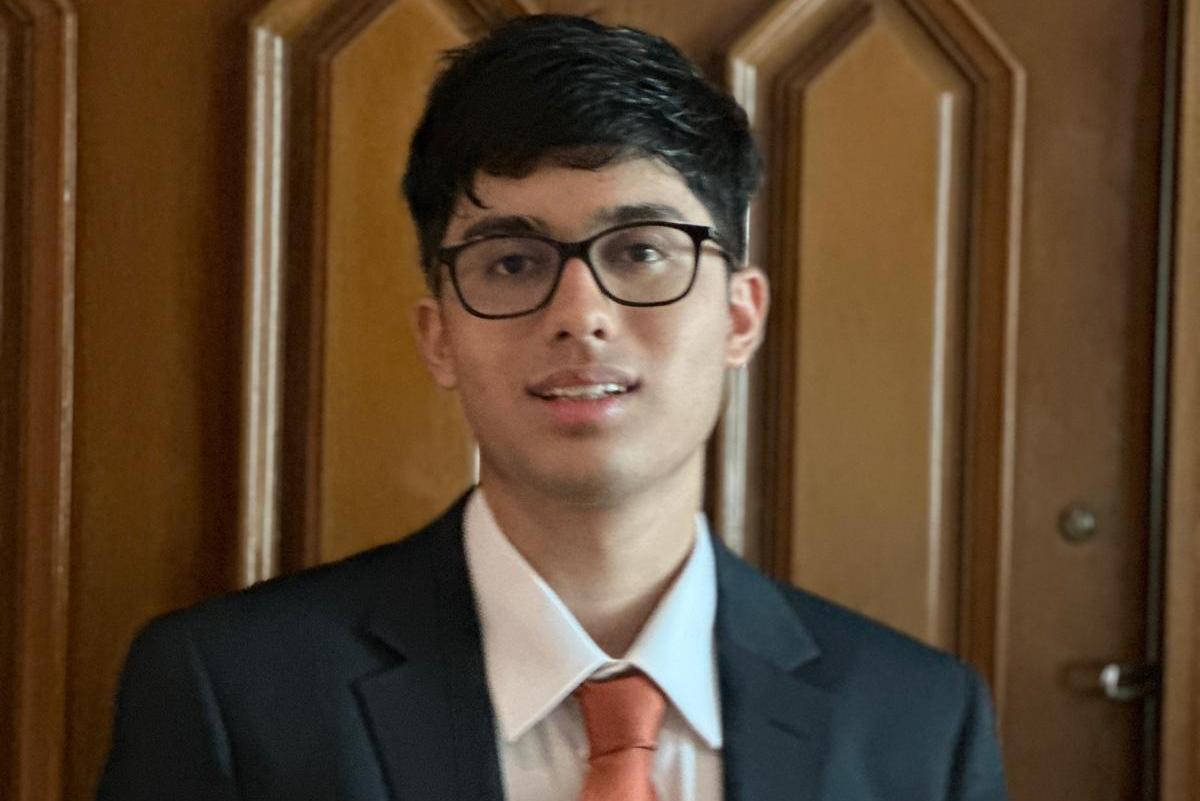
At just 17, Ameya Meattle is proving that age is no barrier to impact. A Grade 12 student in Singapore, Ameya blends technical innovation with deep social purpose—creating life-changing opportunities for the visually impaired across India and Singapore. At the age of 14, he founded Earth First, a social enterprise that helps visually impaired individuals earn, learn, and build confidence by creating eco-friendly products and gaining digital skills.
In this inspiring interview with TheCSRUniverse, Ameya shares the journey of Earth First, his hands-on collaborations with 8 NGOs, and how his training modules, Python coding programs, and retail tie-ups are transforming the lives of more than 150 visually impaired individuals. He discusses developing a VR-based diagnostic tool for visual acuity in partnership with MIT’s Sinha Lab, and an indoor navigation system for the visually impaired as part of Project Canary.
From accessible STEM tools at IIT Delhi’s AssisTech Lab to AI-powered training modules and career mentoring, Ameya’s innovations span craft, code, and compassion. He talks about the power of inclusive tech, the importance of partnerships, and his vision of a world where the visually impaired are creators—not just recipients—of solutions.
Q&A
Q. What first inspired you to start Earth First, and how did it evolve into a platform creating real impact for the visually impaired?
A. My volunteering journey with visually impaired students commenced very organically. I am born and raised in SIngapore. Every summer holiday since I was very young, my grandmother took me with her to volunteer at blind schools in Delhi. I was moved by the spirit and resilience of the visually impaired children, which kept drawing me back each summer. To feel independent and in control was a basic human desire and I felt that the visually impaired community were not fully availing their potential and were often treated as objects of charity. This inspired me and when I was 14, I launched a small social entrepreneurship venture called Earth First where I worked with a few NGO’s to create eco-friendly products which I would then sell in Singapore through participation in exhibitions, pop-ups, corporate orders and even retail orders. The timing was perfect as Singapore was transitioning away from plastic bags. Over the last few years, I expanded my outreach as I travelled to other cities in India during my vacations and I was able to mobilize eco systems and scale impact across borders. In total, my social entrepreneurship venture trained over 150 visually impaired individuals across eight NGOs culminated in 23 unique product lines, created new markets in Singapore
I was also interested in Science & Tech, and I also wanted to equip visually impaired youth with scientific inquiry and knowledge-based roles, moving beyond limited opportunities like creating simple candles and crafts. I designed a Python coding program for visually impaired individuals, across multiple NGOs bringing new digital literacy pathways. This program was very successful, some NGO’s featured this an in their newsletters, which spread the word to other schools working with visual impairment, creating a ripple effect. Students from those schools started joining in. It created real excitement among visually impaired students who hadn't encountered opportunities like this before.
Q. How did your early work with visually impaired individuals shape the way you design and deliver training at Earth First?
A. The early work of creating eco friendly bags was challenging. Visually impaired students were making niche designs like these for the first time and required reiterative training. The 23 product lines were developed through a lot of trial and error. As I was looking at unlocking retail markets in Singapore, I had to make sure the design aesthetics would make sense. Some bags were ‘imperfect’ but they really resonated with customers who were quite intrigued that visually impaired students made these beautiful bags. I also got discounted material from export houses to keep prices down as I wanted to make sure I unlock retail markets and corporate orders in Singapore
Q. With partnerships across eight NGOs in Singapore and India, what outcomes or transformations stand out most to you?
A. I feel a sense of achievement in playing a small part in getting the visually impaired community excited about tech. I tried very hard to advocate to convince NGOs focussing on visual impairment institutionalize and scale coding program. They were quite wary at first but it was so successful that NGOs even started publishing about this program in their newsletters and many more NGOs were interested. Students can now make their own apps - some have proudly demonstrated games as well as simple mobility apps that help them! I am now building AI modules for training program. I will also continue to do my outreach across corporates to give these students opportunities to work with. It's important that visually impaired communities and persons with disabilities have more forward looking STEM careers.
The work I did with Dr Sinha at MIT in creating an alternate VR eye screening tool also stands out as it means thousands of people can now be screened for vision problems where traditional eye exams couldn't reach them. I am personally very excited about this eye screening test as it allows a population that were traditionally excluded from taking the standard eye tests such as children, non-English speakers, and people with cognitive challenges.
Q. Could you share how you designed the product development and training process to help visually impaired individuals acquire real skills and confidence?
A. Each eco-friendly product that's been made is a labor of love and took visually impaired students many days to stitch. I worked with vocational trainers who introduced step-by-step audio guides and standardized stitching patterns. The joy on the faces of visually impaired vocational trainees was palpable when our first 100 bags sold out. This fueled my ambition and I broadened my product range and customer reach. Other than youth, I also worked with the elderly visually impaired population. For instance, in Singapore I partnered with ‘To Be Calm’, a fragrances brand, and the Singapore Association of the Visually Handicapped.
We successfully trained elderly visually handicapped in Singapore to create the perfect fusion of soy luxury candles with floral notes. For the tech projects, I developed leaders from within this group, giving them real responsibility and positions of impact. Working closely with the technical lead and students to figure out gaps.
This meant students could teach others and replicate the work there and there were much more efficient
Rather than relying on short-term solutions, I established self-sustaining support systems where visually impaired individuals could develop practical skills, secure meaningful work, and achieve financial independence.
Q. You also developed a Python training program for visually impaired students. What inspired this initiative, and what kind of career opportunities has it opened up for them?
A. The main goal was to ensure that visually impaired students have opportunities beyond mundane crafts and could access successful careers in STEM. When I interned at AssisTech Lab (India’s premier assistive technology lab) at IIT Delhi, I was engaged in making accessible STEM tools and teaching aids such as accessible periodic tables for coding accessible images and shapes accessible mathematical equations. I have engaged with many corporations to try and set up a program where persons with disabilities can be hired. As I expand my outreach, I am also ideating the structure of a program that includes certified training, career advice and access to resources. This journey is difficult but I will continue advocacy and hope I can unlock some opportunities.
Q. Your work on the audio-guided navigation device for Project Canary is a great example of inclusive innovation. How do you see such assistive technologies evolving in the coming years?
A. Tech and AI have been game changers as the possibilities of inclusive tech are immense. I have learned a lot from the accomplished team (led by Dr. Matthew Varghese, lauded by Bill Gates for his work on Polio) where we developed a revolutionary indoor navigation app to promote mobility for visually impaired individuals and persons with disabilities. My supervisor for this work was the inspiring Dr Smriti Singh, who is a a professor at Delhi University and an accessibility consultant for Project Canary. My contribution to the Project Canary team was to provide them with a fully functional navigation system, enabling visually impaired and persons with disabilities to find their way through unfamiliar spaces, avoiding obstacles, and reducing their anxiety while navigating. It's now deployed in three institutions across Delhi University, hospitals, and NGOs. I am now also helping making cultural spaces like art exhibitions more accessible. Possibilities of assistive tech are endless. Specifically for navigation, machine learning for contextual awareness. VR can also be leveraged for creating rich navigation clues.
Q. The VR-based diagnostic game for assessing visual acuity is another unique contribution. How do you envision this tool transforming the way vision testing and rehabilitation are conducted?
A. The VR screening tool is very exciting as it allows a population that were traditionally excluded from taking the standard eye tests such as non-English speakers, people with cognitive challenges and young children. I also tried to gamify this tool as traditional eye tests can be disengaging for children and I wanted to turn eye exams into a fun, interactive experience. Working with MIT's Dr. Pawan Sinha this tool transforms medical screening into an immersive experience. Health workers can test vision anywhere with a phone and VR set - without needing expensive hospital equipment.
Q. Can you tell us about your collaboration with mentors and institutions such as MIT’s Sinha Lab and IIT Delhi? How have these partnerships helped strengthen your efforts and innovations?
A. I am really lucky to have interned with Dr Pawan Sinha for more than a year. Working at the Sinha Lab has taught me a lot - he is professor of vision and computational neuroscience at MIT. A brilliant scientific mind with a deeply compassionate heart, his work stands at the crossroads of science and service. He founded Project Prakash not only to restore sight to children born blind but also to unlock profound insights into how the brain learns to see. In addition to creating the VR screening tool, I also contributed to a paper by Dr Pawan Sinha on Childhood Developmental Disorders authored by him.
I have also really enjoyed working with AssisTech Lab at IIT and I try to go back there as often as I can as the innovation they are working on is mindblowing. Other learning from my supervisor at Assistech Lab was that solutions need to be cost effective and practical for them to truly have scale and impact.
I want existing projects to scale by expanding outreach by deploying his navigation system at new locations and refining VR acuity screening tool for broader clinical use
Q. As a young innovator, what message would you share with others looking to use technology to solve real-world social challenges?
A. I try to keep assimilating the needs of the marginalized community, and creating solutions where I can. We need Governments and institutions to be open minded to make the world truly inclusive. To this end, I will keep advocating for changes in practices and attitudes to embrace new technology. My motive is simple: "I believe everyone deserves a chance to see their potential.”



.png)