Building India’s AI Future: Bridging Innovation, Policy, and Responsible Technology Through Collaborative Leadership
Artificial Intelligence is rapidly transforming industries, economies, and societies, making it one of the defining technologies of our time. As India aspires to become a global AI powerhouse, the conversation must extend beyond technological breakthroughs to include responsible governance, ethical innovation, digital sovereignty, and a robust policy ecosystem. Building an AI-driven future requires collaboration between industry, academia, startups, policymakers, and research institutions to ensure innovation remains inclusive, practical, and globally competitive.
Recognising this need, Pariniti, an AI policy think tank established by Pan IIT Alumni India, seeks to bridge the gap between cutting-edge technological advancements and evidence-based policymaking. Bringing together experts from across the AI value chain—including semiconductors, cloud infrastructure, governance, energy, and AI applications—the initiative aims to develop practical policy recommendations, foster multi-stakeholder dialogue, and strengthen India's position in the global AI landscape.
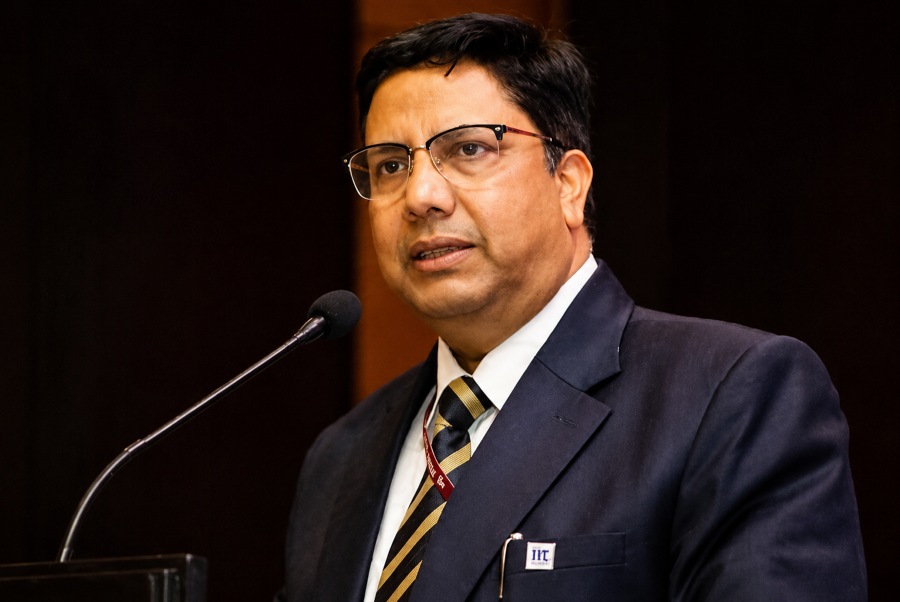
In this exclusive email interview with TheCSRUniverse, Mr. Prabhat Kumar, IRS, Chairman, Pan IIT Alumni India, shares the vision behind Pariniti, discusses India's evolving AI ecosystem, and highlights the critical importance of balancing innovation with regulation. He also speaks about digital sovereignty, AI infrastructure, ethical governance, the role of IIT alumni in shaping India's AI future, and the long-term roadmap for positioning India as a global leader in trustworthy and innovation-driven artificial intelligence. Scroll down to explore how collaborative leadership and policy innovation can help shape the next chapter of India's AI journey.
Read on for the full interview.
Q. What inspired Pan IIT Alumni India to establish Pariniti, and what gap in India’s current AI policy and innovation ecosystem does the think tank seek to address?
A. India’s AI discourse today is fragmented – brilliant work is happening in isolation across industry, academia, startups, and government. But there is no single, credible, non-governmental platform that brings the full stack of AI expertise together to offer actionable, market-grounded policy advice. Pariniti was born to fill that gap. We saw that while India has world-class talent and ambition, our policy conversations often lack real-time industry reality and deep technical insight. Pariniti will be that bridge – between the semiconductor lab and the boardroom, between the data centre and the Parliament.
Q. India is rapidly emerging as a major AI market. How do you envision Pariniti contributing to the development of a responsible, inclusive, and globally competitive AI ecosystem for the country?
A. We want Pariniti to become the go‑to thought partner for policymakers and industry alike. Our contributions will be three‑fold: first, by producing white papers and policy briefs grounded in data and practitioner experience – not theoretical wish lists. Second, by convening closed‑door roundtables where honest, unscripted conversations happen between founders, VCs, civil servants, and researchers. Third, by using Pan IIT’s immense reach to amplify those insights through op‑eds, social media, and direct representations. Responsible AI cannot be built in silos – we will ensure every voice from the ecosystem is heard, especially those from smaller cities and non‑metro innovators.
Q. Pariniti brings together experts from across the AI value chain, including semiconductors, cloud infrastructure, governance, and applications. Why was it important to adopt such a multidisciplinary approach from the outset?
A. Because AI is not just a software problem. The performance of an AI model depends on the chip that runs it, the energy that powers the data centre, the cloud that hosts it, and the governance framework that guides its use. If we only talk about algorithms, we miss half the story. By bringing experts from all five layers – energy, semiconductors, compute & cloud, models, and governance – we ensure that our recommendations are systemic, not symptomatic. A bottleneck in semiconductor supply affects AI innovation as much as a bad regulation. Our multidisciplinary structure allows us to see the full picture.
Q. As AI continues to reshape economies and societies, what do you see as the most pressing policy challenges India must address in areas such as data governance, ethics, regulation, and digital sovereignty?
A. Three challenges stand out. First, data sovereignty – how do we ensure that Indian data trains Indian models and not just global LLMs? Second, ethical accountability – when an AI system causes harm, who is liable? The developer, the deployer, or the user? Current laws are silent. Third, regulatory agility – traditional rule‑making takes years, but AI evolves monthly. We need frameworks that are principles‑based, not prescriptive, and allow for regulatory sandboxes. Digital sovereignty also means building our own foundation models and compute infrastructure – not just consuming what others make.
Q. How will Pariniti balance innovation and regulation while developing policy recommendations, particularly in emerging areas where technological advancement often outpaces governance frameworks?
A. We will never advocate for regulation that stifles innovation. Our approach is to identify minimum necessary guardrails – not maximum possible controls. We will work with real‑time case studies: for example, instead of asking “should we regulate AI?”, we ask “what specific harm are we trying to prevent?”. We also plan to propose sunset clauses for any regulatory recommendation, so that rules automatically expire or need renewal every two years. Finally, we will embed startup founders and VCs in our working groups – because they are the ones who feel the burden of over‑regulation first. Balance is not static; we will revisit our recommendations every six months.
Q. The think tank plans to engage CEOs, startup founders, venture capitalists, academics, and policymakers. How will this diverse stakeholder representation strengthen the quality and practical relevance of Pariniti’s recommendations?
A. A policy paper written only by academics may be rigorous but impractical. One written only by founders may be actionable but narrow. By bringing all stakeholders together in the same room – and then having our knowledge partner Praxis synthesise the discussion – we create recommendations that are both evidence‑based and executable. For example, a VC can tell us which AI sectors are capitalconstrained; a policymaker can tell us what regulatory changes are politically feasible; an academic can validate the technical assumptions. The magic happens at the intersection. Our members will also review each white paper before release, ensuring that no recommendation is out of touch with ground reality.
Q. What role do you see IIT alumni playing in shaping India's AI future, and how can their collective expertise help bridge the gap between research, industry needs, and public policy?
A. IIT alumni are uniquely positioned because they sit at every table – as CTOs in Silicon Valley, as founders of unicorns in Bengaluru, as researchers in top global labs, and as civil servants in Delhi. They speak the language of technology, business, and governance. Pariniti will harness that distributed expertise through structured verticals and monthly online discussions. Our alumni will not just write reports – they will actively engage with government committees, draft model bills, and mentor young AI startups. The IIT network is India’s hidden superpower in AI; Pariniti is the mechanism to unlock that power for public good.
Q. Many countries are investing heavily in AI infrastructure and talent development. From Pariniti’s perspective, what strategic priorities should India focus on to strengthen its global competitiveness in AI over the next decade?
A. India must focus on three strategic priorities. First, indigenous compute capacity – building our own GPU clusters and semiconductor fabs, not relying entirely on imports. Second, AI‑ready data sets – anonymised, high‑quality Indian language data for training models that reflect our diversity. Third, applied AI talent – not just PhDs in ML, but millions of technicians who can deploy and maintain AI systems across healthcare, agriculture, and public services. We also need to aggressively pursue energy‑efficient AI – given our power constraints, India could lead the world in low‑carbon AI infrastructure. Pariniti will publish a “National AI Competitiveness Roadmap” within 12 months addressing these.
Q. Beyond policy papers and recommendations, how does Pariniti plan to influence real-world decision-making and ensure that its insights translate into actionable outcomes for government, industry, and society?
A. We have a three‑stage influence model. First, we will formally submit our white papers to NITI Aayog, MeitY, and line ministries, and seek meetings to present findings. Second, we will work with our member network – many of whom are senior industry leaders – to pilot recommendations in their own organisations (e.g., testing a data governance framework in a live startup). Third, we will take our insights directly to the public through op‑eds in national newspapers, social media campaigns, and townhall webinars. Influence is not just about convincing the minister; it is about shifting the public conversation. We will also track which recommendations are actually adopted and publish an annual “Policy Impact Scorecard”.
Q. What is your long-term vision for Pariniti, and how do you hope it will contribute to India's aspirations of becoming a global leader in trustworthy, inclusive, and innovation-driven artificial intelligence?
A. My vision is that by 2030, Pariniti will be recognised globally as one of the most credible AI policy think tanks – not just from India, but from the Global South. We will have influenced at least five major national policies, mentored 100+ AI policy researchers, and built a repository of open‑source frameworks for responsible AI. But more than awards, I want Pariniti to be the place where a young engineer from a small town feels that her voice matters in shaping AI rules, and where a policymaker turns first for unbiased, practical advice. India can lead the world in trustworthy AI – not because we copy the West, but because our diversity, our democratic institutions, and our deep technical talent give us a unique advantage. Pariniti will be the engine that turns that advantage into reality.






.png)