Building Inclusive Learning Ecosystems: Da One Group and HMD’s Vision for the Shikhar Dhawan Foundation’s Digital Shiksha Programme
Digital education is no longer limited to providing devices and internet access. The real measure of progress lies in creating learning environments where technology strengthens teaching, improves student engagement and equips young learners with the skills needed for an increasingly digital future. For India, where educational inequities continue to be shaped by geography and socio economic realities, building such inclusive ecosystems has become a national priority.
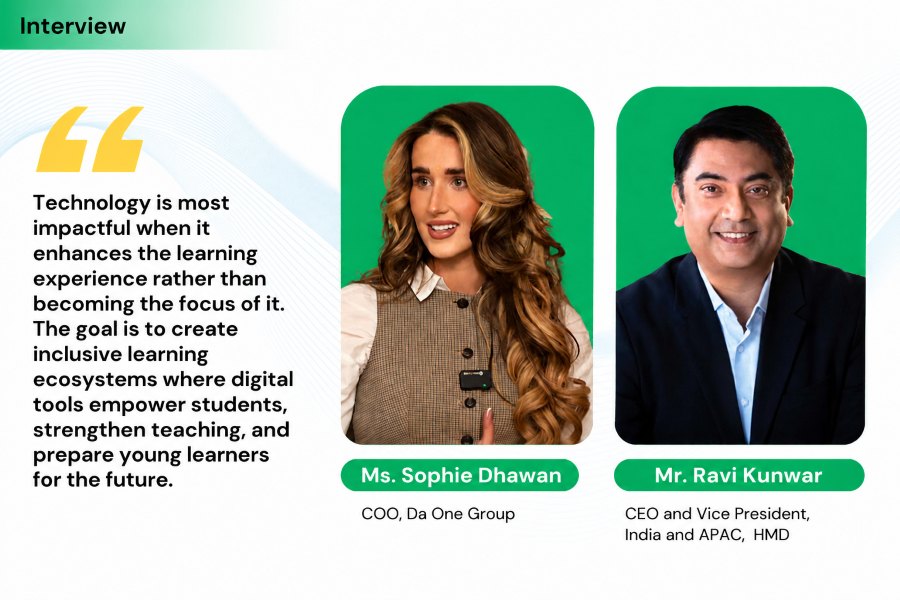
In this interview, Ms. Sophie Dhawan, COO of Da One Group, whose philanthropic arm is the Shikhar Dhawan Foundation, and Mr. Ravi Kunwar, CEO and Vice President, India and APAC, HMD, discuss how the Foundation’s Digital Shiksha initiative has evolved into a comprehensive digital learning programme that goes beyond classroom infrastructure. They reflect on the importance of combining technology with quality content, teacher capacity building and institutional partnerships to deliver sustainable educational outcomes. The conversation also highlights the role of government school collaborations, the evolving meaning of digital inclusion, HMD’s continued support for the initiative, and the Foundation’s broader approach to creating lasting social impact through education, livelihoods and inclusion.
Scroll down to read the full interview:
Q. The Shikhar Dhawan Foundation works across education, livelihoods, healthcare, sports and hunger eradication. How do you identify the social challenges where philanthropy can create the most sustainable and scalable impact, and what principles guide your intervention design?
A. Sophie Dhawan: When evaluating where we can create meaningful impact, we look for areas where the right support at the right time can open up opportunities that may otherwise remain out of reach. While the challenges faced by communities may differ, access and inclusion often sit at the heart of many social issues. Shikhar has always been passionate about giving back to society, creating opportunities that enable people to build better futures for themselves, whether through education, sport or community development. It is a vision I deeply resonate with, and one that continues to shape how we identify and design our initiatives. We also place significant importance on partnerships, sustainability and measurable impact because lasting change can only be created when good intentions are matched by meaningful outcomes.
Q. Many CSR programmes focus on infrastructure creation, while others prioritise behavioural or systemic change. How does the Foundation balance immediate community needs with the goal of creating long-term, measurable social transformation?
A. SD: At the Foundation, we believe meaningful social transformation begins with people. Infrastructure and resources are important because they help address immediate needs, but lasting change happens when individuals are equipped with the opportunities and support needed to improve their own circumstances. Whether it is education, livelihoods or healthcare, our focus is always on creating pathways that enable long-term progress, dignity and inclusion. Sustainable change is most effective when it is built with people, not simply delivered to them.
Q. Digital Shiksha has evolved from the Foundation's Smart Libraries Initiative into a technology-enabled learning programme active across multiple states, including resource-constrained regions such as Kargil. What have been the most important insights from this journey, and how have they shaped the programme's approach to designing and scaling digital education across diverse geographies?
A. SD: As Digital Shiksha has evolved over the years, one thing has become increasingly clear to us: technology is most impactful when it enhances the learning experience rather than becoming the focus of it. The journey from Smart Libraries to Digital Shiksha has reinforced the importance of creating learning environments where technology genuinely supports students and educators.Working across diverse regions, including remote areas such as Kargil, has also reminded us that every community learns differently. While the objective remains the same, successful interventions must be shaped by local needs and realities. That balance between consistency and adaptability continues to guide the programme's growth today.
Q. HMD has been associated with the Shikhar Dhawan Foundation's digital education journey since the Smart Libraries initiative and is now supporting the largest rollout of Digital Shiksha to date. What has given HMD the confidence to continue strengthening its support for the initiative?
A. Ravi Kunwar: HMD's support for Digital Shiksha is rooted in a shared belief that access to education and access to technology are closely interconnected. Over the years, we have seen how thoughtfully deployed digital solutions can help bridge learning gaps, improve access to educational resources and create opportunities for students who may otherwise be left behind. What has consistently stood out to us is the programme's focus on using technology to make learning more accessible, engaging and inclusive. As Digital Shiksha expands its reach, we are proud to continue associating with the Shikhar Dhawan Foundation and its vision that seeks to amplify access to digital education and empower more young learners through technology.
Q. The Foundation is now expanding Digital Shiksha across 10 Delhi government schools in partnership with the Directorate of Education and HMD. What makes government school ecosystems particularly important for creating large-scale educational impact, and what opportunities do you see in working alongside public institutions?
A. SD: Government schools play a vital role in shaping the aspirations and futures of millions of children across the country. If we aspire to create meaningful change at scale, it is important to work within systems that have the ability to reach and positively influence young minds from diverse backgrounds. Our partnership with the Directorate of Education, Government of NCT of Delhi, is particularly encouraging because it reflects a shared commitment towards strengthening digital learning in public education. The initiative is also aligned with the broader national focus on leveraging technology to make education more accessible, inclusive and future-ready. Collaborations between public institutions, implementation partners and corporate organisations create an opportunity to build solutions that are both scalable and sustainable.
RK: The real opportunity within India's education ecosystem lies in ensuring that access to technology is not determined by geography or socio-economic background. Government schools therefore play a critical role in democratising access to digital learning for millions of students. We see immense value in working alongside institutions such as the Directorate of Education, Government of NCT of Delhi because lasting change happens when policy, implementation and technology work in alignment. Partnerships of this nature allow us to contribute towards building more future-ready learning environments at scale.
Q. Digital inclusion is increasingly becoming central to educational equity. From your perspective, what are the biggest barriers preventing students in underserved communities from fully participating in the digital learning ecosystem, and how can philanthropy help bridge those gaps?
A. RK: While access remains an important challenge, the digital divide today is increasingly about effective usage rather than availability alone. Students and educators need access to relevant content, digital literacy and the confidence to engage with technology in meaningful ways. We see the HMD Smartphones playing an important role in expanding access to knowledge and learning opportunities. However, meaningful digital inclusion requires an ecosystem that combines connectivity, content and digital literacy. Philanthropy can help bridge these gaps and ensure that technology becomes a tool for opportunity rather than a source of inequality.
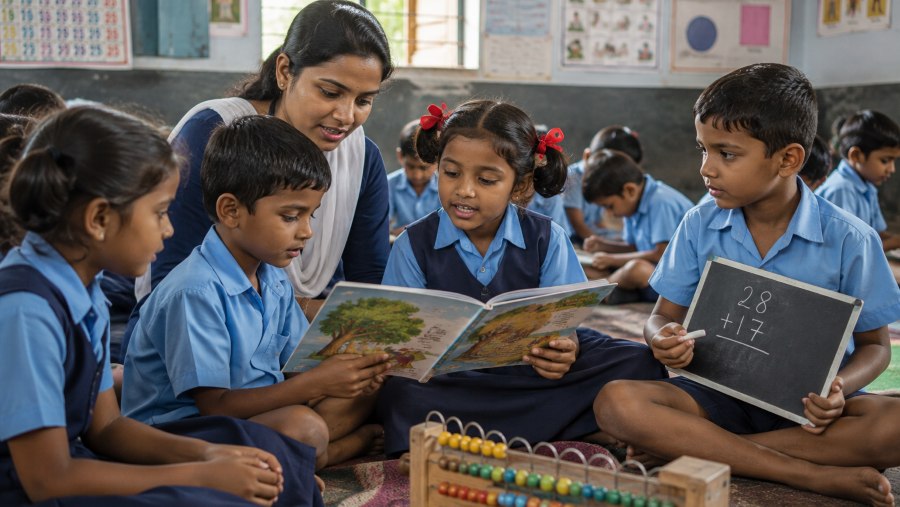
Q. Digital Shiksha combines Interactive Flat Panels, licensed K–12 content, teacher training, monitoring and analytics. In your experience, why is it important to look beyond hardware deployment and focus on building a complete learning ecosystem for students and educators?
A. SD: The real opportunity in digital education lies not in digitising classrooms, but in enriching the learning experience for students and educators. Technology can be a powerful enabler, but only when it helps make learning more engaging, accessible and meaningful. That is why Digital Shiksha brings together technology, quality content and teacher enablement, ensuring that digital tools become meaningful enablers of learning rather than ends in themselves.
RK: At HMD, we have always believed that the success of technology is defined not by deployment, but by adoption. Whether it is the HMD Smartphone in the hands of a learner or digital infrastructure within a classroom, technology creates value only when it enables better outcomes for the people using it. The strength of Digital Shiksha lies in its ability to bring together technology, content and teacher enablement within a single framework. That combination creates an environment where digital tools can become a meaningful part of everyday teaching and learning.
Q. The programme has reached more than 20,000 students and is expected to engage over 800 educators through the latest Delhi rollout. Could you share any early indicators, data points or classroom observations that demonstrate how digital learning is influencing student engagement, conceptual understanding or teaching effectiveness?
A. SD: What has been particularly encouraging is seeing how readily both students and educators embrace digital learning when it is introduced in a structured and accessible manner. Teachers have shared that interactive and visual learning formats help improve classroom engagement, while students tend to participate more actively when learning becomes immersive. These observations continue to reinforce our belief that when technology is introduced thoughtfully and with purpose, it can help create more engaging and meaningful learning experiences for both students and educators.
RK: The most meaningful indicator for us is not the presence of technology in a classroom, but the extent to which it becomes part of everyday teaching and learning. The growing comfort among educators and the enthusiasm shown by students reinforce our belief that thoughtfully implemented technology can make learning more engaging and accessible. These are the kinds of signals that give us confidence in the long-term value of initiatives such as Digital Shiksha.
Q. As a technology company, how does HMD evaluate the success of education-focused CSR initiatives? Beyond reach and scale, what indicators do you believe are most important when measuring meaningful impact?
A. RK: For a technology-led intervention, the real measure of success lies in adoption and sustained usage. We look at factors such as how effectively digital tools are being integrated into teaching and learning, how confidently educators are using technology, and whether students are gaining greater access to knowledge and learning opportunities. Ultimately, successful CSR initiatives are those that continue to deliver positive outcomes well beyond the initial intervention.
Q. As discussions around AI, digital literacy and future-ready skills gain momentum, how do you envision Digital Shiksha evolving over the next few years to ensure that students from underserved backgrounds are not left behind in the rapidly changing world of work and learning?
A. RK: Looking ahead, digital literacy will be as fundamental as literacy itself. As access to smartphones, connected devices and digital services continues to expand, the opportunity is to ensure that every student, regardless of geography or socio-economic background, can participate confidently in the digital economy. Initiatives such as Digital Shiksha have an important role to play in helping students build familiarity with technology from an early age, while also developing the skills needed to thrive in an increasingly digital world.
Q. Beyond Digital Shiksha, initiatives such as Livelihood On Wheels have enabled over ₹33 lakh in livelihood earnings for persons with disabilities through mobility and employment-linked solutions. What common philosophy connects the Foundation’s education and livelihood programmes, and how do you define success when measuring empowerment and inclusion across these diverse interventions?
A. SD: While our programmes address different areas, they are all driven by a shared belief that every individual deserves the opportunity to lead a life of dignity and fulfilment. Whether through education, livelihoods, healthcare or sport, our focus is on creating pathways that help people realise their potential and build better futures for themselves. The progress of initiatives such as Livelihood On Wheels reflects the power of that approach. It makes me happy to say that in the previous financial year alone, the programme enabled over ₹46 lakh in livelihood earnings for persons with disabilities, helping create greater financial independence, opportunity and inclusion for its beneficiaries. For us, success is not defined solely by the number of people reached, but by the positive and lasting change created in people's lives and communities.



.png)