Building a Stronger Disability Ecosystem: Nivedita Krishna on Funding, Inclusion, and Systemic Change
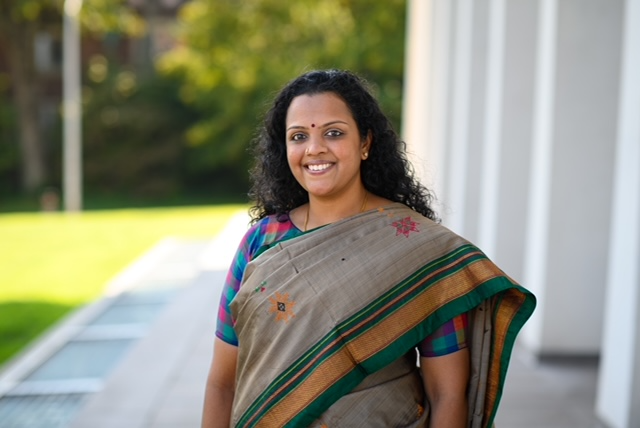
Real change begins when we invest in the people and communities that are too often overlooked. Yet, despite millions of Indians living with disabilities, the sector continues to remain one of the country’s most underfunded development priorities. A new report by Pacta, The Landscape of Funding for Disability in India, shines a spotlight on this critical gap and examines why disability-focused organisations continue to face chronic funding challenges despite forming a significant part of India’s non-profit ecosystem.
In this interview, Nivedita Krishna, Founder of Pacta, discusses the report’s key findings, including the concept of a “low-investment equilibrium” that keeps disability funding trapped in a cycle of underinvestment. She explains the gaps between progressive disability rights policies and actual implementation, why CSR and philanthropic funding remain limited, and why areas such as advocacy, research, sports, and innovation struggle to attract support.
The conversation also explores the systemic changes needed across government, philanthropy, and civil society to build a stronger, more sustainable disability ecosystem—one that moves beyond charity and towards meaningful inclusion, equity, and long-term impact.
Scroll down to read more:
Q. What is the vision behind this report, and what key gaps were you trying to address through this initiative?
A. We started from a simple but frustrating observation: disability is one of the most under-researched funding areas in India. There was no systematic estimate of what philanthropy gives to disability, no mapping of why organisations struggle to fundraise, no data that put the funder and the NPO experience side by side. Funders were making decisions without visibility into the sector, and NPOs were fundraising without understanding how funders think. We wanted to fix that, to put the first honest, evidence-based picture of disability funding fragility on the table and make it useful for everyone in the room.
Q. Your report describes disability funding in India as being trapped in a “low-investment equilibrium.” Could you explain what this means in practical terms?
A. It's a trap with three interlocking parts. The government under-invests only one state, Assam, publishes a disability-disaggregated budget, and our combined disability spend is about 0.04% of GDP. Philanthropy takes its cues from government signals and since disability doesn't register as a state priority, funders don't prioritise it either. That leaves NPOs chronically underfunded, which means they can't build the fundraising staff, impact measurement systems, or compliance infrastructure that funders require. So they look less fundable which makes funders less interested which keeps government investment low. Each part of the trap is rational for the actor inside it. Collectively, it produces a stable system of underinvestment that doesn't self-correct. That's the equilibrium. Breaking it requires someone to move first.
Q. Despite disability-focused organisations forming a notable share of India’s non-profit ecosystem, the sector continues to receive limited CSR and philanthropic support. Why do you think disability remains structurally underfunded in India?
A. Three reasons, and they compound each other. First, there's no visibility, disability funding data is subsumed under broad categories like GEDI z9in data bases like Hurun/ Candid etc), education for children with disabilities (in CSR) so even funders who are giving don't know how much is going to disability specifically. What you can't see, you can't grow. Second, disability work doesn't fit neatly into how funders are set up to give it's long-term, relational, qualitative, and expensive per beneficiary. Funders optimised for annual cycles, output metrics, and scalability will consistently underfund it, not from bad intent but from structural misalignment. Third, there's a social stigma and awareness deficit that most funders have internalised 38 out of 52 NPOs in our survey reported limited donor interest, and 32 reported limited donor understanding of what disability work actually involves.
Q. What are some of the biggest gaps you observe between India’s disability rights policies and the actual investments being made toward implementation?
A. India's policy framework is genuinely progressive — the RPwD Act 2016 mandates 5% reservation in poverty alleviation schemes, UNCRPD sets clear inclusion standards, the Accessible India campaign has real ambitions. The gap is in the translation layer. Children with disabilities are 0.8% of school enrolment nationally. Only 0.01% of the PMKVY budget in 2023–24 went to persons with disabilities. The MPLADS circular mandates accessible infrastructure but the latest annual report has no disability-specific reporting at all. Policy commitments exist on paper; monitoring systems to track whether they're being implemented don't. And because there's no accountability mechanism, there's no pressure on the system to close the gap.
Q. The report highlights that funding is heavily concentrated around education and therapy. Why do areas such as advocacy, research, sports, and innovation continue to receive limited attention?
A. CSR is overwhelmingly concentrated in education and livelihoods ; 79% and 87% of CSR-funded disability organisations respectively work in these areas. Government funding goes almost entirely to therapy and education. Sports, advocacy, and research don't produce the short-term, countable outputs that annual grant cycles reward. Sports is seen as a luxury. Advocacy is seen as risky/ political, research is seen as a dust gathering exercise. This is not just in disability intersections, but true of other thematics as well.
.jpeg.jpeg) Q. How do current CSR and philanthropic approaches toward disability funding need to evolve to create more sustainable and long-term impact?
Q. How do current CSR and philanthropic approaches toward disability funding need to evolve to create more sustainable and long-term impact?
A. Three shifts are non-negotiable. First, move from annual to multi-year funding disability interventions span lifetimes, and 12-month grant forces organisations to spend as much time renewing relationships as delivering programmes. Funders like Mariwala Health Initiative and APPI show that 3–7 year funding horizons are possible and that they produce better outcomes for everyone. Second, fund the organisation, not just the project — NPOs need flexible funds. The Bridgespan Pay What It Takes study suggests that funding ~20% of an institutions budget over 3–5 years allows it to become the kind of fundable, governed entities that funders say they want. Third, embed disability as a cross-cutting lens in existing portfolios education, health, livelihoods rather than creating a separate, marginal disability silo. The goal is mainstreaming, not parallel funding streams.
Q. From your interactions with disability organisations, what are some of the most common operational or funding challenges they continue to face?
A. Short funding cycles that force organisations to fundraise continuously rather than programme effectively; fund disbursement delays — sometimes two months — that mean staff salaries depend on founders' personal resources; compliance requirements that were designed for large organisations but applied uniformly to small ones; and the absence of any feedback when a funding application fails, which makes it impossible to improve. Most disability organisations are working in geographic and social isolation, without the peer networks, intermediaries, or sectoral infrastructure that has been created for other more established sectors.
Q. Could you share how collaborations with your current partners, researchers, or ecosystem stakeholders have helped strengthen the report’s findings and enhance Pacta’s broader efforts in this space?
A. This study wouldn't exist without Able Together and Sudhir Shenoy's conviction that the sector needed shared knowledge, not just individual giving. Sudhir's instinct was from the start that any understanding Pacta produced should be a public good — tools that any funder or NPO could use, not proprietary insight for one philanthropist. The data walks we ran with 52 NPOs across geographies were genuinely collaborative — organisations shared with a candour they rarely get to exercise, precisely because the process was designed to hold space for their experience without reducing it to a set of bullet points for a donor report. The funder interviews added the other side of the mismatch. Putting both experiences in the same document, in dialogue with each other, is what makes this study different from a standard sector report.
Pacta always advances research in disability that our nonprofit partners validate as necessary prior to us investing ourselves in the study. We host data walks to have our eco system engage with the data and question it. The credibility of research methodology and commitment to advance the sector and not compete with partners has allowed us to forge partnerships with orgs doing great work in the sector.
Q. What systemic changes across policy, philanthropy, and institutional support—do you believe are most necessary to strengthen India’s disability ecosystem over the next few years?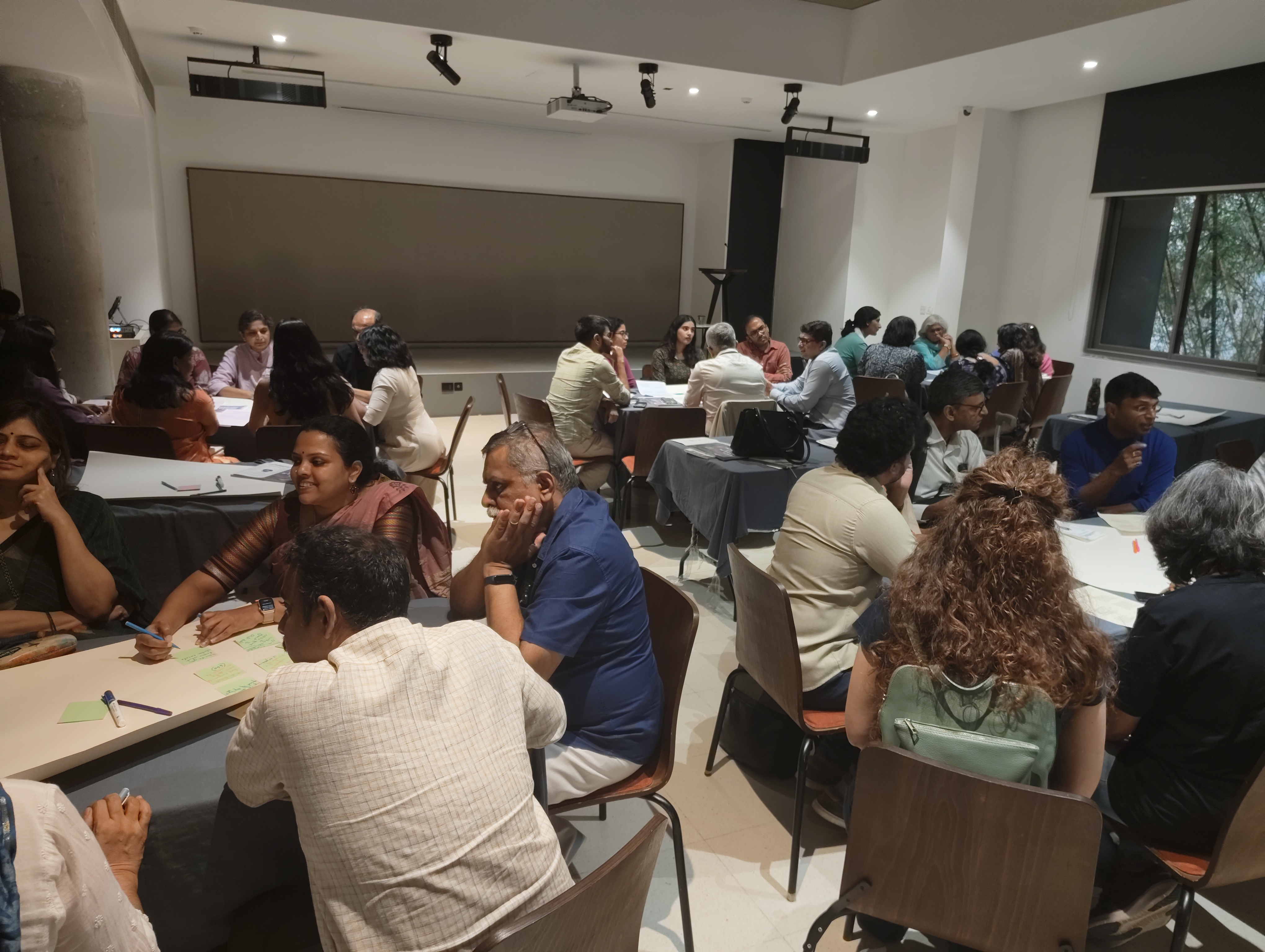
A. Three that are most urgent. First, disability-disaggregated budgets and outcomes tracking from government — expand what Assam does to every state, and add disability KPIs to the Aspirational Districts Programme. Without government signals, private capital will not follow at scale.
Second, collectivising on both sides of the funding relationship. Funders working in disability need to pool intelligence, coordinate strategy, and avoid the duplication that comes from every funder independently discovering the same organisations and gaps. NPOs need collectives too shared platforms to negotiate with funders, set common standards, and advocate for sector-level change that no individual organisation has the leverage to drive alone. The disability sector doesn't yet have the equivalent of what NASSCOM built for tech or what the climate sector has built through funder networks. That infrastructure needs to be built deliberately.
Third, sustained investment in organisational capability — specifically in data management, fundraising, monitoring and evaluation, technology, and access to networks. These are the exact capabilities that funders say they want to see, and the exact capabilities that chronic underfunding prevents organisations from building. It's a circular problem that requires someone to break the circle. Funders investing in sector-wide capability infrastructure not just in individual grantees is one of the highest-leverage interventions available. The disability sector doesn't need more isolated strong organisations. It needs a strong sector.



.png)