Building a Green Future Through Technology, Skills and Inclusive Growth
As India advances its clean energy and sustainability ambitions, the focus is increasingly shifting from isolated environmental initiatives to creating long-term, inclusive impact. The transition to a low-carbon future will depend not only on technological innovation but also on the ability to expand energy access, build green skills, strengthen local ecosystems, and ensure that communities are active participants in the development journey. In this evolving landscape, businesses have an important role to play in aligning growth with environmental responsibility and social progress.
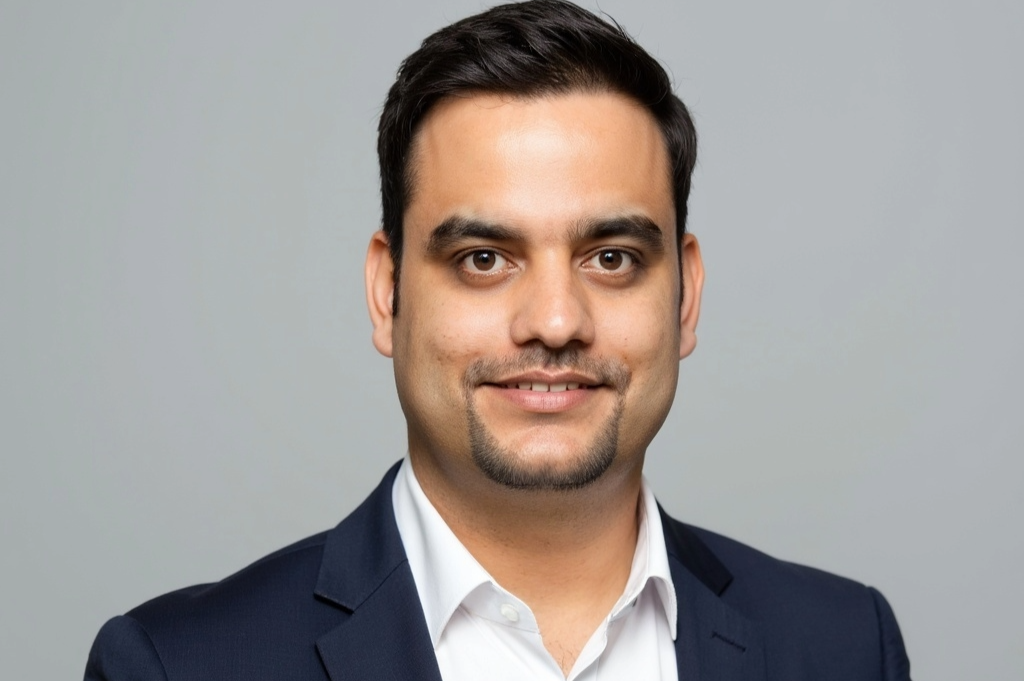
In this conversation with TheCSRUniverse, Abhishek Sarmah, Head of Corporate Strategy and Strategic Marketing, ESG and CSR at Delta Electronics India, shares insights on how technology-led sustainability can drive meaningful change. He discusses the opportunities and challenges surrounding clean energy access, green workforce development, ESG integration, and cross-sector collaboration, while highlighting the importance of building scalable solutions that deliver lasting for both industry and society.
Read the full interview below.
Q&A
Q. What role can companies like Delta Electronics India play in making sustainability both scalable and socially inclusive?
A. India is growing fast, and the green transition is real. The opportunity is to ensure this growth reaches every corner not just metros, but smaller towns, industrial belts, and communities just beginning their journey.
At Delta, the goal is not just to make good technology; it's to ensure that technology reaches people who need it most. The team constantly pushes to ask: efficient for whom? Scalable for whom?
Companies like Delta must do three things together: deploy clean energy solutions at a scale that makes them affordable, build local skills so communities can maintain and benefit from this infrastructure, and advocate for policies that bring all of India into the green story. The vision is simple: Delta powering a green India. Not just for some, but for everyone.
Q. How can clean energy solutions create long-term impact in underserved communities?
A. The technology exists and it works. The real opportunity is in how we design and deploy it for communities with different realities than large urban centres.
Real impact starts when solutions are designed from the ground up for a community's actual situation: grid availability, economic capacity, and local technical skills. Delta's Green EV Charging Station integrates EV chargers, energy storage, solar PV inverters, and a charging management system into a microgrid providing clean, stable electricity even where the conventional grid is still developing. That's designing for energy resilience, not just energy access.
When a community can generate, store, and manage its own power locally, it doesn't depend on distant infrastructure. Solutions built that way tend to stay, grow, and genuinely transform lives.
Q. What sustainability challenges in underserved regions are still overlooked by corporates?
A. Water is one. Delta has taken water stewardship seriously setting up rainwater collection, recycling systems, and recharge pits to support groundwater replenishment. More companies need to treat water as a shared community resource.
Biodiversity is another. Delta joined the TNFD Forum, conducted its first biodiversity risk assessment, and became one of the world's first Early Adopters in January 2024. The hope is that this becomes a sector-wide conversation.
Then there's the informal economy small workshops, local artisans, micro cold chains. There's a real opportunity to bring clean energy financing and technology to these businesses through supply chains and advocacy. This remains an exciting frontier for the years ahead.
Q. What are the biggest gaps in green skills today, and how can corporates help bridge them?
A. The biggest gaps today are in emerging areas such as energy storage systems, EV charging infrastructure, industrial automation, robotics, PLC programming, and Electronics System Design & Manufacturing (ESDM), which are critical to building a more sustainable and energy-efficient industrial ecosystem. Corporates can help bridge these gaps by working closely with academia and government skill-development bodies to create industry-aligned training programmes and provide hands-on exposure to real-world technologies.
At Delta, we have partnered with the Tamil Nadu Skill Development Corporation (TNSDC) to establish a Technical Centre of Excellence focused on ESDM, industrial automation, robotics, and smart manufacturing, with curriculum developed alongside our engineers and delivered on industry-grade equipment.
Most recently, we inaugurated a Centre of Excellence in Robotics and PLC Automation at the Government College of Engineering, Bargur. Equipped with 6-axis articulated robots, SCARA robots, PLC training kits, and smart automation systems, the centre supports TNSDC's Vetri Nichayam initiative and provides practical training to 20–25 participants per batch, helping create a skilled workforce ready for future industries.
Q. How is Delta Electronics integrating ESG into core business decisions rather than treating it as a separate function?
A. ESG can easily become a reporting exercise. Delta has worked deliberately to ensure that doesn't happen.
Internal carbon pricing means the cost of carbon is factored into capital investment decisions, not treated as a side concern. Clear 2025 targets were set: 80% renewable electricity usage, a 20% reduction in plant electricity and water consumption intensity, and a 100% waste diversion rate. These sat alongside business targets with the same reviews and the same accountability.
Being recognised as ESG Company of the Year at the 2025 National Conclave on Environmental Services, organised by SEPC under the Ministry of Commerce and Industry, affirmed this approach. But what keeps the team motivated is the work itself.
Q. How do you measure whether your sustainability initiatives are creating real, long-term impact?
A. On the environment side, Delta tracks specific, verifiable numbers. 5.5 MW of rooftop solar has been installed, and 9.6 million units of wind-generated electricity have been contracted. The auto tube cleaning system alone saves 613,200 kWh annually. Globally, Delta's products helped customers save 45.5 billion kWh between 2010 and 2023 equivalent to cutting 23.84 million tonnes of carbon emissions.
On the social side, job placement rates, income changes, and feedback from communities and training partners are tracked regularly. Measuring long-term social impact is a frontier the sector is still developing. What Delta believes firmly is that transparency matters reporting honestly on what's working, what's being refined, and what's being learned is as important as the work itself.
Q. Which sector in India offers the most urgent opportunity for sustainability-led transformation?
A. Energy storage and grid modernization present one of the most urgent opportunities for sustainability-led transformation in India.
India has made significant progress in expanding renewable energy capacity. The next challenge is ensuring that clean energy is available when and where it is needed, making energy storage and smarter grid infrastructure critical to the next phase of the transition.
To support this shift, Delta is working across areas such as Battery Energy Storage Systems (BESS), Green Hydrogen, EV charging infrastructure, and solar PV inverters, helping build a more resilient and future-ready energy ecosystem.
Digital technologies will also play a crucial role. AI-enabled energy management platforms can help forecast demand, renewable energy generation, and energy usage patterns, enabling organizations to optimize both operational efficiency and sustainability outcomes.
EV mobility is another important area of transformation. The integration of EV charging infrastructure with renewable energy and energy storage solutions can help accelerate adoption while improving energy reliability and reducing environmental impact
Q. How does Delta approach collaborations with academia and industry partners to scale sustainability impact?
A. No single company can drive systemic change alone. The most meaningful progress happens when government, academia, communities, and industry work together.
The model built in Tamil Nadu shows what's possible. Curriculum was co-designed with Delta's own engineers, labs were equipped with actual Delta technology, and programmes were structured to lead to real employment. The Centre of Excellence at Bargur was set up with TNSDC and TN AutoSkills, reinforcing a long-term commitment to India's manufacturing transformation.
Alongside the inauguration of the Bargur Centre of Excellence, a tree plantation drive involving 30,000 saplings was organised — a signal that the thinking extends to the whole community, not just the training centre. By joining the TNFD Forum and becoming an Early Adopter of biodiversity risk frameworks, Delta ensures its commitments are globally benchmarked, not just self-declared.
Q. What leadership lessons have shaped your approach to balancing growth with responsibility?
A. Three principles guide Delta's thinking consistently:
Sustainability earns its place when it speaks the language of business. When renewable energy adoption is linked to cost efficiency and risk reduction, it stops being a CSR ask and becomes a strategic decision.
The community is treated as a partner, not just a beneficiary. The skill centres established by Delta not only create opportunities for local communities but also help build a strong future-ready talent pipeline. When business growth and community development move together, the overall impact becomes far more meaningful and sustainable.
Real targets demand honest accountability. Delta committed to reducing greenhouse gas emissions by 20% by 2025, and as RE100 members, the team is working toward 100% renewable electricity. Ambition without accountability doesn't move the needle.
India is at a genuinely important moment. The decisions made in the next few years on energy, skills, and manufacturing will shape what kind of country this becomes. At Delta Electronics India, the entire team feels energised by that responsibility.






.png)