Beyond Tree Counts: How SayTrees Is Redefining CSR-Led Climate Action Through Restoration and Resilience
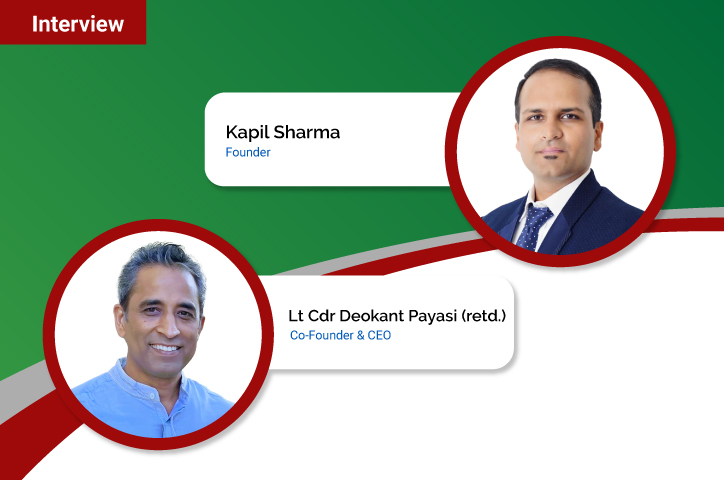
As climate action increasingly shifts from symbolic gestures to science-backed, long-term solutions, SayTrees offers a compelling model for how CSR can drive meaningful ecological and social outcomes. Founded nearly two decades ago, the organisation has evolved from a tree-planting initiative into a restoration-led climate partner working across forests, water systems, and farmlands.
In this conversation, Founder Kapil Sharma and Co-Founder & CEO Lt Cdr Deokant Payasi (retd.) share how SayTrees is reframing success in environmental CSR, from prioritising biodiversity, survival rates, and ecosystem health to embedding community ownership, scientific monitoring, and climate resilience at the core of every intervention.
Scroll down to read the full interview:
Q. After nearly two decades of work, how has SayTrees seen the conversation on CSR-led climate action evolve from tree counts to long-term ecological restoration?
A. At SayTrees, our mission is built on two interconnected pillars: Ecosystem Restoration and Climate Resilience. Ecosystem restoration reflects our long-term ambition to help degraded landscapes return to their natural state, while climate resilience recognises the realities of a changing climate and focuses on enabling communities to adapt and thrive despite it.
Over time, SayTrees has evolved from a tree-planting initiative into a multifaceted organisation working across both urban and rural ecosystems. Through large-scale programmes such as One Village, One Forest, the development of urban Miyawaki forests, and comprehensive lake rejuvenation projects, we actively drive ecosystem recovery. In parallel, we strengthen climate resilience by supporting farmers in transitioning from monoculture practices to diversified agroforestry systems integrating trees into farmlands to create sustainable ecological outcomes while securing long-term livelihoods.
Our approach has also expanded beyond traditional metrics of success. We now place strong emphasis on biodiversity scores, the use of native species, and the adoption of natural farming techniques, ensuring that our impact is both measurable and regenerative.
Q. Why are survival rate, biodiversity, and ecosystem health more meaningful metrics than plantation numbers when evaluating environmental CSR projects?
A. SayTrees goes far beyond tree planting; we design and nurture self-sustaining ecosystems. Every project is backed by a mandatory two-year maintenance and monitoring roadmap, ensuring the delivery of a thriving forest rather than just planted saplings. While a high survival rate remains a key performance metric, we recognise that survival alone is not enough.
Our work prioritises native, non-invasive species and follows a multi-layered, high-density plantation model to restore lost biodiversity. With a deep understanding that ecosystems function as fragile, interconnected networks where the loss of even a single species can lead to systemic collapse, we measure success through ecological complexity, resilience, and long-term balance.
Q. SayTrees works extensively on lake and well restoration alongside afforestation. How does integrating water conservation strengthen climate resilience in both urban and rural contexts?
A. At SayTrees, we believe there can be no green without blue; water and forests are deeply interconnected. As a result, water planning is an equally critical priority for us, especially when implementing large-scale afforestation and tree-based interventions outside forest areas.
In rural landscapes, water stored in lakes and ponds is a shared resource, supporting human consumption, agriculture, and livestock. Our work focuses on improving water storage capacity so that villages have reliable access to water throughout the summer months. This sustained availability enables additional agricultural yield, strengthens rural livelihoods, and allows communities to support and maintain larger cattle populations.
The creation of additional storage capacity also allows villages to capture and retain excess rainfall during periods of heavy rain. By strengthening water infrastructure alongside ensuring that at least 20–40% of land is brought under tree-based interventions, communities are better equipped to manage the impacts of weather variability and climate extremes.
Q. Agroforestry is a key pillar of your work. How can CSR partnerships help farmers transition to climate-resilient livelihoods while delivering measurable carbon and biodiversity benefits?
A. The primary challenge in adopting agroforestry is the economic gestation gap—the capital-intensive phase during which trees have not yet begun to generate returns. Due to this extended timeline, formal credit markets often fall short in providing adequate financing to farmers. Yet, allocating 20–40% of farmland to tree-based interventions plays a critical role in strengthening climate resilience.
CSR and carbon financing serve as the essential bridge in this transition, helping de-risk adoption for farmers. In return, we generate a high-integrity carbon asset: every carbon offset is rigorously measured, verified, and reported, enabling corporates to access high-quality carbon credits to mitigate their emissions footprint.
Our multi-layered, multi-variety agroforestry design deliberately avoids the risks associated with monoculture, instead fostering biodiverse ecosystems that deliver both biological stability and long-term financial resilience.
Q. What role does community ownership play in ensuring that CSR-funded environmental projects remain sustainable well beyond the project lifecycle?
A. At SayTrees, we believe a project’s true success lies in its sustainability long after our active monitoring period concludes. Our approach focuses on community capacity building during the transition and overlap phase. Rather than simply handing over completed projects, we equip local stakeholders with the technical know-how required to maintain and sustain the forests and water bodies we co-create.
By actively involving communities in prioritising activities and addressing on-ground implementation challenges, we cultivate a strong sense of ownership. This collective stewardship ensures that the ecological infrastructure remains resilient, self-managed, and impactful for generations to come.
Q. How does SayTrees apply scientific planning and data-driven monitoring to ensure accountability, transparency, and long-term impact for corporate partners?
A. SayTrees leverages a proprietary digital ecosystem to bridge the gap between on-ground action and corporate accountability. Through our in-house data-gathering application and dedicated partner dashboards, we deliver an unprecedented level of transparency.
By deploying IoT-enabled sensors, we provide real-time insights into lake rejuvenation efforts, including water levels and periodic water quality analysis alongside comprehensive forest impact data. These sensors monitor critical microclimatic indicators such as soil moisture, temperature reduction, humidity, and noise pollution levels.
This data-driven approach ensures our partners have access to near real-time, verifiable reporting on the environmental impact of their investments.
Q. Urban interventions such as Miyawaki forests have gained popularity. What should corporates understand about their design, limitations, and long-term maintenance before investing in them?
A. Miyawaki forests have become a strategic necessity in our rapidly narrowing climate window, delivering high-impact ecological outcomes in a fraction of the time required by conventional restoration approaches. While traditional methods can take decades to mature, the Miyawaki technique achieves dense canopy cover within just 2–3 years, making it particularly well-suited for urban centres and densely populated landscapes.
That said, this accelerated model of restoration is resource-intensive, demanding significant upfront investment in high-quality compost, mulching, and consistent irrigation. Equally critical to its success is the exclusive use of native, non-invasive species; the introduction of even a single invasive species can compromise ecosystem balance over time.
Ultimately, Miyawaki forests are biodiversity-first habitats designed as powerful carbon sinks and vital sanctuaries for birds, reptiles, and insects where ecological restoration takes precedence over direct human recreation.
Q. From your experience, what are the most common pitfalls in CSR-led environmental initiatives, and how can companies avoid short-term or cosmetic sustainability efforts?
A. To achieve meaningful ecological recovery, we must move beyond ad hoc, fragmented interventions toward integrated, landscape-level programmes. Lasting impact emerges from sustained, multi-year commitments to a defined geography, whether across an entire watershed, through comprehensive ecosystem restoration, or via holistic village upliftment.
By concentrating our efforts in a single region over several years, we generate a powerful compounding effect on biodiversity regeneration and groundwater levels. Central to this approach is our unwavering focus on long-term maintenance: we do not step away until local communities have attained full technical and financial autonomy to manage and safeguard their natural assets.
Q. How can corporates better align their CSR climate initiatives with national priorities, climate goals, and local community needs simultaneously?
A. The Government of India has articulated clear environmental and social priorities through flagship programmes such as Aspirational Districts, Nagar Vans, and rural employment initiatives. Together, these programmes offer a strong and structured framework for Corporate Social Responsibility (CSR).
By aligning with these national priorities, corporates can either deepen the impact of existing government efforts or complement them by extending proven ecological models to unreached and underserved regions. At SayTrees, we serve as the implementation bridge, ensuring that corporate capital effectively translates national vision into measurable, on-ground outcomes at the local level.
Q. Looking ahead, what kind of CSR partnerships will be essential to scale credible, science-backed climate solutions across India over the next decade?
A. The fight against climate change demands a unified, collaborative approach bringing together government, corporates, implementation partners (NGOs), and local communities, each acting within their respective spheres of influence. CSR plays a critical catalytic role by providing the initial momentum needed to scale climate action at pace.
Looking ahead, achieving Net Zero and becoming Water Positive must be mandatory KPIs for every corporate entity. In parallel, the academic and scientific communities have a vital responsibility to lead with science-based prioritisation and innovative solutions that enable these efforts to scale exponentially.
By embedding the principles of Reduce and Reuse into every operational process, we can move beyond isolated interventions and create systemic, long-term impact at a planetary scale.








.png)