Beyond the Hills of Sonbhadra: With the Spirit of Development Alternatives
Some stories of development arrive wrapped in data and dashboards. Others arrive softly, carrying the dust of broken roads, the silence of forgotten villages, and the quiet courage of communities that persist despite it all. Beyond the Hills of Sonbhadra is one such story. Written by Mr Nipun Kaushik, Associate Director – Fundraising at Quest Alliance, this deeply reflective piece takes us far from boardrooms and policy conversations into the lived realities of one of Uttar Pradesh’s most resource-rich yet underserved districts. Through his first-hand experiences, Nipun brings alive the paradoxes of Sonbhadra, its natural abundance and persistent deprivation, while thoughtfully capturing how Development Alternatives works alongside communities to restore dignity, resilience, and hope. This is not just an account of interventions; it is a reminder that meaningful change often begins where few are willing to go, and grows strongest when it is rooted in empathy, partnership, and patience.
Where Change Begins – Often Off the Beaten Path
When we think of development work, the picture is usually of bustling project sites, conference rooms, and community meetings. But in my experience, real impact rarely begins there. It begins in places far from urban lights, where roads crumble long before the journey starts, and where survival depends on resilience in the face of scarcity.
This August, my work took me to Sonbhadra, the largest yet one of the least developed district in Uttar Pradesh. It is a place of breathtaking hills, the serene Son River winding through the city, and abundant mineral wealth; but also, a stark reminder that natural beauty does not always translate into prosperity.
The railway station, a modest two-platform facility under renovation, was my first glimpse of how underinvestment shapes daily life. Roads were broken enough to slow vehicles to walking pace. Even government residences reflected scarcity. Yet just outside the urban limits lay expansive rivers and rivulets, nature’s gifts flowing freely, but never staying long enough to nourish the land or its people.
Sonbhadra: An Underlying Paradox
Trucks piled high with sand and minerals rumbled along the roads, narrating a story of extractive richness. But the poverty around told a different tale, of wealth leaving faster than it arrives, of resources drained from the soil without leaving prosperity behind.
 And then came the puzzle of water. Sonbhadra is graced by rivers, yet it is semi-arid and water-scarce. Its rugged terrain ensures water flows in abundance, but with no structures to hold it, it rushes past, leaving the land parched. Groundwater offers no respite; it is laced with heavy metals poisoning more than they nourish.A recent government report on Sonbhadra, found that 120 villages, home to 2 lakh residents, have unsafe drinking water due to excess fluoride - posing a severe public health risk. Some villages report fluoride concentrations of 2 mg/L or higher, well above the safe limit of 1-1.5 mg/L.
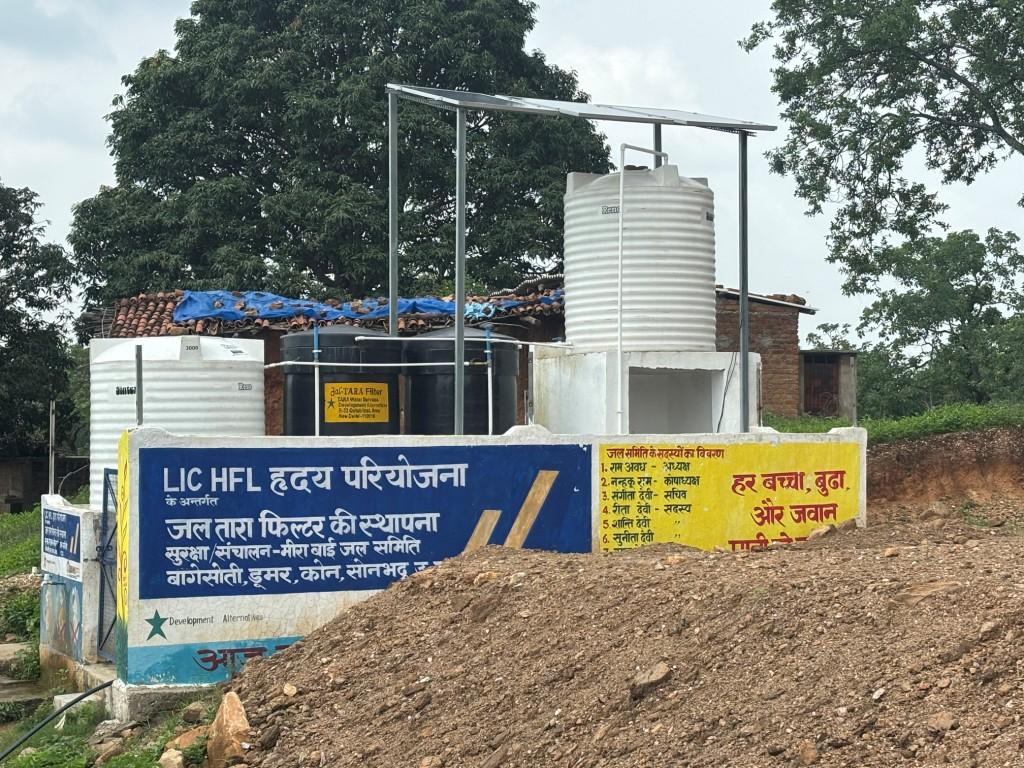
This is where I saw Development Alternatives step in, not as outsiders bringing solutions, but as partners walking alongside communities. Through the Integrated Village Development Programme (IVDP), I witnessed villages capturing and conserving water with check dams and deepened nalas, restoring green cover through tree plantation, and strengthening livelihoods with WADI farming. Most striking for me was the way safe drinking water reached households through JalTARA filters. Women’s self-help and JalTARA collectives are routinely tasked with local water management, including water testing and upkeep, ensuring sustainability. The collective regularly test water using government kits. What I saw was more than infrastructure; it was dignity, resilience, and self-reliance taking root in some of the toughest geographies.
During my visit, these initiatives came alive through interactions with the locals. In one of the villages, a middle-aged man shared that before JalTARA filters, clean drinking water was not even something they dreamt of. “We only wished to see clean water once in our lifetime,” he said quietly. Today, every household in his village has access to safe water and with it, the dignity of health and hope. His gratitude was palpable, his words heavy with years of deprivation, yet lifted by relief that someone cared enough to bring change.
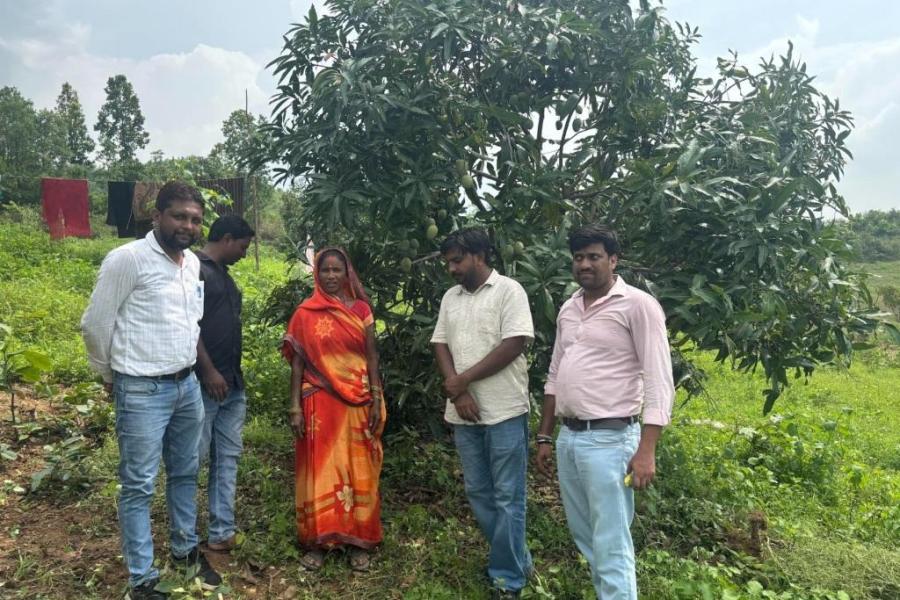
In another village, a tribal woman led us with quiet pride through her WADI farm, a lush patch of mango trees she now owns and cultivates. Her confidence was striking. Her income had grown, her family’s future had brightened, and her sense of ownership over her success was unmistakable.
That evening, the town showed me yet another face which was simple, restrained, yet charming. I watched a film in a local theatre for the price of a Delhi coffee. Later, walking back with colleagues because autos were hard to find, we convinced a hesitant driver to drop us. He explained that after dark, many avoid picking up passengers, too many rides go unpaid. Not out of dishonesty, but out of hardship. That single exchange was a quiet lesson in empathy: how trust, dignity, and survival coexist in fragile balance.
Bridging India and Bharat
The divide between India and Bharat is stark in Sonbhadra. Yet places like these remind me why Development Alternatives has made Bundelkhand its karmabhoomi, a social laboratory where we watch, listen, refine, and expand social impact models that work in the toughest conditions. The lessons from Bundelkhand inform our work in other geographies, shaping models that are culturally rooted, economically viable, and environmentally sound.
Reaching geographies like Sonbhadra is not just about implementing a project. It is about showing up where hope has grown faint, staying long enough to work with communities, and building systems that endure beyond an organisation’s project cycle. These geographies demand patience, humility, and partnership. They test whether our instincts for development can survive without immediate results. They ask if we can see the beauty in a person’s pride when they drink from a cup of safe water, harvest crops sustained by a check dam, or pluck mangoes from their WADI farm.
They remind me of the truth we live by: lasting change begins where very few are willing to go.